Low-Carb Rice Alternatives: 8 Best Keto Swaps
Cauliflower rice (~2g net carbs/cup) and shirataki rice (~0g) replace white rice's ~45g per cup. See all 8 best low-carb rice swaps ranked.

Editorial Team · June 20, 2026 · 7 min read
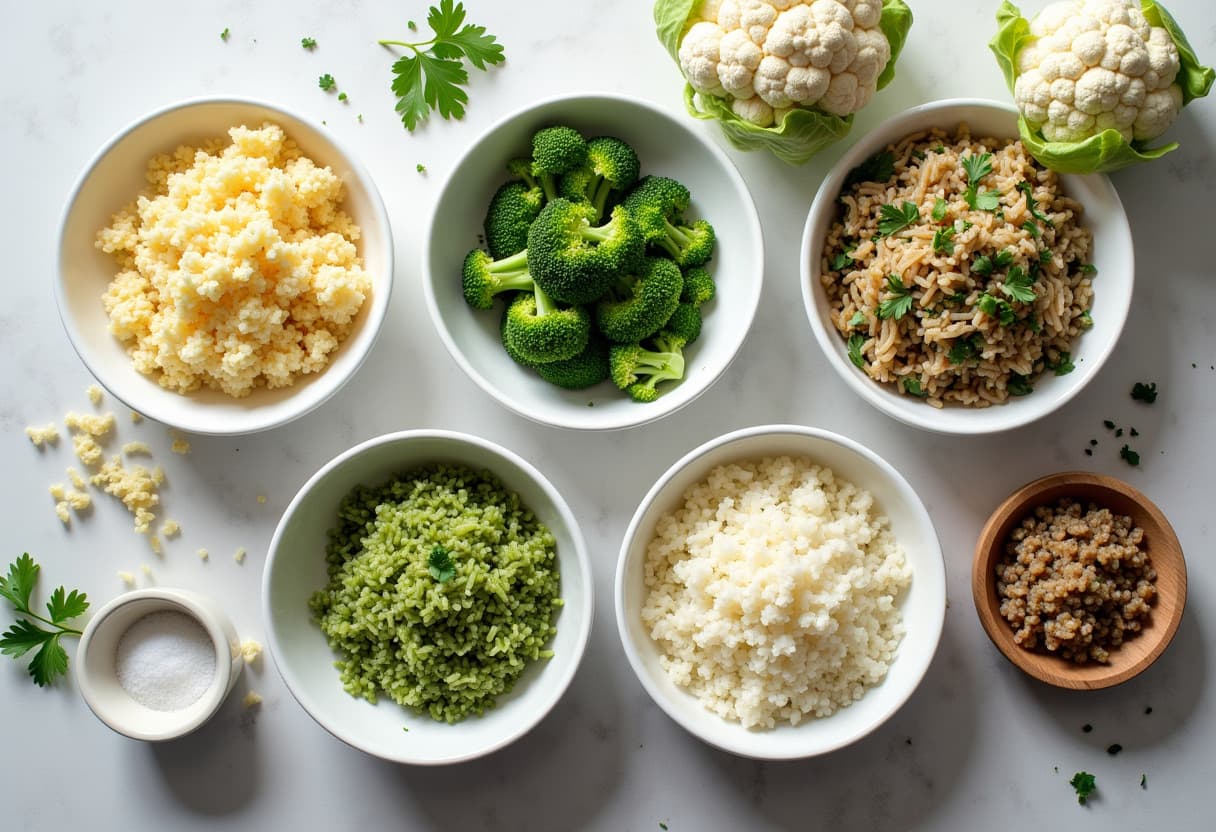
The best low-carb rice swap is cauliflower rice at roughly 2g net carbs per cooked cup — about 90 percent less than the ~45g in a cup of white rice. For near-zero carbs, shirataki (konjac) rice comes in under 1g per serving, while broccoli rice (~4g), riced cabbage (~3g), and hearts of palm rice (~2g) round out the produce-based options. If you want something closer to real grains, riced cauliflower-and-egg "fried rice," chopped mushrooms, and konjac blends bridge the gap. Every one of these fits a 20-50g daily keto budget where real rice simply can't.
Low-carb rice alternatives ranked
Here are the best rice substitutes ranked by net carbs (total carbs minus fiber) per cooked cup, with white rice as the baseline. Numbers are approximate and vary by brand and preparation.
| Alternative | Net carbs (per cup, cooked) | Texture / best use | Notes |
|---|---|---|---|
| White rice (baseline) | ~45g | Fluffy, neutral — anything | Not keto; one cup can exceed a full day's carb budget |
| Shirataki / konjac rice | <1g | Springy, gelatinous — soups, stir-fry, rice bowls | Lowest-carb option; rinse and dry-fry to fix texture |
| Cauliflower rice | ~2g | Light, slightly grainy — fried rice, pilaf, bowls | Best all-rounder; mild flavor, cooks in minutes |
| Hearts of palm rice | ~2g | Tender, slightly tangy — paella, risotto, casseroles | Holds shape well; faint briny note |
| Riced cabbage | ~3g | Soft, mild — fried rice, stuffed-pepper filling | Cheapest swap; sweeter, denser than cauliflower |
| Broccoli rice | ~4g | Grainy, green — bowls, casseroles, fritters | More fiber and flavor; stronger taste than cauliflower |
| Riced mushrooms | ~4g | Chewy, savory, umami — risotto, "dirty rice" | Releases water; great for meaty dishes |
| Konjac-shirataki blends | ~2-5g | Firmer than pure shirataki — everyday rice swap | Some blends add oat fiber or tofu for a rice-like bite |
| Cooked quinoa | ~34g | Fluffy, nutty — low-carb (not keto) bowls | High-protein, but far too starchy for keto |
Sources: USDA FoodData Central (public domain) and manufacturer nutrition panels for shirataki and hearts-of-palm products.
Why rice doesn't fit keto
A single cup of cooked white rice delivers about 45g of net carbs — and brown rice isn't much better at ~42g, since its extra fiber only shaves off a few grams. On a standard keto diet of 20-50g net carbs per day, one ordinary serving of rice can use your entire allowance before you've added anything else to the plate.
That's because rice is almost pure starch, which your body breaks down into glucose quickly. (If the term is new to you, here's what net carbs are and why they matter.) The good news: the dishes we love rice for — fried rice, burrito bowls, curry, risotto, sushi — are really about texture and the sauce that clings to it. Swap the grain and you keep the meal.
Cauliflower rice: the best all-rounder
How to use it. Pulse raw cauliflower florets in a food processor until they're rice-sized, then sauté in a little oil or butter for 5-7 minutes. Pre-riced fresh and frozen bags are everywhere now, which makes this the lowest-effort swap. Use it anywhere you'd use rice: fried rice, burrito bowls, under a curry, or as a pilaf with herbs and toasted nuts.
How it tastes. Mild and slightly grainy, with a faint cruciferous note that mostly disappears under sauce or seasoning. At ~2g net carbs per cup it's the closest thing to a free side on keto.
Where it falls short. Cauliflower releases a lot of water. If you crowd the pan it steams into mush instead of staying fluffy, and reheated leftovers can turn soggy. The fix: cook it hot and uncrowded, and pat frozen riced cauliflower dry before frying. Some people also find the smell strong when it overcooks — pull it while it still has a little bite.
Shirataki (konjac) rice: near-zero carbs
How to use it. Shirataki rice is made from the konjac plant's glucomannan fiber and comes pre-cooked in liquid. Drain, rinse very well under cold water, then dry-fry in a hot pan for a few minutes to drive off moisture before adding it to a dish. It shines in soups, stir-fries, and saucy rice bowls.
How it tastes. Almost flavorless on its own, which is a plus — it takes on whatever you cook it with. At under 1g net carbs and 5-15 calories per serving, it's the lowest-carb rice on earth.
Where it falls short. Texture is the honest trade-off: shirataki is springy and slightly gelatinous, not fluffy. Straight from the bag it has a faint fishy smell (that's the packing liquid) — the rinse-and-dry-fry step is non-negotiable. It also won't absorb water like a grain, so it stays distinct rather than melding into a creamy risotto.
Broccoli rice and riced cabbage
Broccoli rice (~4g net carbs/cup) is cauliflower rice's greener cousin — more fiber, more vitamin C, and a bolder flavor. Rice the stems and florets together, then sauté. It's excellent in cheesy casseroles and grain bowls where its taste is a feature, not a flaw.
Riced cabbage (~3g net carbs/cup) is the budget champion. Finely chop or pulse green cabbage and fry it like rice; it goes slightly sweet and tender and is fantastic in fried "rice" and as a base for stuffed-pepper fillings. It cooks down more than cauliflower, so start with more than you think you need.
Hearts of palm rice and riced mushrooms
Hearts of palm rice (~2g net carbs/cup) holds its shape better than cauliflower and won't go to mush, which makes it the best choice for paella, risotto, and baked casseroles. Expect a mild tang and a slightly firmer bite. Rinse it to soften the brine flavor.
Riced mushrooms (~4g net carbs/cup) bring deep umami that no other swap matches. Pulse cremini or button mushrooms, then cook over high heat to evaporate their water. They're ideal for savory, meaty dishes — think "dirty rice," mushroom risotto, or a base under braised beef.
How to cook low-carb rice so it actually works
Most disappointing cauliflower rice is just wet cauliflower rice. A few rules carry across every swap on this list:
- Dry it first. Pat frozen riced veg dry, and dry-fry shirataki before saucing. Excess water is the enemy of rice-like texture.
- Cook hot and uncrowded. A wide, hot pan lets moisture escape and edges brown. A crowded pan steams.
- Season harder than you would rice. These swaps are blank canvases — be generous with salt, fat, garlic, soy/tamari, and acid.
- Add a little fat or egg. A scrambled egg stirred through cauliflower "fried rice," or a knob of butter, makes the dish read as richer and more rice-like.
- Match the swap to the dish. Fluffy bowls → cauliflower; saucy stir-fry → shirataki; baked or stirred-and-creamy → hearts of palm; savory and meaty → mushrooms.
For a wider view of what else fits your plate, see our keto food list and the lowest-carb vegetables that pair well with these.
Track your rice swaps in seconds
Even low-carb swaps add up — a generous bowl plus sauce, oil, and add-ins can quietly climb. CarbMeNot is an AI-powered low-carb and keto tracker that makes logging effortless: snap a photo of your cauliflower fried rice or type "shirataki rice," and it returns net carbs, fiber, and macros automatically, then subtracts them from your daily budget in real time. Instead of guessing whether tonight's bowl fits, you'll see exactly where you stand. Download CarbMeNot and log your rice swaps in one second.
Key takeaways
- Cauliflower rice (~2g net carbs/cup) is the best all-around rice swap — about 90 percent fewer net carbs than white rice (~45g).
- Shirataki / konjac rice is the lowest-carb option at under 1g net carbs, with a springy texture that suits soups and stir-fries.
- Hearts of palm (~2g), riced cabbage (~3g), broccoli rice (~4g), and mushrooms (~4g) all fit keto and each excels in a different dish.
- Quinoa (~34g net carbs/cup) is a fine low-carb-ish swap but is too starchy for keto.
- Drying the veg, cooking hot and uncrowded, and seasoning boldly are what turn any swap from soggy to satisfying — and tracking with CarbMeNot keeps the total under your daily limit.
Frequently asked questions
- What is the best low-carb substitute for rice?
- Cauliflower rice is the best all-around swap at about 2g net carbs per cup, versus roughly 45g for cooked white rice. For near-zero carbs, shirataki (konjac) rice has under 1g net carbs per serving but a chewier, more gelatinous texture.
- How many carbs does cauliflower rice have?
- Cooked cauliflower rice has roughly 2-3g net carbs per cup (about 4g total carbs minus 2g fiber). That's around 90 percent fewer net carbs than the same cup of white rice (~45g), making it the go-to keto rice replacement.
- Does shirataki rice have any carbs?
- Almost none. Shirataki (konjac) rice is mostly water and glucomannan fiber, so a typical serving has under 1g net carbs and only 5-15 calories. It's the lowest-carb rice alternative available, though the texture is springy rather than fluffy.
- Is quinoa a good low-carb rice substitute?
- Not for keto. Cooked quinoa has about 34g net carbs per cup. It's a healthier, higher-protein swap than white rice for general low-carb eating, but it's far too starchy to fit a 20-50g daily keto budget.
- Can you eat rice on keto at all?
- Generally no. One cup of cooked white rice has about 45g net carbs, which exceeds most people's entire daily keto allowance (20-50g). Use cauliflower, shirataki, or broccoli rice instead, and save real rice for higher-carb or non-keto days.
Sources
Keep reading
Free tools: Is It Keto? checker · macro calculator · protein calculator · 7-day meal plan PDF