Low-Carb Pasta Alternatives: Best Keto Noodle Swaps
Shirataki noodles (0-1g net carbs) and spiralized zucchini (~3g) replace pasta's ~40g per cup. Here are the best keto noodle swaps, ranked by carbs and taste.

Editorial Team · June 20, 2026 · 7 min read
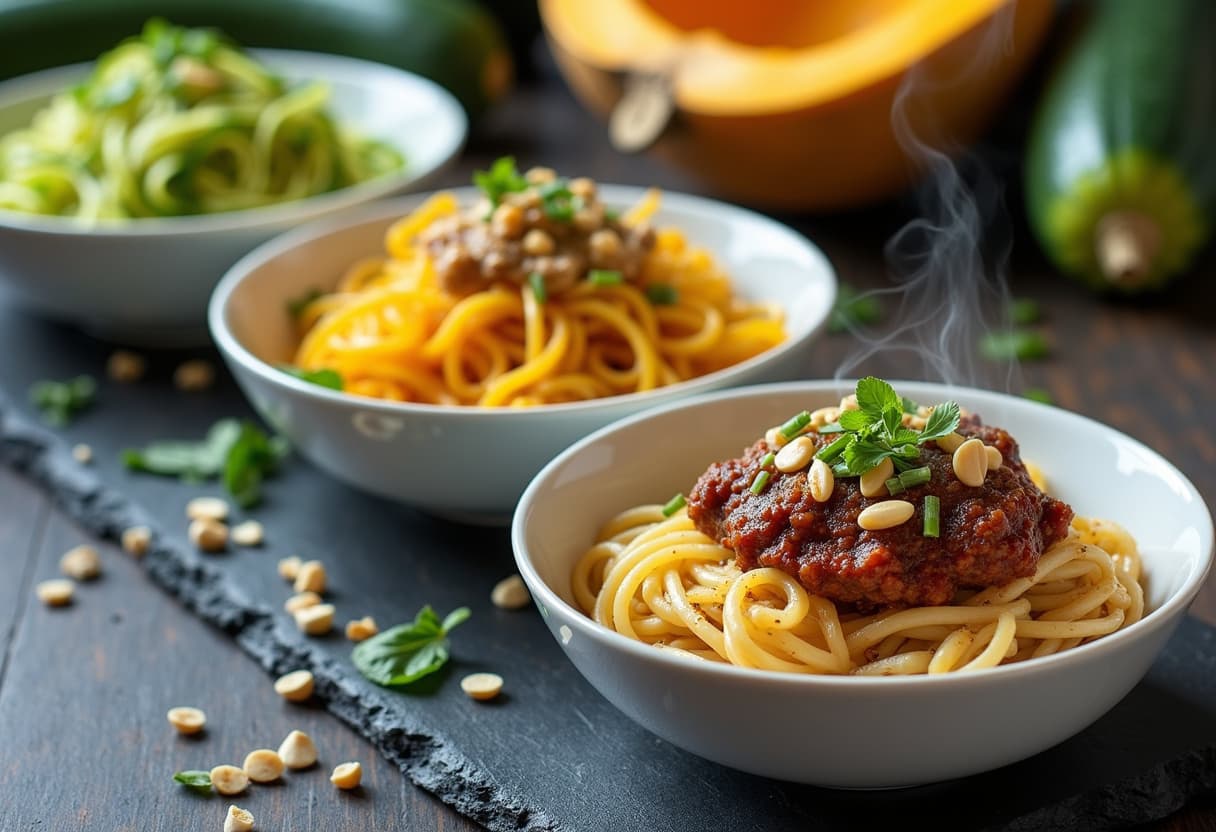
If you're eating low-carb or keto, pasta is one of the hardest foods to give up — and one of the easiest to replace once you know the swaps. A single cooked cup of spaghetti carries about 37-43g net carbs, enough to blow through an entire day's keto budget in one bowl. The good news: you can get the slurp, the twirl, and the sauce-delivery without the carb load.
The best low-carb pasta alternatives, ranked by net carbs: shirataki (konjac) noodles at ~0-1g per serving, hearts of palm noodles at ~2-4g, zucchini noodles ("zoodles") at ~3g per cup, and spaghetti squash at ~7g per cup — versus ~37-43g for regular wheat pasta. Shirataki wins on pure carbs but needs careful prep; zucchini and spaghetti squash win on flavor and nutrition. Legume pastas (chickpea, lentil) are healthier than wheat but still too carb-heavy for strict keto at 18-32g per serving.
Comparison table: low-carb pasta swaps at a glance
| Alternative | Net carbs (per serving) | Texture / best use | Notes |
|---|---|---|---|
| Regular wheat spaghetti (baseline) | ~37-43g per cooked cup | Classic soft, chewy bite; any sauce | The food you're replacing — not keto-friendly |
| Shirataki / konjac noodles | ~0-1g per ~4 oz serving | Bouncy, neutral, slightly gelatinous; bold sauces | ~97% water + glucomannan fiber; must rinse & dry-fry |
| Hearts of palm noodles | ~2-4g per ~3 oz serving | Tender, slightly tangy, holds shape; brothy & creamy dishes | Comes pre-cooked in a pouch; rinse to cut acidity |
| Zucchini noodles (zoodles) | ~3g per cup | Soft-crisp, fresh, watery; light/quick dishes | Salt & drain or quick-sauté to avoid sogginess |
| Spaghetti squash | ~7g per cup | Mild, slightly sweet, distinct strands | Roast, then fork into strands; sturdiest veg option |
| Cabbage "noodles" | ~3-5g per cup | Soft when braised, silky; stir-fries & casseroles | Cheap and sturdy; great in pad-thai-style dishes |
| Kelp noodles | ~1g per ~4 oz serving | Crunchy raw, softens when soaked; cold salads | Rinse and soak in warm water + acid to soften |
| Edamame / black-soybean pasta | ~8-13g per 2 oz dry | Closest to real pasta chew; high protein | The most "pasta-like" but watch the portion |
| Chickpea / lentil pasta | ~18-32g per 2 oz dry | True al dente bite; protein- & fiber-rich | NOT keto — for moderate low-carb days only |
Shirataki (konjac) noodles — the lowest-carb option
Shirataki noodles are made from glucomannan, a soluble fiber from the konjac root, mixed with water and a little calcium hydroxide. The result is essentially a fiber-and-water gel, which is why they land near 0-1g net carbs and only a handful of calories per serving.
How it tastes: Neutral, with a springy, almost rubbery bounce. They have no flavor of their own, so they take on whatever sauce you give them.
Where it falls short: Texture is the honest trade-off. Out of the bag they're wet, slippery, and carry a faint fishy smell from the packing liquid. They will never replicate the soft chew of fresh wheat pasta.
How to use it: Drain and rinse under cold water for a full minute. Then — this is the step most people skip — dry-pan-fry the noodles over medium-high heat for 5-8 minutes with no oil until they squeak and the surface moisture evaporates. This firms them up dramatically. Only then add your sauce. They shine in peanut/sesame noodles, Thai-style curries, garlic-butter "scampi," and ramen-style broths where a bold, salty, or fatty sauce does the heavy lifting.
Hearts of palm noodles — the under-the-radar winner
Cut into linguine-like strands, hearts of palm noodles come pre-cooked in a pouch or can at roughly 2-4g net carbs per serving. They've quietly become a favorite because they handle better than shirataki and taste better than most people expect.
How it tastes: Tender with a gentle artichoke-like tang. The acidity mellows once you rinse and heat them.
Where it falls short: That tang can fight delicate sauces, and the strands are shorter than spaghetti, so you don't get the long twirl.
How to use it: Drain, rinse well to remove the brine, then simmer 3-5 minutes in your sauce so they absorb flavor and soften. They're excellent in creamy alfredo-style sauces, tomato-basil, and brothy soups.
Zucchini noodles (zoodles) — the fresh, nutritious pick
Spiralized zucchini is the most popular swap for good reason: it's cheap, widely available, genuinely nutritious (potassium, vitamin C, fiber), and clocks in around 3g net carbs per cup.
How it tastes: Light, fresh, faintly green, with a tender-crisp bite when cooked right.
Where it falls short: Water. Zucchini is ~95% water, and if you overcook it you get a puddle of sauce sitting on limp, soggy strands.
How to use it: Spiralize, then salt the noodles and let them drain in a colander for 10-15 minutes; squeeze out excess moisture in a clean towel. Sauté in a hot pan for just 1-2 minutes — they should still have snap. Or skip the heat entirely and serve them raw, warmed only by a hot sauce poured over the top. Pair with pesto, marinara, or bolognese.
Spaghetti squash — the sturdiest, most satisfying
Roast a spaghetti squash and the flesh pulls apart into naturally noodle-shaped strands at about 7g net carbs per cup — higher than the others here, but still a fraction of wheat pasta, and the most filling option on the list.
How it tastes: Mildly sweet and nutty, with a satisfying, slightly firm strand that holds up to hearty sauces.
Where it falls short: The flavor is more pronounced than zucchini, so it doesn't disappear under sauce — it tastes like squash. It's also the most labor-intensive (roasting takes 35-45 minutes).
How to use it: Halve lengthwise, scoop the seeds, brush with oil, and roast cut-side down at 400°F until tender. Drag a fork across the flesh to release the strands, then drain briefly. It's outstanding baked into casseroles, topped with meat sauce, or tossed with brown butter and parmesan.
Cabbage and kelp noodles — cheap, sturdy, and overlooked
Thinly sliced cabbage braises down into silky "noodles" at 3-5g net carbs per cup and is unbeatable for cost and durability — ideal in stir-fries, keto pad thai, and casseroles. Kelp noodles (~1g net carbs) bring crunch to cold salads; soak them in warm water with a splash of lemon or vinegar to soften their wiry texture.
A word on legume pastas — honest expectations
Chickpea, lentil, edamame, and black-bean pastas dominate "healthy pasta" marketing. They are a real upgrade over white pasta — more protein, more fiber, lower glycemic impact — but they are not keto. Most run 18-32g net carbs per 2 oz dry serving, and chickpea/lentil sit at the high end of that range. Edamame and black-soybean pasta are the lowest (~8-13g) and the closest to real pasta texture, making them a reasonable choice on a moderate low-carb day or for someone targeting 50-100g carbs daily — but they'll still crowd a strict 20-30g keto budget fast. Always check the label and weigh your dry portion; the per-serving numbers assume a modest 2 oz, and most people pour double.
How to cook low-carb noodles so they don't disappoint
The single biggest reason people give up on pasta swaps is excess water and under-seasoning. Three rules cover almost every alternative:
- Dry it out. Rinse and dry-fry shirataki and kelp; salt and drain zucchini; pat hearts of palm and spaghetti squash. Watery noodles dilute your sauce and ruin texture.
- Don't overcook. Vegetable noodles need 1-3 minutes, not 10. Treat them like a quick sauté, not a boil.
- Sauce harder. These noodles bring little flavor or starch of their own, so they won't "grab" sauce the way wheat does. Use bolder, fattier, more generously seasoned sauces, and finish with cheese, herbs, or a squeeze of acid.
Get those right and a bowl of zoodles with bolognese or shirataki with peanut sauce is genuinely satisfying — for a fraction of the carbs.
Want to see exactly how your swap stacks up? Log your pasta alternative in CarbMeNot to track net carbs, fiber, and protein in real time — so you know whether tonight's bowl cost you 3g or 30g, and stay comfortably inside your keto budget.
Frequently asked questions
- What is the lowest-carb pasta substitute?
- Shirataki (konjac) noodles are the lowest, at roughly 0-1g net carbs per serving, because they're about 97% water and 3% glucomannan fiber. Hearts of palm noodles are next at around 2-4g net carbs per serving. Both are dramatically lower than regular wheat pasta, which has about 37-43g net carbs per cooked cup.
- How many carbs are in regular pasta vs. low-carb alternatives?
- One cooked cup of regular spaghetti has about 37-43g net carbs. Zucchini noodles have ~3g per cup, spaghetti squash ~7g per cup, hearts of palm noodles ~2-4g, and shirataki ~0-1g. Even modest portions of real pasta can use most of a 20-30g daily keto carb budget, while a full bowl of zoodles barely registers.
- Do shirataki noodles taste like pasta?
- Not exactly. Shirataki has a neutral, slightly gelatinous, bouncy texture rather than the soft chew of wheat pasta. The key is preparation: rinse them very well, then dry-pan-fry for 5-8 minutes to drive off water. They work best as a carrier for bold sauces (peanut, curry, garlic-butter) rather than as a stand-in where pasta is the star.
- Are chickpea or lentil pasta keto-friendly?
- No. Legume-based pastas (chickpea, lentil, edamame, black bean) are lower-carb than wheat and higher in protein and fiber, but they still run roughly 18-32g net carbs per 2 oz dry serving. They suit moderate low-carb or higher-carb days, not strict keto. For keto, choose shirataki, hearts of palm, zucchini, or spaghetti squash instead.
- Can I eat low-carb pasta alternatives every day?
- Yes. Vegetable-based swaps like zucchini, spaghetti squash, and cabbage add fiber, potassium, and micronutrients, so daily use is healthy. Shirataki is fine daily too, though its glucomannan fiber can cause bloating or digestive changes in some people at first, so increase your intake gradually and drink plenty of water.
Sources
Keep reading
Free tools: Is It Keto? checker · macro calculator · protein calculator · 7-day meal plan PDF