Low-Carb Milk Alternatives: Best Keto Milks Ranked
Unsweetened almond milk (1g net carb/cup) and macadamia milk (1g) beat dairy milk's 12g. Here's every keto milk ranked by net carbs, taste, and use.

Editorial Team · June 20, 2026 · 7 min read
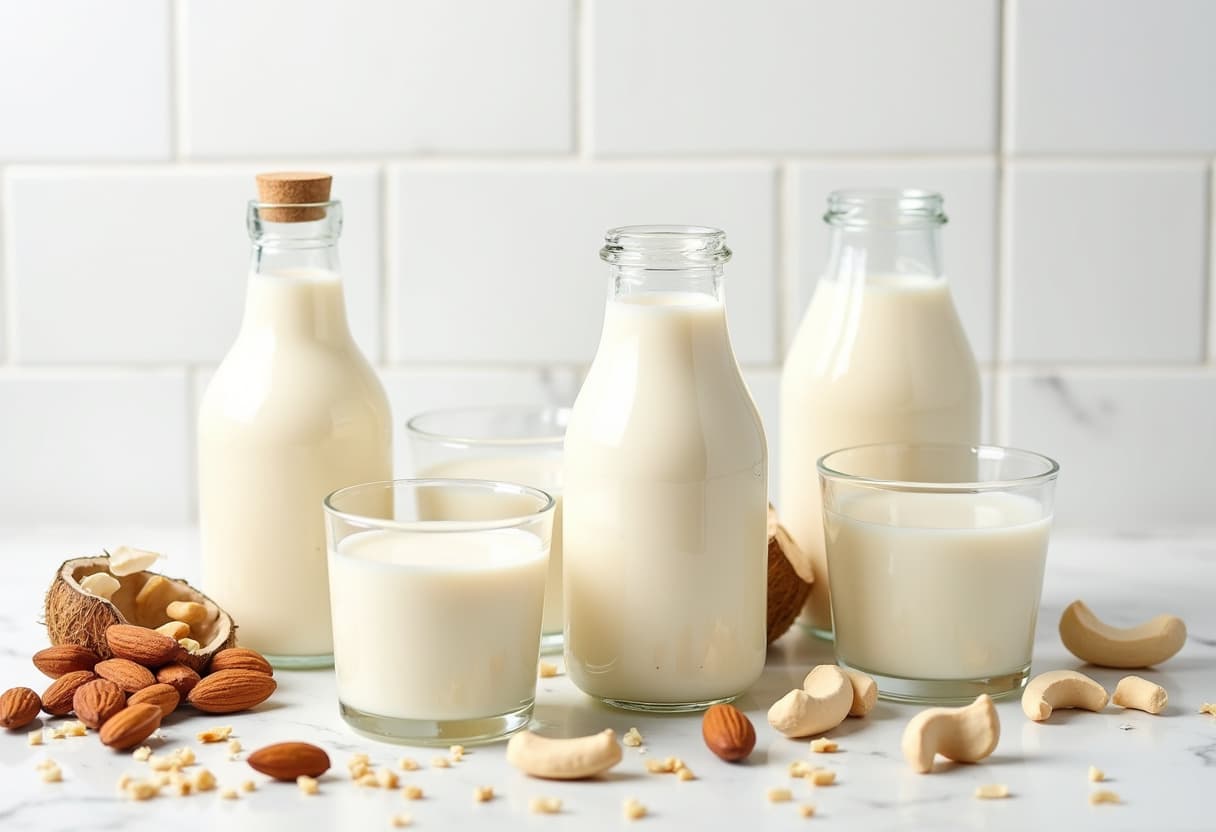
If you went keto and your morning coffee or cereal suddenly felt off-limits, dairy milk is the reason. A single cup of whole milk carries about 12 grams of net carbs — all from lactose, the natural sugar in milk — which can swallow half of a strict 20-25g daily carb budget before you've eaten breakfast. The good news: several milk alternatives deliver the same creamy job for a fraction of the carbs.
The best low-carb milk swaps are unsweetened almond milk (about 1g net carb per cup), macadamia milk (about 1g), and unsweetened coconut milk beverage (about 1g) — all roughly 90% lower in carbs than dairy milk's 12g. Unsweetened soy milk (1-3g) is a solid higher-protein option. The single most important rule: buy unsweetened. Sweetened plant milks pack 10-16g of added sugar per cup and are no better than dairy. And skip oat milk entirely — at 12-16g net carbs, it's the one plant milk that's worse than the cow.
Low-carb milk alternatives ranked
All figures are per 1-cup (240 ml) serving of the unsweetened product unless noted. Brands vary, so always check your specific carton.
| Alternative | Net carbs (per cup) | Texture / best use | Notes |
|---|---|---|---|
| Whole dairy milk (baseline) | ~12 g | Creamy, neutral; the reference standard | All carbs are lactose; not keto-friendly in glass quantities |
| Unsweetened almond milk | ~1 g | Thin, neutral; cereal, smoothies, drinking | Lowest-calorie option (~30-40 kcal); very widely available |
| Macadamia milk | ~1 g | Rich, buttery; coffee, lattes | Premium price; smooth mouthfeel, low oxalate |
| Unsweetened coconut milk (beverage) | ~1 g | Creamy, faint coconut; coffee, curries | Carton type, not canned; some have a coconut taste |
| Unsweetened cashew milk | ~1-2 g | Creamy, mild; sauces, lattes | Naturally thick; blends smoothly without separating |
| Unsweetened flax milk | ~1 g | Thin, neutral; smoothies | Adds omega-3 ALA; often protein-fortified versions exist |
| Unsweetened pea milk | ~1-2 g | Creamy, slightly beany; smoothies, drinking | Highest protein after soy (~8g); allergen-friendly |
| Unsweetened soy milk | ~1-3 g | Creamy, neutral; all-purpose | Highest protein (6-8g); the most complete protein here |
| Hemp milk (unsweetened) | ~1-2 g | Thin, earthy/nutty; smoothies | Omega-3s; distinct flavor not everyone likes |
| Heavy cream diluted in water | ~0-1 g | Very rich; coffee, splashed in | Effectively zero carb per splash; high calorie |
| Oat milk (unsweetened) | ~12-16 g | Creamy, foamy; the best latte texture | Avoid on keto — as high as dairy or higher |
Unsweetened almond milk: the default keto pick
Almond milk is the workhorse. At roughly 1g net carb and 30-40 calories per cup, unsweetened almond milk is both the lowest-carb and lowest-calorie option, which is why it dominates keto kitchens. It's also the easiest to find — nearly every grocery store stocks an unsweetened carton.
How it tastes: mild, faintly nutty, and noticeably thinner than dairy. That thinness is the honest trade-off. Poured over cereal or blended into a smoothie, you won't miss anything. In coffee, it can feel watery and won't foam into proper microfoam, and some people notice it curdles slightly in very hot, acidic coffee. Use the "barista" version if you want better steaming.
Where it falls short: almost no protein (~1g) and a thin body. If you're using milk partly as a protein source, almond milk won't deliver. Also confirm the label says unsweetened — the standard sweetened version jumps to ~13-16g net carbs, undoing the entire point.
Macadamia and cashew milk: the creamy upgrade
If almond milk's thinness bothers you, the tree-nut alternatives are creamier for the same ~1-2g net carbs. Macadamia milk has a rich, almost buttery mouthfeel that holds up beautifully in coffee and lattes — it's arguably the best-tasting low-carb milk for a flat white. Cashew milk is naturally thick and emulsifies well, so it shines in cream sauces, soups, and blended drinks without separating.
The catch is price and availability: both cost more than almond milk and aren't on every shelf. Macadamia milk in particular is a premium product. But for coffee drinkers who found almond milk disappointing, the upgrade is worth it.
Coconut milk: carton vs. can
Two very different products share this name.
Coconut milk beverage (the carton in the milk aisle) is mostly water with a little coconut cream, landing around 1g net carb per cup. It's creamy with a faint coconut note and works well in coffee, smoothies, and curries.
Canned coconut milk is the thick, high-fat stuff for cooking — still very low carb (about 1-2g net carbs per 1/4 cup) but far richer and higher in calories (around 100-120 kcal per quarter cup). It's a fantastic keto ingredient for curries, soups, and dairy-free "creamer," but you wouldn't pour a full glass.
Honest trade-off: the coconut flavor. In a Thai curry it's perfect; in a vanilla latte some people find it intrusive. Taste before you commit a whole recipe to it.
Soy and pea milk: when you want protein
Most keto milks sacrifice protein. The two exceptions are unsweetened soy milk (6-8g protein, ~1-3g net carbs) and unsweetened pea milk (~8g protein, ~1-2g net carbs). Soy is the only plant milk with a complete amino acid profile comparable to dairy, which makes it the smartest swap if milk is part of your protein strategy or you're combining keto with strength training.
Both are creamy and neutral-to-slightly-beany. The usual sweetened-vs-unsweetened warning applies with force here: sweetened soy milk runs 10-12g net carbs, four to ten times the unsweetened version.
The trap: oat milk and sweetened everything
Two mistakes sabotage more keto coffee routines than anything else.
Oat milk makes the silkiest foam of any plant milk, which is exactly why cafés love it — and why it's a problem. During production, enzymes break the oat starch into maltose and simple sugars, pushing even unsweetened oat milk to 12-16g net carbs per cup, equal to or higher than dairy. There's no keto-friendly version. Treat it as off-limits.
Sweetened anything. "Original" or "sweetened" almond, soy, coconut, and cashew milks add cane sugar, bringing them to 10-16g net carbs. The word to hunt for on every label is unsweetened. If it doesn't say it, assume there's added sugar.
How to use low-carb milk in real life
- Coffee and lattes: macadamia or cashew milk for the creamiest result; a splash of heavy cream (about 0.5g per tablespoon) if you want richness and near-zero carbs. Get the "barista" version of any plant milk if you steam it — they're formulated to foam and resist curdling.
- Cereal and overnight "oats" (chia): unsweetened almond or flax milk. Pour chia seeds in almond milk overnight for a low-carb porridge.
- Smoothies: any of them; almond and pea milk blend cleanest.
- Cooking and sauces: unsweetened cashew or canned coconut milk for body; soy milk for béchamel-style sauces because it thickens reliably.
- Baking: almond and soy milk substitute 1:1 for dairy milk by volume. Coconut adds flavor, so use it where coconut fits.
- Drinking straight: soy or pea milk feel most "milk-like"; almond is fine but thin.
One practical tip: heat plant milks gently and avoid boiling, especially in acidic liquids like coffee, to reduce curdling. Adding the coffee to the milk (rather than milk to hot coffee) also helps it stay smooth.
The bottom line
Swapping dairy milk for an unsweetened almond, macadamia, coconut, or soy milk cuts roughly 11 grams of net carbs per cup — enough to reclaim coffee, cereal, and smoothies on a strict keto budget. Match the milk to the job: thin and neutral (almond) for everyday, creamy (macadamia/cashew) for coffee, high-protein (soy/pea) when you're training. Avoid oat milk and anything sweetened, full stop.
Carb counts swing by brand, so the only way to know your real number is to read the panel — or scan the carton into CarbMeNot, which pulls the exact net carbs for your specific milk and logs it against your daily limit so a "1g" latte doesn't quietly turn into a 14g one. Track your milk swaps in the app and watch your carb budget breathe.
Frequently asked questions
- What is the lowest-carb milk for keto?
- Unsweetened almond milk, macadamia milk, and unsweetened coconut milk beverage all land around 1g net carb per cup, versus 12g for dairy milk. Heavy cream cut with water (a splash diluted in water) is effectively 0g but very rich. Always pick the unsweetened carton — sweetened versions add 10-16g of sugar per cup.
- Can I drink regular milk on keto?
- Not easily. One cup of whole milk has about 12g net carbs from lactose (milk sugar), which can eat up half or more of a 20-25g daily keto carb budget in a single glass. A splash in coffee (about 1 tablespoon, roughly 0.7g) is fine; a full glass usually isn't.
- Is oat milk keto-friendly?
- No. Even unsweetened oat milk runs 12-16g net carbs per cup because the oats are enzymatically broken into maltose and sugars during processing. It is one of the highest-carb plant milks and the worst choice for keto, despite its creamy, latte-friendly texture.
- Is almond milk or coconut milk better for keto?
- Both are excellent at roughly 1g net carb per cup when unsweetened. Almond milk is thinner and more neutral, ideal for cereal, smoothies, and drinking. Coconut milk beverage is creamier and works better in coffee and curries. Canned coconut milk is richer and higher in calories but still very low carb.
- How many carbs are in unsweetened soy milk?
- Unsweetened soy milk has about 1-3g net carbs per cup, making it borderline keto-acceptable and the highest-protein plant milk (6-8g per cup). The sweetened version jumps to 10-12g net carbs, so the unsweetened carton is essential.
Sources
Keep reading
Free tools: Is It Keto? checker · macro calculator · protein calculator · 7-day meal plan PDF