Low-Carb Potato Alternatives for Keto
The best keto potato swap is cauliflower — about 3g net carbs per cup vs ~30g for a baked potato. Compare mash, fries, and roast alternatives here.

Editorial Team · June 20, 2026 · 6 min read
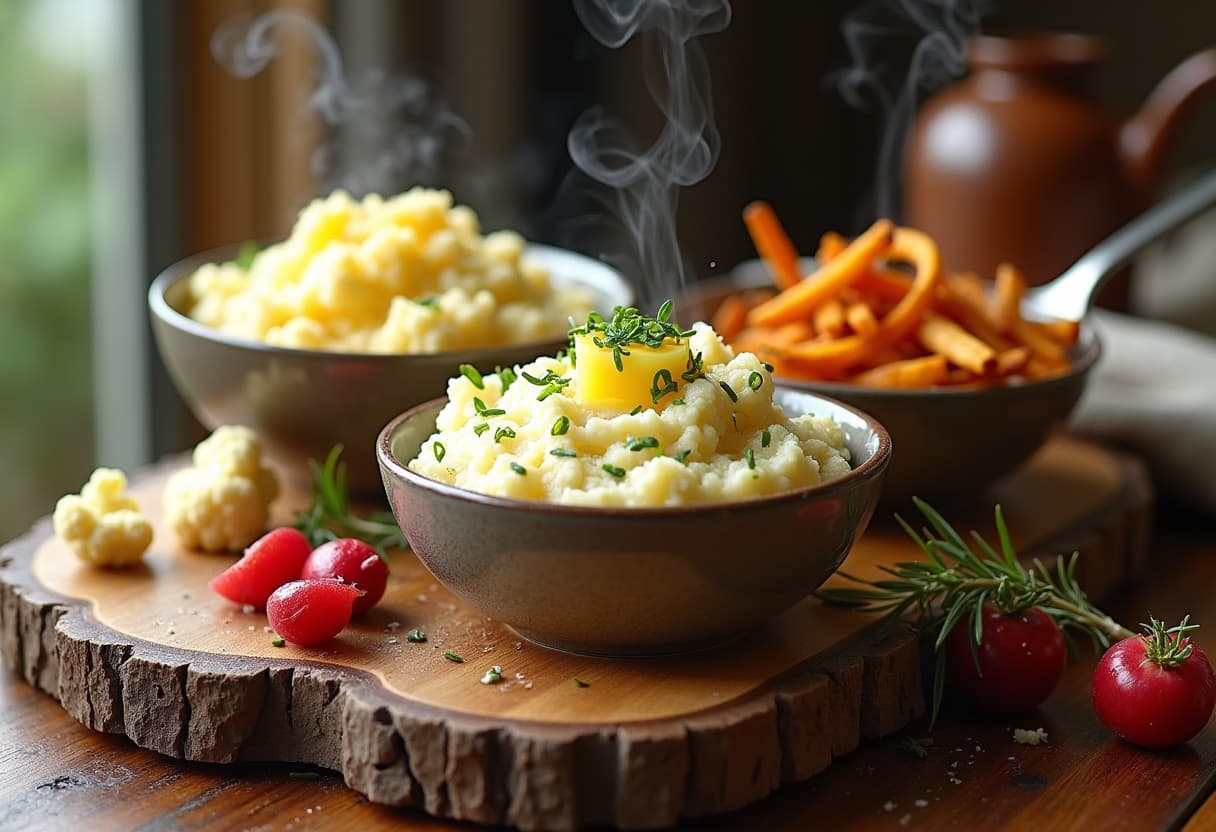
Potatoes are the hardest food to give up on keto — not because of cravings, but because nothing else does what they do: fluffy mash, crisp fries, golden roasties. The good news is that several humble vegetables hit those same textures for a fraction of the carbs, and once you know which one matches which dish, you stop missing the spud.
The single best swap is cauliflower, at roughly 3g net carbs per cup versus about 33g net carbs in a medium baked potato — close to a 90% cut. It mashes, "rices," and roasts. But it isn't the only answer: rutabaga and turnip win for fries and roasties, celeriac makes the silkiest mash, and radishes shrink into convincing roast potatoes. Match the vegetable to the cooking method and the dish, and you can keep potatoes off your plate without feeling deprived. Below is the full comparison and how to cook each one.
Net carb comparison
All figures are approximate net carbs (total carbs minus fiber), based on USDA data for the cooked portion noted. Numbers vary with variety and prep.
| Alternative | Net carbs (per serving) | Texture / best use | Notes |
|---|---|---|---|
| Potato (baked, medium ~173g) — baseline | ~33g | Fluffy, starchy; mash, fries, roast | The food we're replacing |
| Cauliflower (1 cup, cooked) | ~3g | Soft, neutral; mash & "rice" | The all-rounder; watery if under-drained |
| Celeriac / celery root (1 cup, cooked) | ~9g | Dense, creamy; mash & roast | Silkiest mash; mild celery note |
| Rutabaga / swede (1 cup, cooked) | ~9g | Firm, slightly sweet; fries & roast | Best fry texture; holds its shape |
| Turnip (1 cup, cooked) | ~6g | Tender, peppery-mild; fries & mash | Crisps well; gentler than radish |
| Radish (1 cup, raw→roasted) | ~2g | Crisp→soft; roast potatoes | Loses pepperiness when cooked |
| Daikon radish (1 cup) | ~2g | Crunchy→tender; oven fries, hash | Very low carb; mild |
| Zucchini (1 cup) | ~3g | Soft; oven fries, "tots" | Needs breading/drying to crisp |
| Jicama (1 cup) | ~5g | Crunchy, stays firm; fries | Never goes fully soft inside |
| Pumpkin (1 cup, cooked) | ~6g | Soft, sweet; mash | Seasonal; sweeter than potato |
Cauliflower: the all-purpose stand-in
How to use it. Cauliflower is the swap to learn first because it covers the most dishes. Steam or boil florets until fork-tender, then either mash with butter, cream, and salt, or pulse raw florets into "rice." For roasting, toss in olive oil and roast hot (220°C / 425°F) until the edges char.
How it tastes. Neutral and slightly sweet, with a soft, almost custardy texture once cooked through. Blended with cream cheese and a little garlic, cauliflower mash reads as genuinely creamy and comfort-food-like.
Where it falls short. Watery. Cauliflower holds a surprising amount of water, and under-drained mash turns into soup. Steam rather than boil where you can, then press the cooked florets in a clean towel before mashing. It also won't crisp into a true fry — for that, reach for a starchier root below.
Rutabaga and turnip: the fry and roast champions
How to use it. Rutabaga (swede) and turnip are the closest fry replacements because they're firm enough to cut into batons that hold their shape in oil or a hot oven. Cut into 1cm sticks, parboil 4-5 minutes, dry thoroughly, toss in oil, and roast at 220°C / 425°F (or air-fry) until golden, flipping once.
How it tastes. Rutabaga is mildly sweet and earthy with a satisfying give-then-bite. Turnip is more delicate and a touch peppery raw, mellowing as it cooks. Both brown beautifully and carry salt, garlic, and parmesan well.
Where it falls short. Neither goes truly fluffy inside the way a McDonald's-style fry does — expect a denser, more "root vegetable" center. They also need real drying before they hit fat, or they steam instead of crisp. At ~6-9g net carbs per cup they're a step up from cauliflower's carbs, so portion accordingly.
Celeriac: the secret to silky mash
How to use it. Celeriac (celery root) is the knobbly, intimidating-looking root that makes the best low-carb mash of all. Peel generously, cube, and boil or steam until very soft, then blend or mash with butter and cream. It also roasts into tender, golden chunks.
How it tastes. Denser and more potato-like than cauliflower, with a faint, pleasant celery-and-nut aroma. Because it's lower in water than cauliflower, the mash is naturally thicker and less prone to going gluey or watery.
Where it falls short. At ~9g net carbs per cup it's one of the higher-carb options here, and the celery undertone won't suit every recipe (it's gorgeous under braised meat, less so as a blank canvas). The thick peel also means noticeable waste from each root.
Radish and daikon: roast potatoes, reinvented
How to use it. Halve or quarter red radishes, toss in oil, salt, and rosemary, and roast at 220°C / 425°F for 30-40 minutes until soft inside and burnished outside. Daikon, cut into batons, makes a low-carb oven fry or a hash-brown base.
How it tastes. This is the swap that surprises people. Raw radishes are peppery and crunchy, but sustained roasting cooks out almost all the bite, leaving a mild, soft, faintly sweet interior remarkably close to a roasted new potato.
Where it falls short. Radishes shrink a lot, so buy more than you think. If you stop cooking too early, residual sharpness remains — they genuinely need the full roast time. And they'll never be starchy, so don't expect them to thicken a stew or hold a thick mash.
A note on sweet potato, jicama, and pumpkin
Sweet potato gets asked about constantly: at ~20-24g net carbs for a medium one, it can swallow an entire day's strict-keto allowance in a single serving, so it's a no for ketosis (though a reasonable low-glycemic carb for moderate low-carb eaters). Jicama stays crunchy no matter how long you cook it — great for slaw or a firm "fry," wrong for mash. Pumpkin mashes sweet and soft at ~6g net carbs per cup, a nice seasonal change-up if you lean into the sweetness rather than fighting it.
How to cook them so they actually work
The single biggest difference between a great keto potato swap and a disappointing one is moisture management. Potatoes are starchy and dry; most of these vegetables are wetter, so:
- Steam, don't boil, when you'll be mashing — less waterlogging.
- Dry aggressively before roasting or frying. Press mash veg in a towel; pat fries bone-dry. Wet vegetables steam and go limp instead of crisping.
- Use real fat and real heat. Olive oil, butter, duck fat, and a genuinely hot oven (220°C / 425°F) are what create browning and that crave-able edge.
- Season harder than you think. These vegetables are milder than potato, so salt, garlic, parmesan, and herbs do the heavy lifting.
- Match veg to dish: cauliflower or celeriac for mash, rutabaga or turnip for fries, radish for roasties.
Track it, don't guess it
Net carbs in roots swing with variety, size, and how much fat you add roasting them — celeriac mash with cream is a very different number from plain steamed cauliflower. Log your swaps in CarbMeNot to see the real per-serving net carbs and confirm a "potato" dinner still fits your day. A quick scan or search turns a guess into a number, and that's what keeps you in ketosis while still eating fries.
Frequently asked questions
- What is the best low-carb substitute for mashed potatoes?
- Cauliflower mash is the closest swap, with about 3g net carbs per cup versus roughly 33g for a cup of mashed potatoes. For a richer, smoother result with even fewer carbs, mash steamed celeriac (celery root) or blend in cream cheese and butter.
- How many carbs are in a potato vs cauliflower?
- A medium baked potato (about 173g) has roughly 33g net carbs. One cup of cauliflower has about 3g net carbs — roughly a 90% reduction. That's why cauliflower is the default keto potato stand-in.
- What can I use instead of french fries on keto?
- Rutabaga (swede) fries and turnip fries are the best deep-fried texture match at about 6-8g net carbs per cup. Zucchini fries and radish fries are even lower (under 4g) but softer. Daikon and jicama crisp up well for oven 'fries.'
- Are sweet potatoes keto?
- No. A medium sweet potato has about 20-24g net carbs, which can use most or all of a strict 20-25g daily keto allowance in one serving. They're a good low-glycemic carb for moderate low-carb eating, but not for ketosis.
- Do roasted radishes really taste like potatoes?
- Roasting radishes for 30-40 minutes removes nearly all their peppery bite and gives them a soft, mild interior similar to a roasted new potato. They're not identical, but tossed in fat, salt, and rosemary they're a convincing roast-potato substitute at about 2g net carbs per cup.
Sources
Keep reading
Free tools: Is It Keto? checker · macro calculator · protein calculator · 7-day meal plan PDF