Carnivore vs Keto: How They Compare (2026)
Carnivore vs keto compared: carbs, plant foods, fiber, macros, and sustainability — a clear table and guide to help you choose the right approach.

Editorial Team · January 16, 2026 · 5 min read
Last updated June 1, 2026
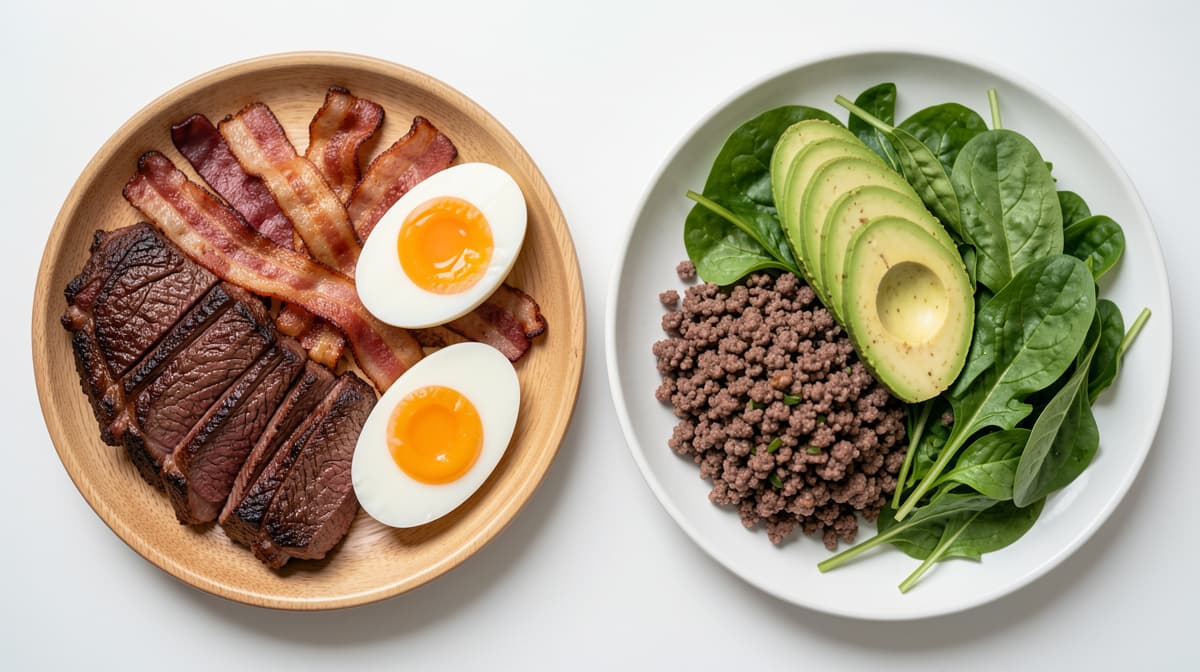
The carnivore diet is animal-foods-only — meat, fish, eggs, and some dairy — with essentially zero carbs and no plants. Keto is low-carb (about 20–50g per day) and high-fat but still includes vegetables, nuts, and some fruit. Carnivore is the stricter, near-zero-carb extreme of low-carb eating, while keto is a more flexible, plant-inclusive approach.
Carnivore vs keto: at a glance
| Feature | Carnivore | Keto |
|---|---|---|
| Carbs | Essentially zero | ~20–50g net carbs/day |
| Plant foods | None | Vegetables, nuts, some fruit |
| Fiber | Effectively none | Moderate (from low-carb veg) |
| Variety | Very limited | Moderate to high |
| Macros | High protein, high fat | High fat, moderate protein, very low carb |
| Sustainability | Hard for most long term | More maintainable long term |
| Best for | Strict elimination, simplicity | Flexible low-carb living, weight loss |
This table is intentionally balanced: carnivore is the more restrictive option and provides little to no fiber and fewer plant-derived micronutrients (like vitamin C and certain antioxidants), which is something to plan around if you follow it.
What is the carnivore diet?
The carnivore diet is an all-animal way of eating. You eat meat, poultry, fish, eggs, and sometimes dairy — and you remove everything that comes from a plant. That means no vegetables, fruit, grains, legumes, nuts, seeds, or added sugars. Because almost nothing on the plate contains carbohydrates, total carb intake lands near zero, which keeps the body in ketosis by default.
People are drawn to carnivore for its simplicity. There are no macros to juggle and few decisions to make: if it came from an animal, it's allowed. Some use it as a short-term elimination diet to identify food sensitivities. The tradeoff is that it's highly restrictive, socially difficult, and removes fiber and several plant-based nutrients entirely. It's wise to talk to a clinician before going fully carnivore, especially if you have kidney or heart concerns.
What is keto?
Keto (the ketogenic diet) is a low-carb, high-fat approach that caps carbohydrates at roughly 20–50g of net carbs per day (National Library of Medicine). At that level, the body shifts from burning glucose to burning fat for fuel, producing ketones — a state called ketosis.
Unlike carnivore, keto keeps plants on the menu. You can eat leafy greens, broccoli, cauliflower, avocados, nuts, seeds, and small portions of low-sugar fruit like berries. Protein is moderate, fat is high, and carbs are kept low but not eliminated. That flexibility is keto's biggest advantage: more variety, more fiber, and an easier diet to live with over months and years.
Because carbs aren't zero, keto does require attention to your daily carb budget — which is exactly where a tracking tool earns its keep. Tools like CarbMeNot let you log meals and count net carbs so you stay under your threshold without guessing. If you're weighing keto against a looser plan first, see our guide on keto vs low carb.
Carnivore vs keto: key differences
The single biggest difference is plants. Keto includes them; carnivore doesn't. That one rule cascades into everything else:
- Carbs: Keto allows a small, deliberate carb budget. Carnivore lands at essentially zero by default.
- Fiber: Keto provides moderate fiber from low-carb vegetables and nuts. Carnivore provides effectively none.
- Micronutrients: Keto draws vitamins and antioxidants from plants; carnivore relies entirely on animal foods, which are nutrient-dense but lack some plant compounds.
- Variety and flexibility: Keto offers far more meal options and is easier to eat in restaurants or with family.
- Tracking: On keto, you watch carbs closely. On carnivore, carbs are a non-issue, so the useful numbers to monitor are protein and fat.
A simple way to frame it: carnivore is what keto looks like at its most extreme edge — same metabolic state, far fewer foods.
Pros and cons of each
Carnivore — pros: Very simple to follow, no carb counting, naturally low in processed food, and useful as a short-term elimination diet.
Carnivore — cons: Highly restrictive, no fiber, missing some plant-based micronutrients, hard to sustain socially and long term, and not well-suited to everyone (check with a clinician first).
Keto — pros: More variety and fiber, includes vegetables and some fruit, easier to maintain, well-studied, and flexible enough to personalize.
Keto — cons: Requires carb tracking, has a short adaptation period (the "keto flu"), and demands more planning than a strict animal-only plate.
Which should you choose?
Choose keto if you want a sustainable, plant-inclusive low-carb lifestyle with room for vegetables, fiber, and variety. It's the better long-term fit for most people and the easier diet to personalize around your goals.
Choose carnivore if you want maximum simplicity, are using it as a short-term elimination experiment, or have found that even keto-friendly plants don't agree with you. Just go in with a plan for fiber and micronutrients, and ideally with medical guidance.
Many people actually start with keto and only experiment with carnivore later — or do the reverse, using a strict carnivore reset before settling into a more flexible keto routine. Both keep you in ketosis; they differ mainly in how much freedom you want on the plate. Whichever you pick, learning how to track macros makes the day-to-day far easier, and you can browse our protein foods database to compare cuts and find high-protein staples for either approach.
Track your macros either way
Whether you go keto or carnivore, knowing your numbers keeps you on track. On keto, CarbMeNot helps you count net carbs and stay under your daily threshold. On carnivore — where carbs are already near zero — CarbMeNot helps you hit your protein and fat targets instead. Snap a photo of your meal, let the AI estimate the macros, and log it in seconds. It's the easiest way to stay consistent on whichever path you choose.
Key takeaways
- Carnivore is animal-foods-only with essentially zero carbs and no plants; keto is low-carb (~20–50g/day), high-fat, and still includes vegetables, nuts, and some fruit.
- Carnivore is the stricter, near-zero-carb extreme of low-carb eating — it keeps you in ketosis by removing nearly all carbohydrates.
- Keto offers more fiber, micronutrients, variety, and long-term sustainability for most people.
- Carnivore provides simplicity and works as a short-term elimination diet, but lacks fiber and some plant nutrients.
- On keto, track carbs; on carnivore, track protein and fat — CarbMeNot handles both.
Frequently asked questions
- What is the difference between carnivore and keto?
- Carnivore is an animal-foods-only diet — meat, fish, eggs, and some dairy — with essentially zero carbs and no plants. Keto is a low-carb, high-fat diet (about 20–50g carbs/day) that still includes vegetables, nuts, and some fruit. Carnivore is the stricter, near-zero-carb extreme of low-carb eating.
- Is carnivore just keto with no carbs?
- In effect, yes — carnivore keeps you in ketosis because it removes nearly all carbohydrates. But carnivore also eliminates all plant foods, so it's a much more restrictive version of keto rather than simply 'keto without carbs.'
- Which is better, carnivore or keto?
- Neither is universally better. Keto offers more variety, fiber, and long-term sustainability for most people, while carnivore is a simpler elimination-style approach some use short term. The best choice is the one you can follow safely and consistently.
- Can you eat vegetables on carnivore?
- No. A strict carnivore diet excludes all plant foods, including vegetables, fruit, grains, nuts, and seeds. If you want vegetables while keeping carbs very low, keto is the better fit.
Sources
Keep reading
Free tools: Is It Keto? checker · macro calculator · protein calculator · 7-day meal plan PDF