The Animal-Based Diet: Food List, Benefits & Keto Comparison
A complete animal-based diet food list, science-backed benefits, and how it compares to keto — including which version keeps you under 20g net carbs a day.

Editorial Team · February 20, 2026 · 5 min read
Last updated June 3, 2026
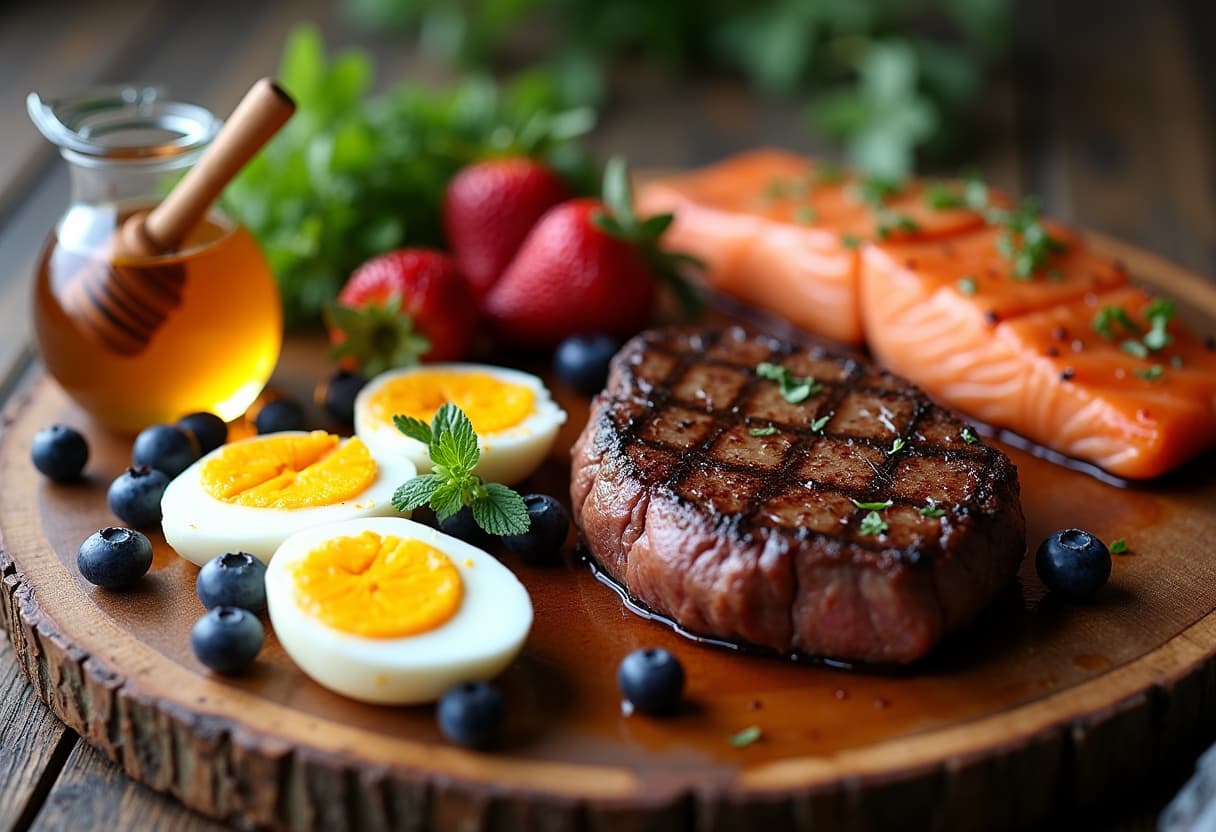
The animal-based diet has exploded in popularity as a middle ground between strict carnivore and standard keto. It puts animal foods at the center of the plate but, unlike carnivore, leaves room for fruit and honey — which makes it both more flexible and more controversial.
The animal-based diet is an eating pattern that builds every meal around animal foods — meat, organs, eggs, fish, dairy, and honey — while adding a small amount of low-toxicity plant foods, mainly fruit. Popularized by Dr. Paul Saladino, it avoids grains, legumes, seed oils, and most vegetables, but unlike strict carnivore it is not zero-carb: a typical day runs 80-150g of carbohydrate from fruit and honey, versus the under-20-to-50g cap that defines keto. The two diets overlap heavily on protein and fat but diverge sharply on carbs and on whether plant foods belong on the plate at all.
What you eat on an animal-based diet
The plate is built in tiers. Animal foods are the foundation, fruit and honey are the main carb source, and dairy is included to taste.
| Tier | Foods | Notes |
|---|---|---|
| Core (most of plate) | Beef, lamb, bison, pork, chicken, eggs | Fatty cuts preferred for energy |
| Organs | Liver, heart, kidney, bone marrow | Nutrient-dense; liver weekly is common |
| Seafood | Salmon, sardines, shrimp, oysters | Omega-3s, zinc, selenium |
| Carbs | Fruit (berries, mango, oranges), raw honey, maple syrup | The main difference from carnivore |
| Dairy | Butter, ghee, cheese, full-fat yogurt | Optional; some skip for A1 sensitivity |
A practical day might be eggs and fruit at breakfast, a ribeye at lunch, and salmon with berries and honey at dinner.
The animal-based diet food list: what to avoid
Just as defining as what you eat is what you cut. Most versions of the animal-based diet exclude:
- Grains and refined starch — bread, pasta, rice, oats, cereal
- Legumes — beans, lentils, peanuts, soy
- Industrial seed oils — canola, soybean, sunflower, corn, grapeseed
- Refined sugar and high-fructose corn syrup
- High-oxalate / high-lectin vegetables — spinach, chard, nightshades, raw cruciferous veg
The reasoning is "plant toxicity" — the idea that oxalates, lectins, and other plant defense compounds cause more harm than the fiber and micronutrients are worth. That claim is debated and not settled science, so treat it as a framework, not a proven rule.
Animal-based vs keto: the key differences
This is where most people get confused, because the two diets look similar on a plate of steak and eggs. The real difference is the rule each one is built on.
| Factor | Animal-based | Keto |
|---|---|---|
| Defined by | Food source (animal-first) | Carb limit (ketosis) |
| Daily net carbs | ~80-150g (typical) | Under 20-50g |
| Fruit & honey | Encouraged | Mostly avoided |
| Plant fats (avocado, olive oil, nuts) | Avoided | Encouraged |
| Vegetables | Mostly excluded | Low-carb veg encouraged |
| Ketosis | Not the goal | The goal |
In short: keto cares how many carbs you eat; animal-based cares where your food comes from. A keto dieter happily eats avocado and olive oil but skips a banana. An animal-based dieter does the reverse.
Can you do both at once?
Yes — and many people effectively do a "ketogenic animal-based" hybrid. If you keep the animal foods but strip the fruit and honey down to a handful of berries, you can stay under 20-30g net carbs and remain in ketosis. Here's how common animal-based carb sources stack up:
| Food | Serving | Net carbs |
|---|---|---|
| Raw honey | 1 tbsp | ~17g |
| Banana | 1 medium | ~24g |
| Mango | 1 cup | ~23g |
| Orange | 1 medium | ~12g |
| Blueberries | 1/2 cup | ~9g |
| Strawberries | 1/2 cup | ~4g |
Two tablespoons of honey plus a banana is already ~58g of carbs — enough to break ketosis on its own. Swap to half a cup of strawberries and you're at 4g. That single choice is the difference between an animal-based diet that's ketogenic and one that isn't.
Benefits and trade-offs
Reported benefits. Animal foods deliver complete protein and highly bioavailable B12, iron, zinc, and choline, and the diet is naturally free of ultra-processed foods and seed oils. Many people report steadier energy, fewer cravings, better satiety, and improved digestion after removing high-fiber and high-oxalate plants.
Trade-offs to watch. The diet is high in saturated fat and very low in fiber, and long-term controlled data is thin. Some people see LDL cholesterol rise sharply. Cutting vegetables removes vitamin C, potassium, and polyphenol sources, though fruit and organ meats cover part of that gap. If you have cardiovascular, kidney, or cholesterol concerns, get bloodwork before and after and work with a clinician.
Making it work for you
Whether you go full animal-based, ketogenic animal-based, or somewhere in between, the deciding variable is carbs from fruit and honey — and that's exactly the kind of thing that's easy to underestimate by eye. Logging your meals in CarbMeNot shows your running net-carb total in real time, so you can see instantly whether today's mango and honey kept you ketogenic or pushed you to 120g. Track a few days, find your line, and let the numbers — not the trend — decide what belongs on your plate.
Frequently asked questions
- What is the animal-based diet?
- The animal-based diet prioritizes animal foods — meat, organs, eggs, fish, dairy, and honey — as the foundation of your plate, then adds a small amount of low-toxicity plant foods like fruit and raw honey. Unlike strict carnivore, it isn't zero-carb; popularized by Paul Saladino, it typically allows fruit, honey, and dairy while avoiding grains, seed oils, legumes, and most vegetables.
- Is the animal-based diet the same as keto?
- No. Keto is defined by carb restriction (usually under 20-50g net carbs daily) to reach ketosis, and allows non-animal foods like avocado, nuts, and olive oil. The animal-based diet is defined by food source rather than a carb limit, and freely includes fruit and honey, which often pushes daily carbs well above ketogenic levels.
- Can you do an animal-based diet and stay in ketosis?
- Only if you minimize the fruit and honey. A meat-and-eggs-heavy animal-based plan with little fruit can stay under 20-30g net carbs and support ketosis. But a typical version with several servings of fruit plus honey can easily exceed 80-100g of carbs a day, which breaks ketosis for most people.
- What foods are not allowed on an animal-based diet?
- Most versions exclude grains, bread, pasta, legumes (beans, lentils, soy), industrial seed oils (canola, soybean, sunflower), refined sugar, and high-oxalate or high-lectin vegetables like spinach and nightshades. Animal foods, fruit, honey, and dairy form the core of what is allowed.
- Is the animal-based diet healthy long term?
- It can provide complete protein, B12, iron, zinc, and choline, and many people report improved energy and digestion. However, it's high in saturated fat and low in fiber, and long-term data is limited. Anyone with cardiovascular risk, kidney issues, or a history of high LDL should work with a clinician and monitor bloodwork.
Sources
Keep reading
Free tools: Is It Keto? checker · macro calculator · protein calculator · 7-day meal plan PDF