Keto vs Atkins: Key Differences (and Which to Choose)
Keto vs Atkins compared: carb limits, phases, protein, and ketosis goals — plus a clear table and how to choose the right low-carb plan for you.

Editorial Team · March 20, 2026 · 5 min read
Last updated May 31, 2026
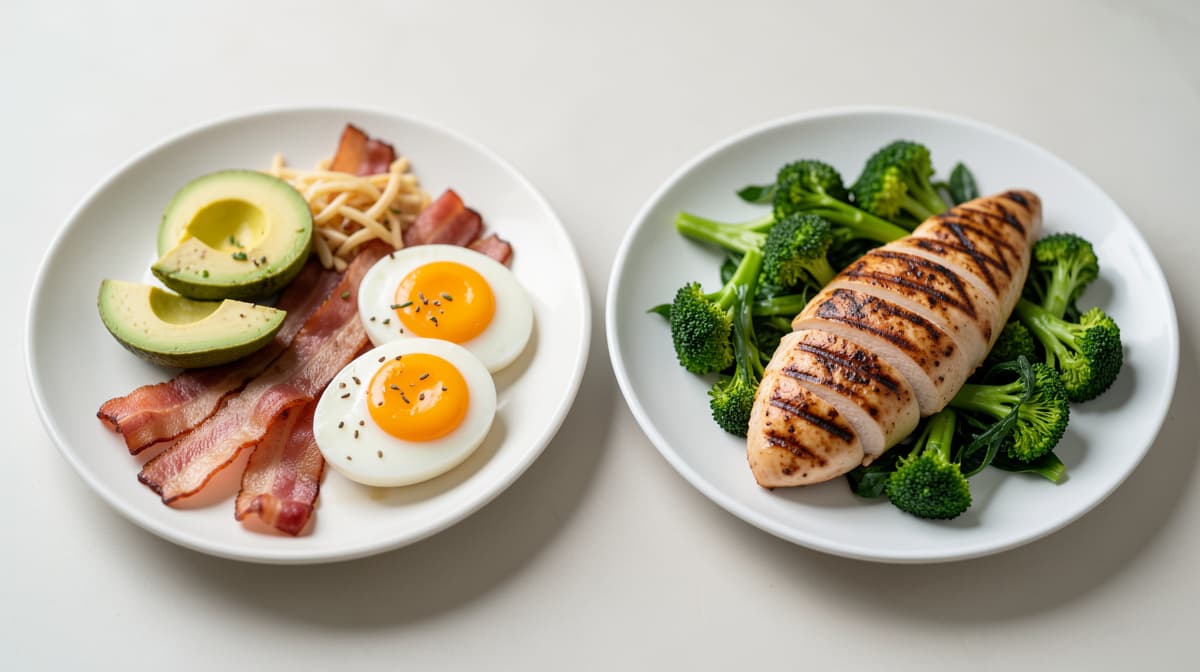
Keto and Atkins are both low-carb diets, but they work differently. Keto keeps carbs very low and fat high to stay in ketosis, with steady macros every day. Atkins is a phased plan that starts very low-carb (Phase 1 at about 20g net carbs), then gradually adds carbs back over four stages. Keto is a constant state; Atkins is a progression.
Keto vs Atkins: at a glance
| Feature | Keto | Atkins |
|---|---|---|
| Carb limit | ~20–50g net carbs/day, ongoing | Starts ~20g, increases by phase |
| Phases | None — one consistent target | Four phases (Induction → Maintenance) |
| Protein | Moderate | Moderate to higher |
| Fat emphasis | High (primary fuel) | High, but eases over time |
| Ketosis goal | Yes — stay in ketosis | Yes in Phase 1; optional later |
| Flexibility | Strict and constant | Flexible, loosens by design |
| Best for | Fixed rules, metabolic goals | A structured path back to more carbs |
Both plans live and die by the same number: net carbs. The difference is the target and whether it changes over time.
What is the keto diet?
The ketogenic ("keto") diet keeps net carbs very low — typically 20–50g per day — and replaces them with fat as the body's main fuel. When carbs stay low enough for long enough, the body shifts into ketosis, producing ketones from fat for energy (National Library of Medicine).
The defining feature of keto is consistency. There are no scheduled "stages" where you add carbs back. You pick a daily carb ceiling and stay under it indefinitely to keep ketosis going. A typical day skews high-fat, moderate-protein, and very-low-carb: think eggs, avocado, fatty fish, olive oil, and non-starchy vegetables. (Our keto food list covers what fits and what doesn't.)
Because the target never moves, keto is simple to follow once you've learned which foods fit — but it asks for ongoing discipline, especially around hidden carbs.
What is the Atkins diet?
Atkins is one of the original low-carb diets, and unlike keto it's built as a four-phase progression:
- Phase 1 (Induction): ~20g net carbs/day. This is the strictest stage and looks almost identical to keto. Most people enter ketosis here.
- Phase 2 (Balancing): Slowly reintroduce nuts, seeds, and low-carb vegetables, nudging carbs upward.
- Phase 3 (Pre-Maintenance): Add more variety — some fruit and starch — as you approach your goal weight.
- Phase 4 (Lifetime Maintenance): Settle at the highest carb level where you maintain your results.
The idea is to start tight, find your personal carb tolerance, and gradually relax to a level you can sustain for life. So while Atkins begins in keto territory, it's explicitly designed to move beyond it. In its early phases fat is emphasized, but later stages allow a broader mix of foods.
Keto vs Atkins: the main differences
The plans share DNA — both cut carbs sharply, both can trigger ketosis, and both tend to reduce appetite. The real distinctions are about structure:
- Constant vs phased. Keto holds one carb target. Atkins moves through stages, adding carbs over time.
- Ketosis priority. Keto's entire goal is staying in ketosis. Atkins only guarantees ketosis in Phase 1; later phases may take you out of it, and that's by design.
- Carb ceiling over time. On keto, your ceiling stays low (often 20–50g). On Atkins, it climbs as you progress.
- Built-in exit ramp. Atkins includes a roadmap for reintroducing carbs. Keto doesn't — loosening up is something you decide on your own.
If you want a deeper look at where strict keto sits on the broader spectrum, see keto vs low carb.
Which should you choose?
Neither plan is universally "better" — they suit different people and goals.
Choose keto if you like fixed, predictable rules, want to stay in ketosis for steady energy and appetite control, or have a specific metabolic goal. The consistency is the appeal: one target, every day.
Choose Atkins if you want a structured plan with a clear path to reintroducing carbs, or you suspect a permanently low ceiling will be hard to maintain. Atkins gives you a method for finding your own sustainable carb level.
Many people start with the strict, keto-like Phase 1 of Atkins and then either progress through the phases or simply stay put — at which point they're essentially doing keto. The lines blur in practice, and that's fine.
If you have diabetes, take medication, or have a medical condition, talk to your doctor before starting either plan.
Whatever you choose, the make-or-break habit is the same: knowing your net carbs. Both diets require you to count them accurately — and that's exactly what CarbMeNot is built for. (Not sure how the math works? Start with what is net carbs.)
Track carbs on either plan
Keto and Atkins both come down to one number, and CarbMeNot makes that number easy to hit. Set your daily net-carb limit — 20g for keto or Atkins Induction, or higher as you move through Atkins phases — and the app's AI tracks your carbs from a photo or quick search. The same app works whether you're holding a strict keto target or stepping up carbs through Atkins, so you never have to switch tools as your plan evolves.
Key takeaways
- Both keto and Atkins are low-carb diets that start in the same place — around 20g net carbs.
- Keto is a constant state: one low carb target, every day, to stay in ketosis.
- Atkins is a four-phase progression that adds carbs back over time to find your sustainable level.
- Keto suits people who want fixed rules; Atkins suits people who want a path back to more carbs.
- Either way, you're tracking net carbs — CarbMeNot lets you set any target and track it the same way.
Frequently asked questions
- What is the difference between keto and Atkins?
- Keto keeps carbs very low and fat high to stay in ketosis with steady macros every day. Atkins is a phased plan that starts very low-carb (Phase 1 at about 20g net carbs) and gradually adds carbs back over four stages. Keto is a constant state; Atkins is a progression.
- Is Atkins the same as keto?
- No, but they overlap. The first phase of Atkins looks a lot like keto — both keep net carbs near 20g and can trigger ketosis. The difference is that Atkins is designed to loosen carb limits over time, while standard keto keeps carbs consistently low to maintain ketosis.
- Which is better for weight loss, keto or Atkins?
- Both can be effective for weight loss because both cut carbs and tend to reduce appetite. Keto may offer faster, steadier results for people who like fixed rules; Atkins offers a built-in path to reintroduce carbs, which can help with long-term maintenance. The best plan is the one you can stick to.
- Can you switch from Atkins to keto?
- Yes. Atkins Phase 1 is essentially keto, so staying there (rather than progressing to later phases) keeps you in ketosis. To switch, hold net carbs around 20–50g per day, keep fat high, and track your macros to confirm you stay in a ketogenic range.
Sources
Keep reading
Free tools: Is It Keto? checker · macro calculator · protein calculator · 7-day meal plan PDF