OMAD on Keto: One Meal a Day Explained
OMAD on keto means eating in a 1-hour window with a 23-hour fast, staying under 20-30g net carbs. Here's how to do it safely and what to eat.

Editorial Team · December 9, 2025 · 5 min read
Last updated June 3, 2026
Combining one meal a day with a ketogenic diet is one of the most aggressive — and most popular — ways to cut through a weight-loss plateau. But OMAD and keto stack two demanding habits on top of each other, so getting the details right matters.
OMAD on keto means eating all your food for the day in a single 1-hour window while fasting for the other 23 hours, keeping total carbs under your keto limit of roughly 20-30g net carbs. Because you fast for 23 hours straight, ketone levels typically run higher than on standard keto, and that one meal still needs to deliver your full daily calorie target (commonly 1,500-2,500 kcal) — not a tiny "diet" plate. Most people take 2-4 weeks to adapt comfortably.
How OMAD and Keto Work Together
Keto shifts your body from burning glucose to burning fat for fuel, producing ketones once daily net carbs drop below about 20-30g. Intermittent fasting does the same thing through time: after roughly 12-16 hours without food, glycogen stores deplete and the body leans harder on fat.
OMAD is the most extreme common fasting schedule — a 23:1 split. Pairing it with keto means you're already fat-adapted when the fast begins, so you skip much of the "keto flu" misery people feel when fasting on a high-carb diet. The result is deeper, steadier ketosis and, for many, sharper appetite control.
The Real Numbers: Carbs and Calories
Two targets define OMAD keto. Carbs stay low; calories stay adequate.
| Target | Typical range | Notes |
|---|---|---|
| Net carbs | 20-30g/day | Total carbs minus fiber |
| Protein | 0.6-1.0g per lb lean mass | Keeps muscle on a single meal |
| Fat | Fills the rest | Primary calorie source |
| Calories (women) | ~1,500-2,000 | All in one sitting |
| Calories (men) | ~2,000-2,500 | All in one sitting |
| Eating window | 1 hour | Fast the other 23 |
The most common OMAD mistake is undereating. A single 900-calorie plate feels like plenty after a 23-hour fast, but chronically eating far below your needs tanks energy, stalls weight loss through metabolic adaptation, and makes the next fast brutal.
What a Good OMAD Keto Meal Looks Like
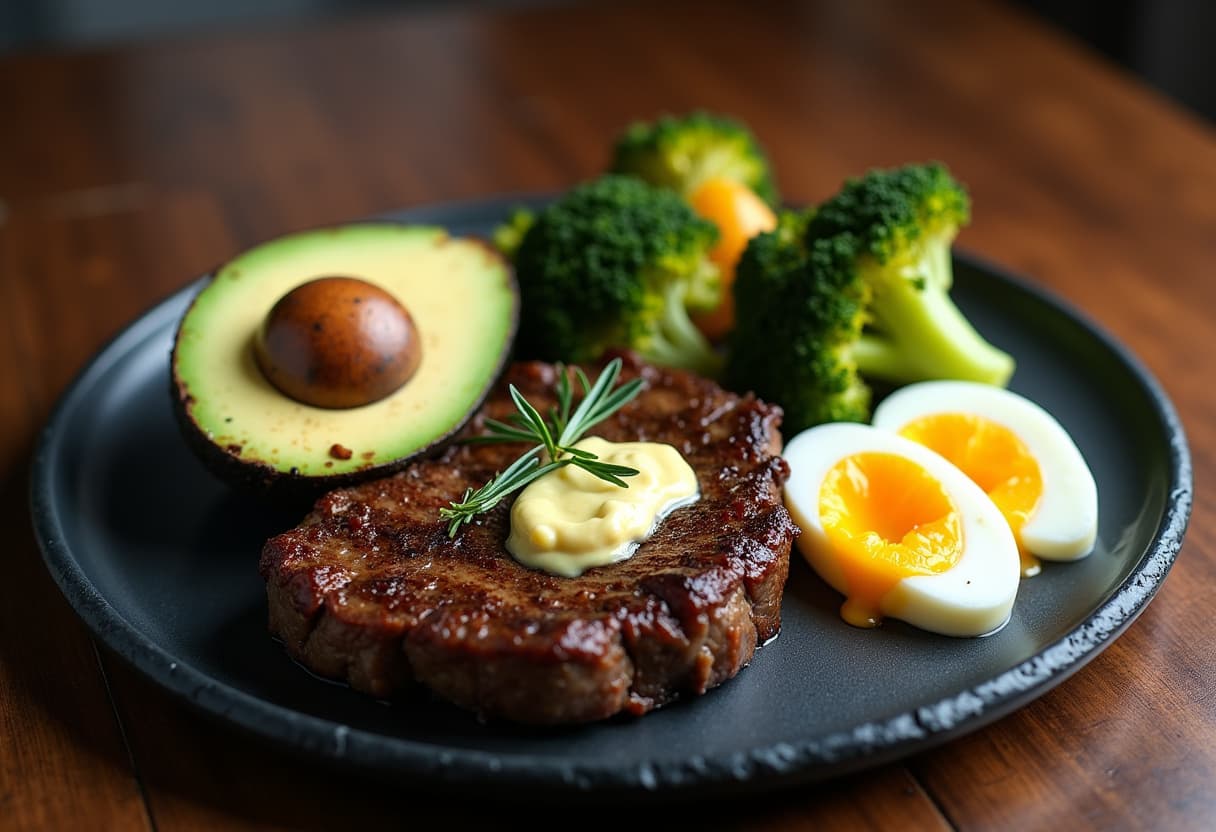
Because it's your only meal, it has to be big, nutrient-dense, and balanced. Build it around a generous protein source, plenty of fat, and low-carb vegetables for fiber and micronutrients.
| Food (typical serving) | Net carbs | Calories | Notes |
|---|---|---|---|
| Ribeye steak (8 oz) | 0g | ~600 | Protein + fat anchor |
| 3 large eggs | ~1g | ~215 | Add for volume |
| Avocado (1 whole) | ~3g | ~240 | Fat + potassium |
| Broccoli (1 cup cooked) | ~3g | ~55 | Fiber, vitamin C |
| Olive oil (2 tbsp) | 0g | ~240 | Easy calorie boost |
| Cheddar cheese (2 oz) | ~1g | ~230 | Fat + protein |
A plate like this lands near 1,580 calories and under 10g net carbs — leaving room to add more fat (butter, nuts, dressing) to reach your target without touching your carb ceiling.
Benefits People Report
- Simplicity: One meal means one decision, no meal prep marathon, no mid-day blood-sugar dips.
- Faster fat loss: The combination creates a large calorie deficit and deep ketosis, which can break stalls.
- Stable energy and focus: Many fat-adapted people describe steady, even energy during the fasting hours.
- Appetite reset: Long fasts often blunt cravings and reduce snacking urges over time.
These are reported experiences, not guarantees — individual results vary widely, and OMAD isn't more effective than gentler approaches for everyone.
Risks and Who Should Skip It
OMAD keto is demanding. Watch for these issues:
- Nutrient and protein gaps: It's hard to fit enough protein, vitamins, and minerals into one meal. Prioritize whole foods and consider electrolytes (sodium, potassium, magnesium).
- Muscle loss: Too little protein over time costs lean mass. Aim for the higher end of your protein range.
- Disordered eating triggers: A rigid one-meal rule can spiral for those with a history of restriction.
- Medication interactions: Long fasts can dangerously lower blood sugar or pressure if you're medicated.
Skip OMAD entirely if you're pregnant, breastfeeding, a type 1 diabetic, have an eating-disorder history, or are under 18. Everyone else should clear it with a doctor and ease in.
How to Start Without Crashing
Don't jump from three meals straight to one. Ramp the fasting window over a few weeks:
- Week 1-2: Get keto-adapted first — under 20-30g net carbs, eating normally.
- Week 3: Move to 16:8 (eat within an 8-hour window).
- Week 4: Tighten to 18:6, then 20:4.
- Week 5+: Try OMAD a few days a week before going daily.
Drink water, black coffee, and tea during the fast, and salt your water if you feel lightheaded. If energy craters or you can't hit your calories, loosen the window — there's no prize for suffering.
Whether you're dialing in your carb ceiling or making sure that one big meal actually hits your calorie and protein targets, logging it in CarbMeNot takes the guesswork out. Track your net carbs, macros, and eating window in one place so you can see exactly what's working — and adjust before a stall sets in.
Frequently asked questions
- What is OMAD on keto?
- OMAD (One Meal A Day) on keto combines a ketogenic diet — under 20-30g net carbs per day — with a 23:1 intermittent fasting schedule, where you eat all your food in a single 1-hour window and fast for the other 23 hours. The keto part keeps you in fat-burning ketosis, while the long fast deepens it and tightens your eating window.
- How many calories should I eat in one meal on OMAD keto?
- Most people need to eat their full daily target — typically 1,500 to 2,500 calories — in that single meal, depending on body size, sex, and activity. Eating too little is a common mistake on OMAD; if your one meal is only 800-1,000 calories, you'll likely feel exhausted and may stall. Use a tracker to confirm you're actually hitting your numbers.
- Does OMAD break ketosis?
- No. As long as your single meal stays under your daily carb limit (usually 20-30g net carbs), OMAD does not break ketosis — in fact the 23-hour fast tends to push ketone levels higher. A meal high in carbs would break ketosis whether you eat once a day or six times, so meal frequency itself is not the issue.
- Is OMAD on keto safe for everyone?
- No. OMAD keto is not recommended for pregnant or breastfeeding women, people with a history of eating disorders, type 1 diabetics, or anyone on blood-sugar or blood-pressure medication without medical supervision. Even healthy adults should ramp up gradually rather than jumping straight to one meal a day. Talk to your doctor first.
- How long does it take to adapt to OMAD keto?
- Most people need 2 to 4 weeks to comfortably adapt, especially if they're already keto-adapted. Hunger, irritability, and low energy in the first 1-2 weeks are normal as your body adjusts to longer fasts. Starting with 16:8 or 18:6 fasting before moving to OMAD makes the transition much easier.
Sources
Keep reading
Free tools: Is It Keto? checker · macro calculator · protein calculator · 7-day meal plan PDF