Keto Macros: How to Calculate Your Ideal Ratio
Keto macros explained: how to calculate your ideal keto macro ratio for fat, protein, and carbs, with example splits at 1500, 2000, and 2500 calories.

Editorial Team · January 19, 2026 · 5 min read
Last updated June 4, 2026
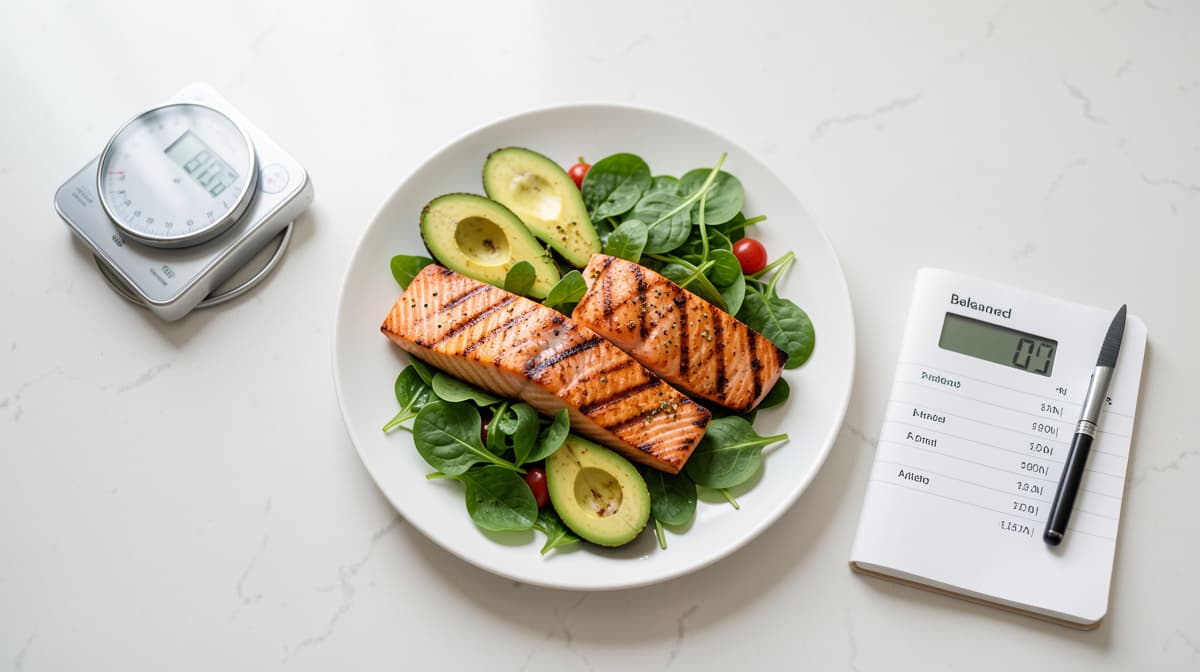
Standard keto macros are roughly 70–75% of your calories from fat, 20–25% from protein, and 5–10% from carbs — usually about 20–50g of net carbs per day. The exact grams depend on your calorie needs and goals, but that ratio is the starting point for nearly every keto plan.
What are keto macros?
"Macros" are the three macronutrients that make up your food: fat, protein, and carbohydrates. Each provides energy — fat has 9 calories per gram, while protein and carbs each have 4. Your keto macros are simply how you split your daily calories across those three.
Keto flips the typical Western diet on its head. Instead of carbs as your main fuel, you eat very few carbs so your body shifts into ketosis and burns fat for energy. That only works if your macros are set up for it — which is why the ratio matters more on keto than on almost any other diet.
The standard keto ratio
The classic keto macro ratio, measured as a percentage of calories, looks like this:
- Fat: 70–75%
- Protein: 20–25%
- Carbs: 5–10%
Here's what that 75% fat / 20% protein / 5% carb split works out to in grams at a few common calorie levels:
| Daily calories | Fat (75%) | Protein (20%) | Carbs (5%) |
|---|---|---|---|
| 1,500 kcal | ~125g | ~75g | ~19g |
| 2,000 kcal | ~167g | ~100g | ~25g |
| 2,500 kcal | ~208g | ~125g | ~31g |
The math: take your calories, multiply by each percentage, then divide fat by 9 and protein and carbs by 4. For example, at 2,000 calories: 2,000 × 0.75 = 1,500 fat calories ÷ 9 ≈ 167g fat.
Notice the carbs stay low in grams across the board — that's the whole point of keto. Most people land in the 20–50g net carb range no matter their calorie target.
How to calculate your macros
You don't have to memorize formulas. Our free keto macro calculator does this in under a minute. But here's the logic so you understand the numbers:
- Find your daily calories. Estimate your maintenance calories (the energy you burn in a day), then subtract roughly 10–20% if your goal is fat loss, or eat at maintenance to stay where you are.
- Set your carbs first. Pick a target between 20 and 50g of net carbs. Start at 20–30g if you're new to keto or want to reach ketosis quickly; you can test higher later.
- Set your protein by body weight. Aim for about 0.7–1g of protein per pound of goal body weight. For a 150-pound goal, that's roughly 105–150g of protein per day. Protein protects muscle and keeps you full.
- Fill the rest with fat. Whatever calories remain after carbs and protein go to fat. Fat is the lever you adjust up or down to match your calorie target — eat more for energy, less for faster fat loss.
That order — carbs, then protein, then fat — is more reliable than chasing exact percentages, because it anchors the two macros that matter most for ketosis and muscle.
Net carbs vs total carbs
Most keto dieters track net carbs, not total carbs. Net carbs are total carbohydrates minus fiber and sugar alcohols like erythritol, because those don't meaningfully raise blood sugar or stall ketosis. So a food with 10g total carbs and 6g fiber counts as just 4g net carbs.
This is why low-carb vegetables and nuts fit on keto despite having carbs on the label — much of it is fiber. If you're stalling or not entering ketosis, counting total carbs is a stricter, simpler fallback. For the full breakdown, see what is net carbs.
Adjusting macros for your goals
The standard ratio is a starting point, not a rule. Tune it based on results:
- Fat loss: Keep protein high to preserve muscle, and pull fat down to create your calorie deficit. Dietary fat is fuel, so eating less of it nudges your body to burn stored fat.
- Muscle gain or athletic performance: Push protein toward the top of the range (around 1g per pound) and add fat for the extra calories. Some athletes test carbs closer to 50g.
- Maintenance: Once you're at your goal, slowly add carbs back — 5–10g at a time — to find the highest carb level where you still feel good.
Re-check your numbers every few weeks. As your weight changes, your calorie needs change too, so yesterday's macros won't fit forever. The key is logging consistently enough to see what's actually working — which is where good tracking earns its keep. For a practical workflow, see how to track macros.
Hit your macros without the spreadsheet
Calculating macros once is easy. Hitting them every day is the hard part — and that's exactly what CarbMeNot is built for. As you log meals with AI photo recognition or a barcode scan, CarbMeNot tracks your fat, protein, and net carbs against your keto targets in real time, so you can see at a glance whether you're on ratio before you take the next bite. No spreadsheet, no mental math.
Get your numbers with the keto macro calculator, then let CarbMeNot keep you on them.
Key takeaways
- Standard keto macros are ~70–75% fat, 20–25% protein, 5–10% carbs.
- That's usually 20–50g of net carbs per day, regardless of calorie level.
- Set macros in this order: carbs first, protein by body weight, fat fills the rest.
- Count net carbs (total minus fiber and sugar alcohols), or total carbs if you're stalling.
- Adjust the ratio for fat loss, muscle, or maintenance — and re-check every few weeks.
- CarbMeNot tracks all three macros automatically as you log, so hitting your ratio is effortless.
Frequently asked questions
- What are the ideal keto macros?
- The standard keto macro ratio is roughly 70–75% of calories from fat, 20–25% from protein, and 5–10% from carbs. In grams that usually means about 20–50g of net carbs per day, with protein set by your body weight and fat filling the rest. Your exact numbers depend on your calorie needs and goals.
- How many carbs should you eat on keto?
- Most people stay between 20 and 50g of net carbs per day to reach and maintain ketosis. Stricter keto sits around 20–30g net carbs, while more active or metabolically flexible people can sometimes stay in ketosis closer to 50g.
- Do you count net or total carbs on keto?
- Most keto dieters count net carbs — total carbs minus fiber (and sugar alcohols like erythritol). Net carbs reflect the carbs that actually raise blood sugar. If you're not losing weight or staying in ketosis, switching to total carbs is a stricter, simpler approach.
- How much protein on keto?
- Aim for roughly 0.7–1g of protein per pound of goal body weight per day. That's typically 20–25% of calories. Protein won't kick you out of ketosis at normal intakes, and it protects muscle, so don't under-eat it.
Sources
Keep reading
Free tools: Is It Keto? checker · macro calculator · protein calculator · 7-day meal plan PDF