The Keto Food Pyramid: What to Eat on Keto
The keto food pyramid puts fats at the base (70-75% of calories) and carbs at the tip (under 20-50g net carbs/day). See exactly what to eat at each level.

Editorial Team · December 4, 2025 · 4 min read
Last updated May 27, 2026
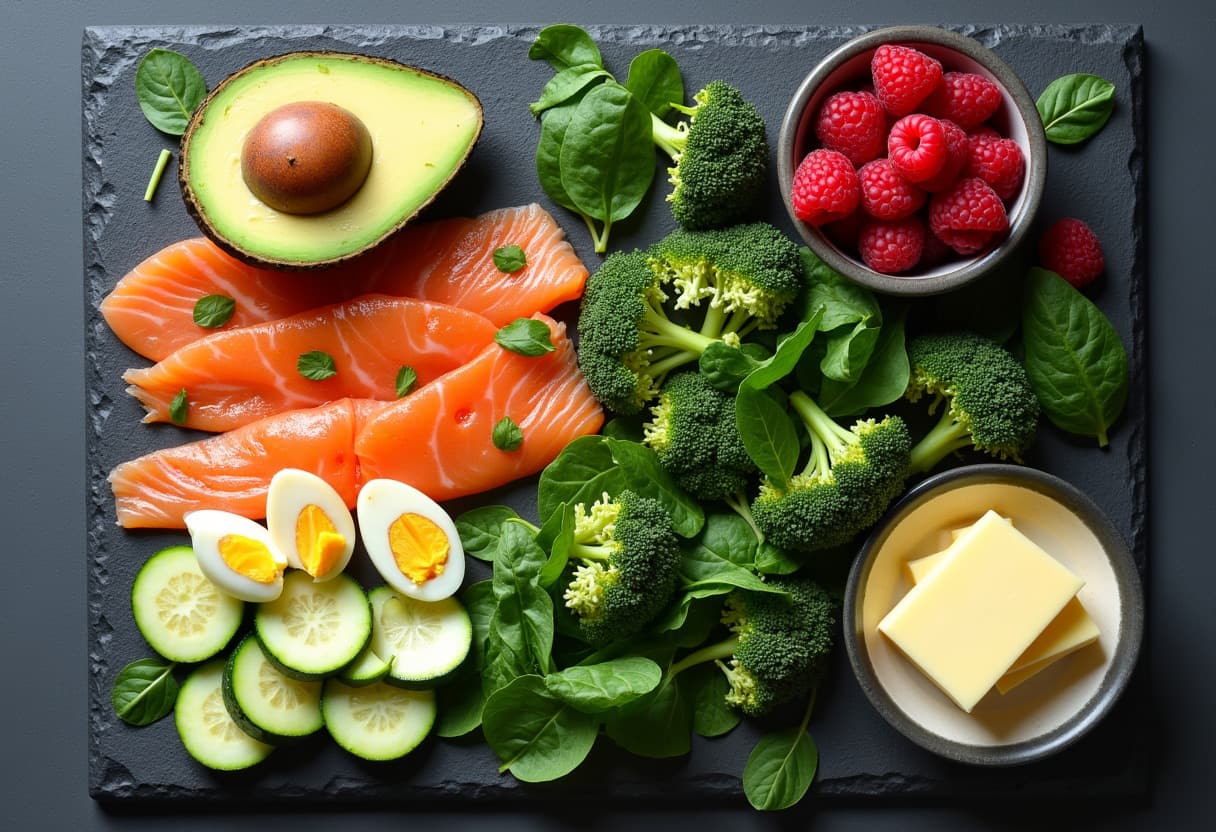
If you grew up with the USDA food pyramid telling you to eat 6 to 11 servings of bread and pasta a day, the keto version will look upside down. That's because it essentially is.
The keto food pyramid flips the traditional pyramid: healthy fats form the base (70-75% of daily calories), moderate protein sits in the middle (20-25% of calories), non-starchy vegetables fill the next tier, and grains, sugar, and starchy foods are pushed to the narrow restricted tip. The goal is keeping net carbs to 20-50 grams per day so your body shifts from burning glucose to burning fat for fuel (ketosis).
Here's how to actually build a plate around it.
The Foundation: Healthy Fats (70-75% of calories)
On a standard ketogenic diet, fat does the heavy lifting that carbs used to do. At 2,000 calories per day, that works out to roughly 155-167 grams of fat. This is the single biggest mindset shift for newcomers to the ketogenic diet pyramid.
Prioritize whole-food and minimally processed fats:
| Fat source | Serving | Fat (g) | Net carbs (g) |
|---|---|---|---|
| Olive oil | 1 tbsp | 14 | 0 |
| Avocado | 1/2 medium | 11 | 1 |
| Butter | 1 tbsp | 12 | 0 |
| Almonds | 1 oz (23 nuts) | 14 | 3 |
| Cheddar cheese | 1 oz | 9 | 0.5 |
| Macadamia nuts | 1 oz | 21 | 2 |
Use fat as a tool, not just a topping: cook in butter or olive oil, dress salads generously, and add avocado to meals. Lean toward monounsaturated and saturated fats from whole foods over heavily refined seed oils.
The Middle: Quality Protein (20-25% of calories)
Protein is moderate on keto, not unlimited. Too little risks muscle loss; too much can blunt ketosis in some people through gluconeogenesis (your liver converting excess protein to glucose). A common target is 0.6-1.0 grams of protein per pound of lean body mass.
Good choices include:
- Fatty cuts of beef, pork, and lamb
- Chicken thighs (more fat than breast)
- Eggs (about 6g protein, under 1g carb each)
- Salmon, mackerel, sardines (also rich in omega-3s)
- Shellfish like shrimp and crab
A 4 oz salmon fillet delivers roughly 23g protein, 12g fat, and 0g carbs, making it an almost perfect keto food.
The Vegetable Tier: Non-Starchy Greens
Vegetables are where many people on the keto food pyramid go wrong, either skipping them entirely or sneaking in starchy ones. Non-starchy vegetables are encouraged because they add fiber, potassium, and micronutrients for very few net carbs.
| Vegetable | Serving | Net carbs (g) |
|---|---|---|
| Spinach (raw) | 1 cup | 0.4 |
| Broccoli | 1 cup chopped | 3.6 |
| Cauliflower | 1 cup | 3 |
| Zucchini | 1 cup sliced | 2.4 |
| Asparagus | 1 cup | 2.4 |
| Bell pepper | 1/2 cup | 2.3 |
Aim to fill a good portion of your plate with these. Cauliflower rice, zucchini noodles, and mashed cauliflower are popular swaps for the starches in the restricted tier.
The Limited Tier: Berries, Dairy, and Occasional Extras
Just below the forbidden tip sit foods you can have in small, measured amounts. Berries are the most keto-friendly fruit, and full-fat dairy fits here too.
- Raspberries: 7g net carbs per cup
- Strawberries: about 9g net carbs per cup
- Blackberries: 6g net carbs per cup
- Greek yogurt (plain, full-fat): 4-7g carbs per 1/2 cup
- Dark chocolate (85%+): about 6-8g net carbs per ounce
These can fit a 20-50g daily budget, but they add up fast, so portion control matters here more than anywhere else on the pyramid.
The Tip: Foods to Limit or Avoid
At the narrow top are the foods that will kick you out of ketosis quickest. On the ketogenic diet pyramid these are minimized or cut entirely:
- Grains and starches: bread, pasta, rice, oats, cereal
- Sugar and sweets: candy, soda, baked goods, honey
- Most fruit: bananas (24g net carbs), apples (21g), grapes
- Starchy vegetables: potatoes, sweet potatoes, corn, peas
- Legumes: beans, lentils, chickpeas
- Sugary and sweetened beverages
One slice of standard bread (12-15g carbs) or a single banana can use up most of a strict 20g day on its own, which is why this tier is so small.
How to Use the Pyramid Day to Day
The keto food pyramid is a blueprint, not a rigid prescription. The percentages (70-75% fat, 20-25% protein, 5-10% carbs) are starting points. Some people thrive on slightly more protein; athletes may tolerate more carbs (a "targeted" or "cyclical" approach). What stays constant across every version of the ketogenic diet is that fat anchors the base and refined carbs sit at the tip.
The hard part isn't knowing the pyramid, it's hitting the numbers consistently. A few "harmless" bites of carbs scattered through the day can quietly push you past 50g. Logging your meals in CarbMeNot shows your net carbs, fat, and protein in real time so you can see exactly where each tier of the pyramid lands on your plate, and adjust before dinner instead of guessing. Track your first few days and the pyramid stops being theory and starts being habit.
Frequently asked questions
- What is at the base of the keto food pyramid?
- Healthy fats sit at the base of the keto food pyramid because they supply 70-75% of your daily calories. This includes olive oil, avocado, butter, fatty fish, nuts, and seeds. On a 2,000-calorie keto diet, that's roughly 155-167 grams of fat per day.
- What foods should you avoid on the keto food pyramid?
- The tip of the pyramid (foods to limit or avoid) includes grains, sugar, most fruit, starchy vegetables like potatoes, beans, and sweetened drinks. A single banana (about 24g net carbs) or one slice of bread (12-15g carbs) can use up most of a strict 20g daily carb budget.
- How many carbs can you eat per day on keto?
- Most people stay in ketosis on 20-50 grams of net carbs per day, with 20-30g being the standard for strict keto. Net carbs are total carbs minus fiber and certain sugar alcohols. The exact threshold varies by individual and activity level.
- How is the keto pyramid different from the USDA food pyramid?
- It's essentially inverted. The traditional USDA pyramid puts grains and breads at the base (6-11 servings), while the keto pyramid puts fats at the base and pushes grains to the restricted tip. Vegetables and protein make up the middle of the keto version.
- Are vegetables allowed on the keto food pyramid?
- Yes, non-starchy vegetables form a key middle tier of the keto pyramid. Leafy greens, broccoli, cauliflower, zucchini, and asparagus are encouraged because they're low in net carbs and high in fiber and micronutrients. Starchy vegetables like potatoes and corn are limited.
Sources
Keep reading
Free tools: Is It Keto? checker · macro calculator · protein calculator · 7-day meal plan PDF