Erythritol: Carbs, Keto, Benefits & Side Effects
Erythritol has ~0.2 cal/g and a near-zero net-carb impact, making it one of the most keto-friendly sweeteners. Here's the science, dosing, and side effects.

Editorial Team · October 20, 2025 · 5 min read
Last updated May 30, 2026
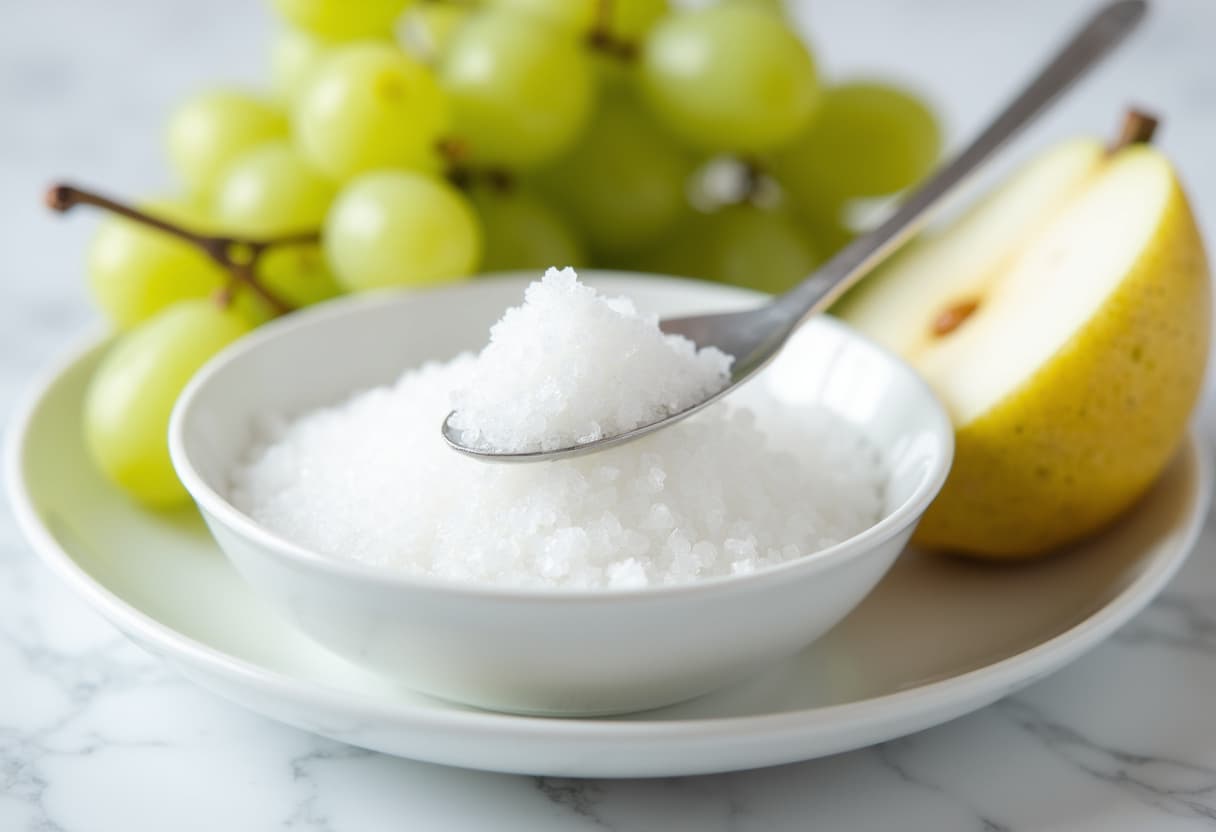
Erythritol is one of the most popular sweeteners in the low-carb world—and for good reason. It tastes close to sugar, bakes reasonably well, and barely registers in your body. Here's what the science actually says about its carbs, keto fit, benefits, and side effects.
Erythritol is a sugar alcohol that provides about 0.2 calories per gram (versus 4 for sugar) and has a glycemic index of 0, so it does not raise blood sugar or insulin. Roughly 90% is absorbed and excreted unchanged in urine, meaning it contributes essentially zero usable carbs. On food labels it shows ~4 g of carbohydrate per teaspoon, but because the body doesn't metabolize it, keto dieters subtract those as net carbs—making erythritol fully keto-friendly.
What Is Erythritol?
Erythritol is a sugar alcohol (polyol) that occurs naturally in small amounts in fruits like grapes, pears, and melons, as well as in fermented foods. Commercially, it's produced by fermenting glucose (usually from corn) with yeast, then crystallizing the result into a white, sugar-like powder.
It's about 60–70% as sweet as table sugar, with a clean taste and a slight cooling sensation on the tongue—the same effect you notice in some mints and gums. Unlike many sweeteners, it has actual bulk, so it can stand in for sugar by volume in recipes, which is why it's the backbone of so many keto sugar substitutes.
Erythritol Carbs and the Net Carb Question
This is where erythritol confuses a lot of people. Because it's a sugar alcohol, U.S. nutrition labels count it as a carbohydrate—about 4 grams per teaspoon. But your body absorbs around 90% of it in the small intestine and excretes it intact, never converting it to energy or glucose.
| Sweetener | Calories/g | Glycemic Index | Treated as net carbs on keto? |
|---|---|---|---|
| Erythritol | ~0.2 | 0 | No (subtract fully) |
| Sugar (sucrose) | 4 | ~65 | Yes |
| Xylitol | ~2.4 | ~13 | Partially (often counted) |
| Maltitol | ~2.1 | ~35 | Yes (counts significantly) |
| Stevia (extract) | 0 | 0 | No |
| Monk fruit (extract) | 0 | 0 | No |
The widely accepted approach: net carbs = total carbs − fiber − erythritol. Because erythritol behaves like neither digestible carb nor fiber, it gets its own subtraction. Note this does NOT apply to all sugar alcohols—maltitol, for example, has a real glycemic impact and should usually be counted.
Is Erythritol Keto? Yes—Here's Why
Erythritol checks every box keto dieters care about:
- No blood sugar spike. A glycemic index of 0 means it won't kick you out of ketosis or trigger an insulin response.
- Essentially zero calories. At 0.2 cal/g, even a generous amount of erythritol adds a rounding error to your daily total.
- No insulin response. Some sweeteners are calorie-free but still provoke a cephalic insulin response; erythritol does not meaningfully do this.
Among the "is erythritol keto" debates online, the consensus from nutrition researchers is clear: it's one of the safest sweeteners for staying in ketosis. The main caveats are tolerance (below) and the fact that blends with maltodextrin or dextrose—common in "1:1 sugar replacement" products—can sneak in real carbs.
Benefits Beyond Keto
- Dental health: Like xylitol, erythritol isn't fermented by mouth bacteria, so it doesn't feed cavities. Some research suggests it may actively reduce dental plaque and cavity risk.
- Diabetes-friendly: Its zero glycemic and insulin response makes it useful for people managing blood sugar.
- Antioxidant activity: A small amount of research suggests erythritol may act as a free-radical scavenger in blood vessels, though this is early-stage.
- Better GI tolerance than most polyols: Because most of it is absorbed before reaching the colon, it causes less fermentation-driven gas than sorbitol or maltitol.
Side Effects and Safety
Erythritol is generally well tolerated, but it's not side-effect-free.
Digestive symptoms are the main issue. Large single doses—roughly 50 grams or more at once (about 0.45 g per kg of body weight)—can cause nausea, gas, or a laxative effect in some people. For perspective, that's far more than the few teaspoons most people use in coffee or a recipe. Sensitivity varies, so start small.
The 2023 cardiovascular study. A widely covered 2023 paper found that people with higher blood erythritol levels had more cardiovascular events, and that erythritol increased clotting tendency in lab tests. Important context: this was largely observational, the body also produces erythritol internally from glucose, and high blood levels may be a marker of underlying metabolic dysfunction rather than a cause. Major health bodies still classify erythritol as safe (it has GRAS status from the FDA), but if you have significant cardiovascular risk, it's a reasonable topic for your doctor.
Erythritol vs. other sugar alcohols. If you've had bad GI experiences with "sugar-free" candy, the culprit is usually maltitol or sorbitol, not erythritol. Erythritol is consistently the best-tolerated polyol.
How to Use It (and What to Pair It With)
Erythritol's two quirks are a slight cooling aftertaste and a tendency to recrystallize, giving baked goods a grainy texture as they cool. Two fixes:
- Use a blend. Erythritol + monk fruit or erythritol + stevia products (like many popular keto sweeteners) mask the cooling note and let you use less.
- Choose "powdered" (confectioners-style) erythritol for frostings, sauces, and anything you don't want grainy.
For 1:1 sugar swaps in baking, allulose or an erythritol blend often performs better than plain erythritol alone.
Tracking Erythritol in CarbMeNot
Because erythritol shows up as a carb on labels but shouldn't count against your keto goal, accurate logging matters. In CarbMeNot, log your sweetener and let the net-carb calculation handle the subtraction so your daily totals reflect what your body actually metabolizes—not the label's headline number. That keeps your ketosis math honest whether you're sweetening coffee or baking a batch of keto brownies.
Track your sweeteners, watch your net carbs, and keep your macros where you want them with CarbMeNot.
Frequently asked questions
- Is erythritol keto-friendly?
- Yes. Erythritol has almost no impact on blood sugar or insulin, contributes about 0.2 calories per gram, and is widely treated as zero net carbs on keto. About 90% of ingested erythritol is absorbed and excreted unchanged in urine, so it isn't fermented or metabolized for energy the way most carbohydrates are.
- How many carbs are in erythritol?
- By food-label convention, erythritol is a sugar alcohol and is listed at roughly 4 grams of total carbohydrate per teaspoon (about 4 g). But because the body doesn't metabolize it, those grams contribute essentially zero calories and have negligible effect on blood glucose, so most keto dieters subtract them entirely as net carbs.
- Does erythritol raise blood sugar or insulin?
- No. Erythritol has a glycemic index of 0 and does not meaningfully raise blood glucose or insulin in people with or without diabetes. This is a key reason it's preferred over sugar, honey, and most other sweeteners on low-carb and keto diets.
- What are the side effects of erythritol?
- The most common side effect is digestive upset—gas, bloating, or a laxative effect—usually at single doses above roughly 50 grams. It's generally better tolerated than other sugar alcohols like xylitol, sorbitol, or maltitol. A 2023 study also linked higher blood erythritol levels to cardiovascular markers, though that research is observational and debated.
- Is erythritol the same as monk fruit or stevia?
- No, but they're often combined. Erythritol is a bulking sugar alcohol that measures more like sugar, while monk fruit and stevia are intense, calorie-free plant extracts used in tiny amounts. Many popular keto sweeteners blend erythritol with monk fruit or stevia to get both volume and clean sweetness.
Sources
Keep reading
Free tools: Is It Keto? checker · macro calculator · protein calculator · 7-day meal plan PDF