High-Protein, Low-Carb Foods: 25 Best Picks
The best high-protein, low-carb foods, ranked: most deliver 20g+ protein with under 2g net carbs per serving. See the full USDA-based table.

Editorial Team · June 20, 2026 · 7 min read
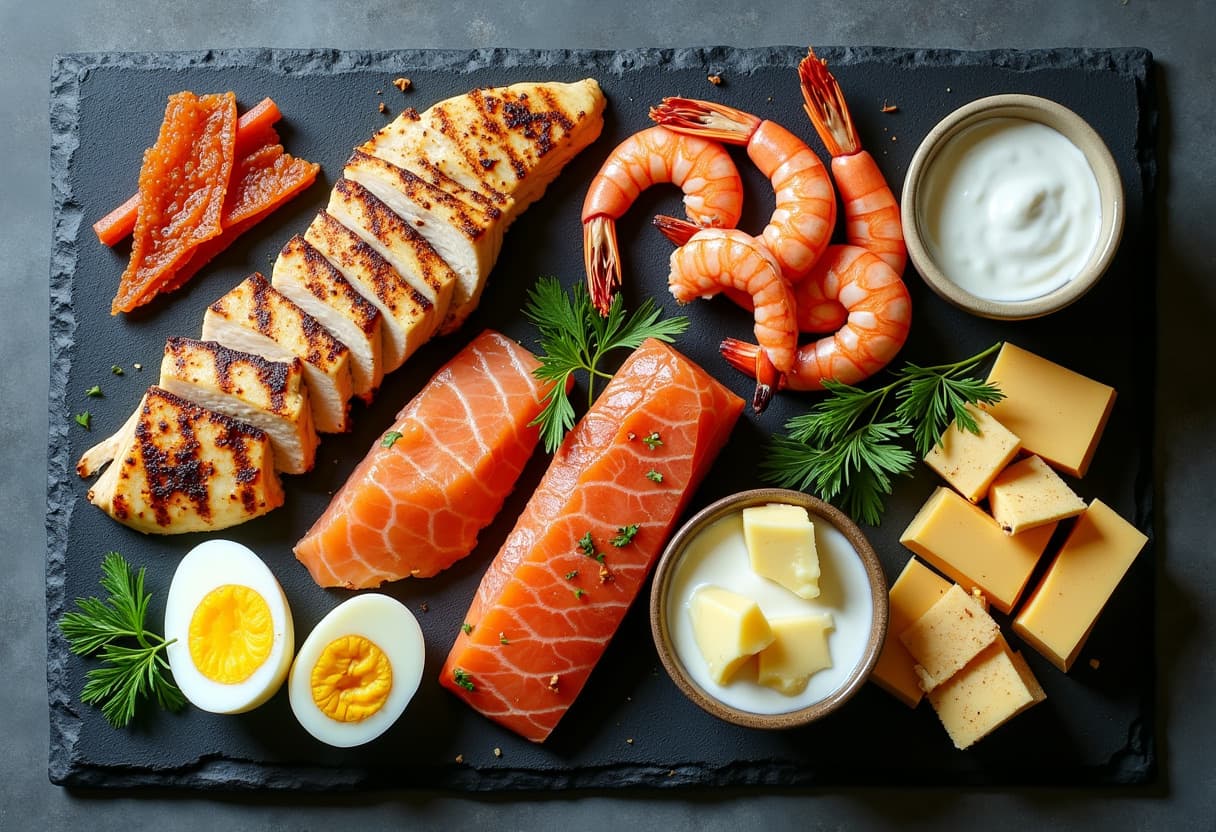
If you want to lose fat without losing muscle — or simply stay full between meals — high-protein, low-carb foods are the most efficient tools you have. Protein is the most satiating macronutrient, and the foods richest in it tend to be naturally the lowest in carbohydrate.
The best high-protein, low-carb foods are pure animal proteins, where carbs are effectively zero: chicken breast (31g protein, 0g net carbs per 100g), canned tuna (26g, 0g), eggs (6g per egg, 0.4g), salmon (25g, 0g), shrimp (24g, 0g), and turkey breast (29g, 0g). Just behind them sit lean beef, pork, white fish like cod and tilapia, hard cheeses (cheddar, parmesan), cottage cheese, Greek yogurt, tofu, tempeh, and protein-forward staples like canned salmon and beef jerky. Most deliver 20g+ of protein with under 2g of net carbs per serving — making them the backbone of any keto or low-carb plate.
The 25 best high-protein, low-carb foods (ranked)
Numbers below are USDA-based, per the common serving listed. "Net carbs" = total carbs minus fiber. Keto verdict assumes a strict <20-50g net carbs/day target.
| # | Food | Net carbs (per serving) | Protein | Keto verdict |
|---|---|---|---|---|
| 1 | Chicken breast, skinless (100g) | 0g | 31g | Perfect |
| 2 | Turkey breast, roasted (100g) | 0g | 29g | Perfect |
| 3 | Canned tuna, in water (1 can, 142g) | 0g | 37g | Perfect |
| 4 | Cod or tilapia (100g) | 0g | 23g | Perfect |
| 5 | Salmon, cooked (100g) | 0g | 25g | Perfect |
| 6 | Shrimp, cooked (100g) | 0g | 24g | Perfect |
| 7 | Sirloin steak, lean (100g) | 0g | 27g | Perfect |
| 8 | Pork tenderloin (100g) | 0g | 26g | Perfect |
| 9 | Eggs, large (2 eggs) | 0.8g | 12g | Perfect |
| 10 | Egg whites (1 cup, 243g) | 1.5g | 26g | Perfect |
| 11 | Beef jerky, no-sugar (28g) | 3g | 9g | Excellent (check brand) |
| 12 | Parmesan cheese (28g) | 1g | 10g | Perfect |
| 13 | Cheddar cheese (28g) | 0.4g | 7g | Perfect |
| 14 | Cottage cheese, 2% (½ cup, 113g) | 4g | 12g | Excellent |
| 15 | Greek yogurt, plain nonfat (170g) | 6g | 17g | Good (plain only) |
| 16 | Whey protein isolate (1 scoop, ~30g) | 1-3g | 24g | Excellent |
| 17 | Tofu, firm (100g) | 1.5g | 17g | Excellent |
| 18 | Tempeh (100g) | 5g | 19g | Good |
| 19 | Edamame, shelled (½ cup, 78g) | 3g | 9g | Good |
| 20 | Canned sardines (1 can, 92g) | 0g | 23g | Perfect |
| 21 | Beef liver (100g) | 4g | 26g | Excellent |
| 22 | Pepperoni / salami (28g) | 0.5g | 6g | Perfect |
| 23 | String cheese (1 stick, 28g) | 1g | 7g | Perfect |
| 24 | Bone broth (1 cup) | 1g | 9g | Excellent |
| 25 | Seitan (85g) | 4g | 21g | Good (not gluten-free) |
Which foods give the most protein per carb?
If your only goal is maximum protein with minimum carbs, pure animal proteins win outright. Chicken breast, turkey, tuna, white fish, lean beef, pork, and shrimp all sit at essentially 0g net carbs while delivering 23-31g of protein per 100g (about a deck-of-cards-sized portion). You physically cannot overload on carbs eating these, which is why they form the core of every low-carb plate.
Eggs deserve a special mention. At ~6g protein, ~0.4g carbs, and 5g of fat each, they're the most complete and affordable protein on the list, with a near-perfect amino acid profile. Two eggs plus a handful of egg whites is a 30g-protein breakfast for under 2g of carbs.
Among dairy, hard aged cheeses (parmesan, cheddar) are nearly carb-free because the lactose ferments out during aging. The softer and fresher the dairy, the more residual milk sugar — which brings us to the foods people get wrong.
"High-protein" foods that aren't as low-carb as you think
Plenty of foods marketed as protein sources carry a surprising carb load. Watch these:
- Flavored Greek yogurt. Plain Greek yogurt is great (~6g carbs, 17g protein per cup). But fruit-on-the-bottom and "vanilla" versions routinely add 15-20g of sugar — tripling the carbs. Buy plain and sweeten it yourself.
- Protein bars. Many contain 20-30g of carbs from sugar, dates, or maltitol (a sugar alcohol that still raises blood glucose). The "20g protein" claim on the front means nothing if the back says 25g net carbs. A few genuinely keto bars exist (1-4g net carbs) — read every label.
- Beans and lentils. Yes, they're protein-rich for a plant food, but ½ cup of black beans has ~13g net carbs. They're a healthy food, just not a low-carb one. Edamame and tofu are the keto-friendly legume exceptions.
- Milk and "high-protein" milks. Regular milk has ~12g carbs per cup from lactose; even ultra-filtered "protein milk" still carries 6g. Unsweetened almond milk (1g) is the low-carb swap.
- Breaded or fried proteins. Chicken nuggets, popcorn shrimp, and crusted fish can hide 15g+ of carbs in the coating alone. The protein is fine; the breading isn't.
- Imitation crab (surimi). It's bulked with starch and sugar — about 13g carbs per 100g, despite looking like seafood.
- Deli meats with fillers. Cheap sliced turkey and ham are sometimes injected with sugar, dextrose, and starch. Look for products listing only meat, water, and salt.
How much protein should you actually aim for?
A practical target is 1.2-2.0g of protein per kilogram of body weight per day (roughly 0.5-0.9g per pound). A 70kg (155-lb) person aiming for the middle of that range needs about 110-120g daily — easily covered by three of the foods above plus a snack.
Protein does double duty on a low-carb diet: it preserves lean muscle during weight loss and it's the most filling macronutrient gram-for-gram, which naturally curbs overeating. The old worry that high protein harms healthy kidneys hasn't held up in research; only people with established advanced kidney disease need to restrict it, and only under medical guidance.
One nuance for strict keto dieters: very large protein servings can be partially converted to glucose (gluconeogenesis), but this process is demand-driven and rarely knocks anyone out of ketosis in practice. Eat to your protein target and don't fear it.
Buying and serving tips
- Buy in bulk and batch-cook. Chicken thighs, ground turkey, and salmon freeze well. Cooking a tray of protein on Sunday makes low-carb eating effortless all week.
- Keep zero-prep proteins on hand. Canned tuna, sardines, hard-boiled eggs, string cheese, jerky, and a tub of cottage cheese cover any hunger emergency without cooking.
- Default to plain, then flavor yourself. Plain yogurt, unseasoned meat, and unflavored protein powder give you full control over the carb count. Spices, herbs, lemon, mustard, and hot sauce add flavor for essentially zero carbs.
- Read net carbs, not front-of-package claims. Total carbs minus fiber (and minus erythritol, but not maltitol) is what counts. The marketing number on the front is rarely the one that matters.
- Don't fear the fat on protein. Whole eggs, salmon, and ribeye carry fat that keeps you full and makes low-carb eating sustainable. Going ultra-lean across the board often leaves people hungry.
The bottom line
The highest-protein, lowest-carb foods are also some of the simplest: chicken, fish, eggs, lean beef, hard cheese, and plain Greek yogurt. Build most meals around a 25-30g protein anchor with under 5g net carbs, fill the rest of the plate with non-starchy vegetables, and you've got a low-carb diet that's easy to stick to.
The catch is portion creep and hidden carbs in "protein" products — which is exactly where tracking pays off. Log these foods in CarbMeNot to see your real net carbs and protein per serving in seconds, and watch how fast your daily numbers fall into place.
Frequently asked questions
- What food has the most protein and lowest carbs?
- Chicken breast and canned tuna are the leaders: roughly 26-31g of protein per 100g with effectively 0g net carbs. Egg whites, turkey breast, and white fish (cod, tilapia) are close behind, all delivering high protein with zero or near-zero carbohydrate.
- How many carbs is 'low-carb' for a high-protein food?
- There's no legal definition, but a practical bar is under 5g net carbs per serving, and ideally under 2g if you're on a strict keto diet. Most pure proteins — meat, fish, eggs, hard cheeses — fall under 1g net carbs naturally.
- Is Greek yogurt low-carb and high-protein?
- Plain, nonfat Greek yogurt has about 9-10g protein and 6g carbs per 170g cup — high protein, but not zero-carb. Plain whole-milk Greek yogurt is similar. Flavored versions can hit 15-20g of added sugar, so always choose plain and add your own berries or stevia.
- Can I eat too much protein on a low-carb diet?
- For most people, no — protein is the most satiating macronutrient and helps preserve muscle while losing fat. Aim for roughly 1.2-2.0g per kg of body weight daily. Only people with advanced kidney disease should restrict protein, and they should do so under medical supervision.
- Are protein bars and shakes good low-carb choices?
- Some are, many aren't. A clean whey or egg-white protein powder delivers ~24g protein and 1-3g carbs per scoop. But many 'protein' bars hide 20-30g of carbs from sugar and maltitol. Always read the label and check net carbs, not just the protein claim on the front.
Sources
Keep reading
Free tools: Is It Keto? checker · macro calculator · protein calculator · 7-day meal plan PDF