Dirty Keto: What It Is, Foods, and Is It Worth It?
Dirty keto keeps net carbs under ~20-50g/day but allows fast food and processed snacks. See a food list, clean vs dirty keto, and the real trade-offs.

Editorial Team · May 19, 2026 · 4 min read
Last updated June 10, 2026
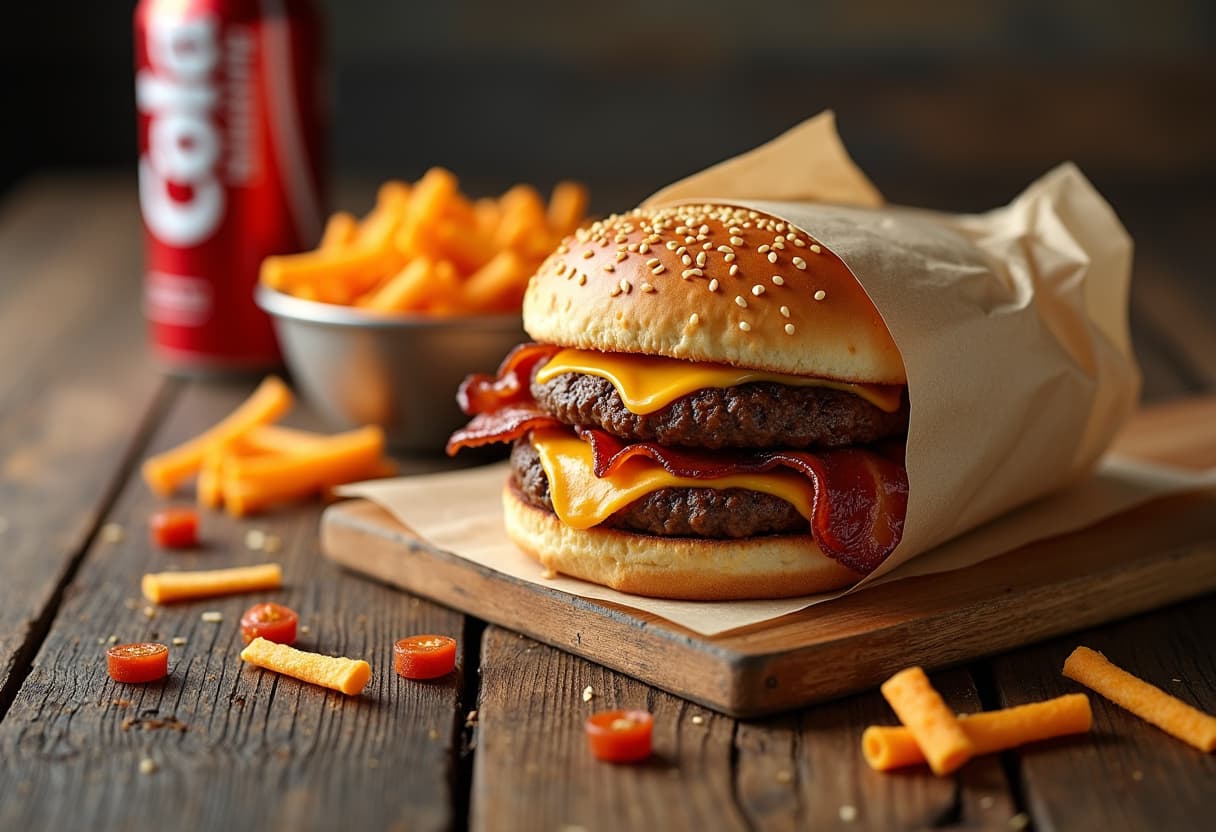
Keto purists eat wild salmon and avocado. But plenty of people stay in ketosis on bunless drive-thru burgers and pork rinds. That second approach has a name: dirty keto. Here's what it actually is, what you can eat, and whether the convenience is worth the trade-offs.
The dirty keto diet follows the same macros as standard keto — roughly under 20-50g net carbs per day, about 70-75% of calories from fat, 15-20% protein — but disregards food quality entirely. It allows processed and fast foods (bunless burgers, bacon, pork rinds, diet soda, packaged "keto" snacks) as long as carbs stay low. It can produce ketosis and weight loss, but tends to be high in sodium and additives and low in fiber and micronutrients.
What dirty keto actually means
Keto works by limiting carbohydrates enough that your body shifts to burning fat for fuel and producing ketones. That metabolic switch only cares about your carb count — not whether those carbs came from broccoli or a fast-food wrapper.
Dirty keto exploits that fact. The "dirty" refers to food quality, not your macros being sloppy. You still track net carbs and keep them low, but you don't worry about whether the food is whole, organic, or nutrient-dense. A bunless bacon cheeseburger and a handful of pork rinds can fit a dirty keto day just as cleanly (mathematically) as grilled chicken and spinach.
Clean vs dirty keto
Both versions aim for ketosis. The difference is entirely about the source and processing of your food.
| Factor | Clean keto | Dirty keto |
|---|---|---|
| Net carb target | ~20-50g/day | ~20-50g/day |
| Food sources | Whole, minimally processed | Any low-carb food, incl. fast food |
| Fats | Olive oil, avocado, butter, fatty fish | Seed oils, processed meats, fried fast food |
| Fiber & micronutrients | High | Often low |
| Sodium & additives | Moderate | Often high |
| Convenience | Lower | Very high |
| Cost | Higher | Often lower |
Clean keto leans on salmon, eggs, avocado, nuts, olive oil, and non-starchy vegetables. Dirty keto leans on whatever is fast and low-carb. Most real-world keto eaters land somewhere in between.
Dirty keto food list
These are common dirty keto staples with approximate net carbs per typical serving. Numbers vary by brand and preparation.
| Food | Serving | Net carbs |
|---|---|---|
| Fast-food bunless double cheeseburger | 1 patty stack | ~3-5g |
| Bacon | 2 slices | ~0g |
| Pork rinds | 1 oz (~28g) | 0g |
| Diet soda | 12 oz can | 0g |
| String cheese | 1 stick | ~1g |
| Pepperoni | 1 oz | ~0-1g |
| Sugar-free packaged keto bar | 1 bar | ~2-5g net |
| Fast-food salad, no croutons | 1 entree salad | ~5-9g |
| Hot dog, no bun | 1 link | ~1-2g |
| Buffalo wings (unbreaded) | 6 wings | ~0-2g |
The pattern is clear: processed meats, cheese, fried protein, and zero-calorie drinks dominate. They're convenient and genuinely low in carbs — just not very nutrient-dense.
The real trade-offs
Dirty keto can absolutely get you into ketosis and support weight loss, because weight loss still comes down to a sustained calorie deficit, which low-carb eating tends to help with by curbing appetite. But there are honest downsides:
- Low fiber. Few processed keto foods contain fiber, which can mean constipation and less gut-microbiome support. Most adults need 25-38g of fiber daily; a heavy dirty keto day might deliver under 10g.
- High sodium and additives. Fast food and processed meats are loaded with sodium, preservatives, and sometimes hidden carbs from sauces and breading. Hidden carbs are how people accidentally blow past their limit.
- Micronutrient gaps. Magnesium, potassium, and several vitamins are scarce when vegetables disappear. Low magnesium and potassium also worsen the "keto flu."
- Easy to overeat. Hyper-palatable processed foods are engineered to be hard to stop eating, which can quietly erase your deficit.
Is dirty keto worth it?
For most people, dirty keto works best as a tool, not a lifestyle. It's a reasonable bridge when you're traveling, slammed at work, or just starting out and need keto to feel doable. Pulling a bunless burger and a side salad through a drive-thru beats abandoning the diet entirely.
The smarter move is "mostly clean, occasionally dirty." Build your week around whole foods, then lean on dirty keto options when life gets in the way. You keep the convenience without making low fiber and high sodium your everyday baseline.
Watch two things especially: hidden carbs in sauces and breading, and total calories. Both are easy to underestimate when you're eating out.
Track it before you trust it
Whether you go clean, dirty, or somewhere between, the only way to know you're actually in your carb range — and not overeating calories — is to log it. Scan a fast-food burger or search a packaged snack in CarbMeNot and you'll see net carbs, hidden carbs, and how the day adds up in seconds. Dirty keto is forgiving on food quality, but the numbers still have to work, and tracking is how you keep them honest.
Frequently asked questions
- What is dirty keto?
- Dirty keto is a version of the ketogenic diet that hits the same macro targets — typically under 20-50g net carbs per day, with 70-75% of calories from fat — but ignores food quality. It allows processed and fast foods like bunless burgers, pork rinds, diet soda, and packaged keto snacks, as long as the carbs stay low.
- What is the difference between clean and dirty keto?
- Both keep net carbs low enough to reach ketosis, but clean keto emphasizes whole, minimally processed foods like fish, eggs, avocado, and non-starchy vegetables. Dirty keto allows any low-carb food regardless of processing, additives, or micronutrient content, including fast food and packaged snacks.
- Can you lose weight on dirty keto?
- Yes. Weight loss on keto is driven mostly by staying in a calorie deficit while keeping carbs low, and dirty keto can achieve both. However, the heavy reliance on processed, hyper-palatable foods can make it easier to overeat calories, and the diet tends to be low in fiber and several micronutrients.
- Is dirty keto bad for you?
- Dirty keto isn't inherently dangerous short-term, but a steady diet of processed meats, refined seed oils, and packaged snacks is high in sodium and additives and low in fiber and micronutrients. It's best used as a temporary or occasional convenience rather than a long-term way of eating.
- What foods are allowed on dirty keto?
- Dirty keto allows any low-carb food: bunless fast-food burgers, bacon, pork rinds, cheese, processed deli meats, diet soda, sugar-free packaged snacks, and fast-food salads without croutons. The only rule is keeping net carbs within your daily limit, usually 20-50g.
Sources
Keep reading
Free tools: Is It Keto? checker · macro calculator · protein calculator · 7-day meal plan PDF