Best Keto Sweeteners (and Which to Avoid)
The best keto sweeteners have near-zero net carbs and low glycemic impact — erythritol, monk fruit, stevia, and allulose. Plus which sweeteners to avoid.

Editorial Team · December 27, 2025 · 5 min read
Last updated June 6, 2026
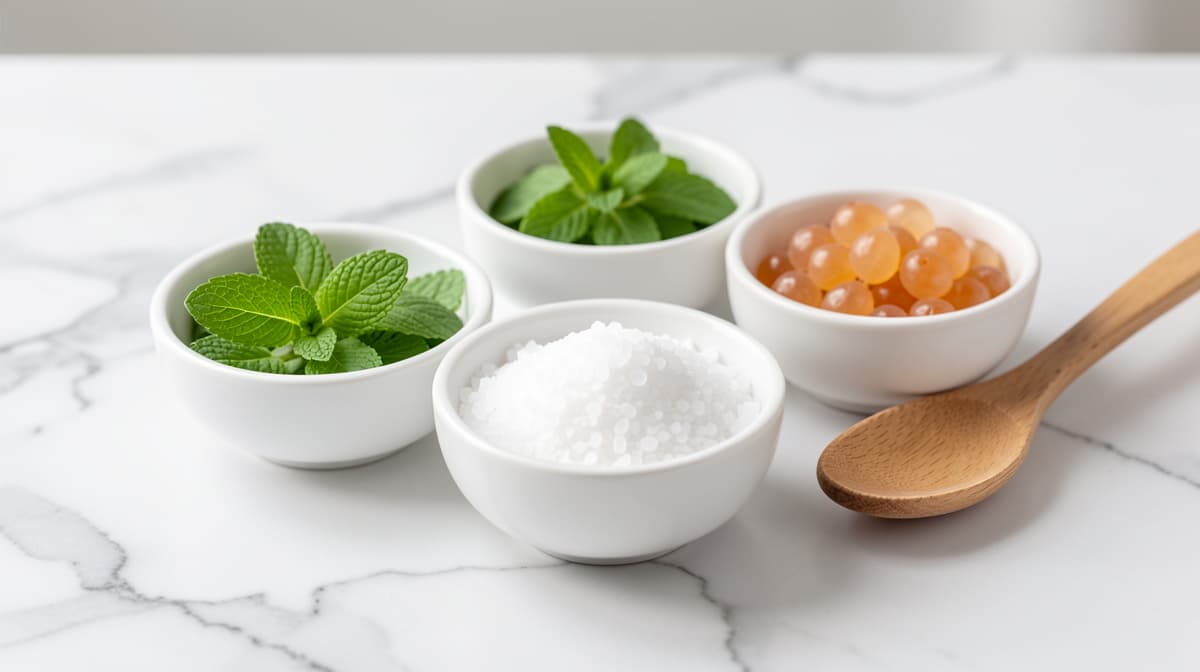
The best keto sweeteners have near-zero net carbs and little to no effect on blood sugar — erythritol, monk fruit, stevia, and allulose are the top choices. Avoid sugar, honey, agave, maple syrup, maltodextrin, and most "sugar-free" syrups sweetened with maltitol, which raises blood sugar despite the sugar-free label.
Sweeteners are one of the most confusing parts of going keto. The "sugar-free" aisle is full of products that still spike your blood sugar, and labels rarely make it obvious which sweeteners are truly carb-free. This guide ranks the common options so you can sweeten coffee, baked goods, and treats without breaking ketosis.
Keto sweetener comparison
| Sweetener | Glycemic impact | Net carbs | Keto-friendly? |
|---|---|---|---|
| Erythritol | ~0 | 0g (subtract fully) | Yes |
| Monk fruit | ~0 | 0g | Yes |
| Stevia | ~0 | 0g | Yes |
| Allulose | ~0 | 0g (subtract fully) | Yes |
| Xylitol | Low-moderate | ~3g per tsp | In moderation |
| Maltitol | High | Counts as carbs | Avoid |
| Honey | High | ~17g per tbsp | Avoid |
| Agave | Moderate-high | ~16g per tbsp | Avoid |
| Table sugar | High | ~4g per tsp | Avoid |
| Aspartame | ~0 | 0g | Yes (artificial) |
| Sucralose | ~0–low | 0g pure | Usually (see below) |
What makes a sweetener keto-friendly?
Two things matter: net carbs and glycemic impact. A keto-friendly sweetener should add close to zero net carbs and shouldn't meaningfully raise your blood glucose or insulin. Sweetness without those two costs is the whole goal.
That's why sugar fails on both counts — it's pure carbohydrate with a high glycemic index — while a compound like erythritol passes, because your body absorbs it but doesn't metabolize it for energy. One nuance to watch: many sweeteners are sold in "bulked" or "baking" blends cut with dextrose or maltodextrin to make them measure like sugar. Those fillers add carbs, so always check the label rather than trusting the front-of-package claim.
Best keto sweeteners
Erythritol is the workhorse of keto baking. It's a sugar alcohol with about 70% the sweetness of sugar, a glycemic index near zero, and it's tolerated better than most sugar alcohols because it's absorbed in the small intestine. It can have a slight cooling aftertaste and may crystallize in baked goods.
Monk fruit (luo han guo) is a fruit extract that's 150–200x sweeter than sugar with no glycemic impact and no aftertaste for most people. A little goes a long way, which makes pure monk fruit excellent in coffee, tea, and sauces.
Stevia is a zero-calorie leaf extract that's also 200–300x sweeter than sugar. It has no effect on blood sugar, though some people notice a faintly bitter or licorice-like aftertaste. High-quality stevia (reb-M or reb-D) tastes cleaner than older products.
Allulose is a "rare sugar" that tastes and behaves almost exactly like real sugar — it browns and caramelizes — but is barely metabolized, so it contributes negligible calories and net carbs. It's the best choice when texture and browning matter, like in ice cream or caramel.
Sweeteners to avoid
Skip anything that's essentially sugar in disguise: table sugar, honey, agave, maple syrup, coconut sugar, and brown sugar. Agave gets marketed as "natural" and lower-glycemic, but it's very high in fructose and still loaded with carbs.
Also avoid maltodextrin, a starch-derived filler with a glycemic index higher than table sugar that shows up in many "keto" and "sugar-free" products. And be skeptical of most "sugar-free" pancake syrups, candies, and chocolate, which are often sweetened with maltitol (more on that below).
Sugar alcohols and net carbs
Sugar alcohols are where most people get tripped up. On a nutrition label, the standard keto approach is to subtract fiber and sugar alcohols from total carbs to get net carbs — the number that actually affects ketosis. For erythritol and allulose, that subtraction is fair: they're not metabolized for energy, so you can subtract them fully.
Maltitol is the big exception. It's a sugar alcohol used in tons of "sugar-free" products, but it has a glycemic index around 35–52 — high enough to noticeably raise blood sugar. Subtracting it the way you would erythritol will badly understate your real carb intake. As a rule: subtract erythritol and allulose fully, subtract xylitol partially (and watch the dose — it causes GI upset for many people), and don't subtract maltitol at all.
This is exactly the kind of label math CarbMeNot handles for you. When you scan or log a product, CarbMeNot subtracts fiber and sugar alcohols to show your true net carbs, so a maltitol-heavy "sugar-free" chocolate doesn't trick you into thinking it's free. If you're still fuzzy on the concept, our guide to what is net carbs breaks it down step by step.
For ready-to-buy options, browse the snacks & sweets database to compare net carbs across sugar-free treats before you put them in your cart.
Track net carbs accurately
The fastest way to keep sweeteners from sabotaging ketosis is to log them and let the math sort itself out. CarbMeNot is a free AI-powered app (iOS and Android) that lets you snap a photo or scan a barcode, then automatically subtracts fiber and sugar alcohols to show real net carbs — including the maltitol gotchas most apps miss. It's the simplest way to stay under your carb budget without doing label arithmetic in the grocery aisle.
Key takeaways
- The best keto sweeteners are erythritol, monk fruit, stevia, and allulose — all near-zero net carbs and low glycemic impact.
- Erythritol and allulose are best for baking (they have bulk and browning); monk fruit and stevia are best for drinks (intensely sweet, no calories).
- Avoid sugar, honey, agave, maple syrup, coconut sugar, and maltodextrin — they're essentially sugar.
- Maltitol is the trap: it's labeled sugar-free but has a high glycemic impact, so don't subtract it as a sugar alcohol.
- Watch for bulked blends cut with dextrose or maltodextrin, which add hidden carbs.
- Let CarbMeNot subtract fiber and sugar alcohols for you so you always see true net carbs.
Frequently asked questions
- What is the best sweetener for keto?
- There's no single winner, but the best keto sweeteners are erythritol, monk fruit, stevia, and allulose. Each has near-zero net carbs and minimal effect on blood sugar. Monk fruit and stevia are intensely sweet and great in drinks; erythritol and allulose work better for baking because they have bulk.
- Does erythritol kick you out of ketosis?
- No. Erythritol is a sugar alcohol that is largely absorbed but not metabolized for energy, so it's excreted mostly unchanged in urine. It has a glycemic index of essentially zero and doesn't raise blood sugar or insulin meaningfully, so it won't kick you out of ketosis.
- Is stevia keto?
- Yes. Stevia is a plant-derived, zero-calorie sweetener with no glycemic impact, making it fully keto-friendly. Watch for blended products, though — many 'stevia' packets are bulked with dextrose or maltodextrin, which do add carbs.
- What sweeteners should you avoid on keto?
- Avoid table sugar, honey, agave, coconut sugar, and maple syrup — they're essentially pure sugar. Also avoid maltodextrin and maltitol, the sugar alcohol in many 'sugar-free' syrups and candies, because maltitol has a high glycemic impact despite being labeled sugar-free.
Sources
Keep reading
Free tools: Is It Keto? checker · macro calculator · protein calculator · 7-day meal plan PDF