Keto Ramen
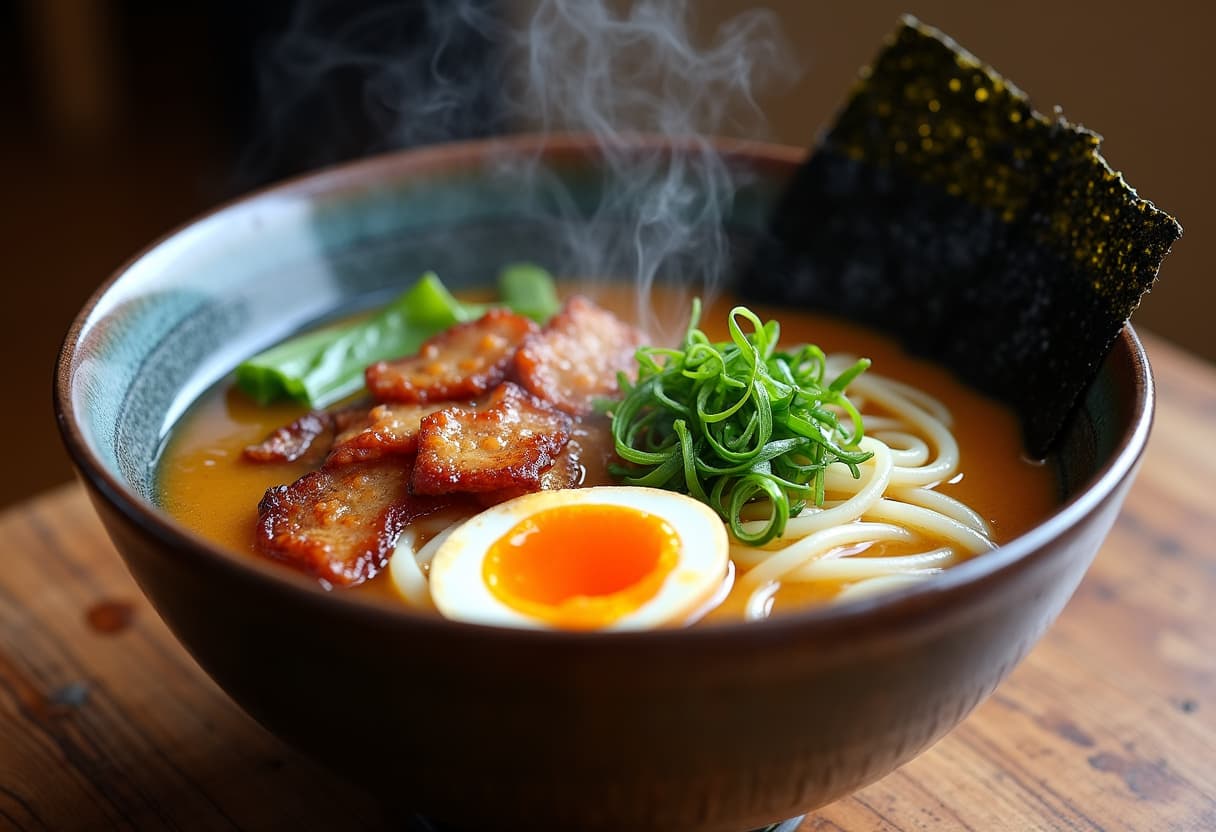
A soul-warming bowl of rich pork-and-chicken broth over springy shirataki noodles, topped with a jammy soft-boiled egg and crispy pork belly. At just 6.5g net carbs per serving and ready in about 50 minutes, this keto ramen delivers all the comfort with none of the wheat.

Editorial Team · June 18, 2026
Nutrition per serving
Per serving · makes 2. Values are estimates; brands vary.
This keto ramen brings all the cozy, slurpable comfort of a classic bowl while keeping carbs in check with shirataki noodles and a rich miso bone broth. Crispy pork belly and a jammy egg make it feel like a restaurant treat any weeknight.
Ingredients
- 2 (7 oz) packs shirataki noodles, fettuccine or spaghetti shape
- 4 cups chicken bone broth
- 8 oz pork belly, sliced 1/4-inch thick
- 2 large eggs
- 2 tablespoons coconut aminos
- 1 tablespoon white miso paste
- 1 tablespoon toasted sesame oil
- 3 cloves garlic, minced
- 1 tablespoon fresh ginger, grated
- 2 green onions, thinly sliced
- 1 cup baby bok choy or fresh spinach
- 1 sheet nori, cut into strips (optional)
Instructions
- 1
Bring a small pot of water to a gentle boil. Lower in the eggs and cook for exactly 7 minutes, then transfer to an ice bath. Peel once cool and halve lengthwise.
- 2
Rinse the shirataki noodles well under cold running water for 1 minute to remove the brine smell, then dry-fry them in a hot nonstick pan for 2-3 minutes until no longer watery. Set aside.
- 3
In a large pot, heat the sesame oil over medium. Add the pork belly slices and cook 5-6 minutes per side until golden and crisp. Remove, slice into bite-size pieces, and reserve the rendered fat in the pot.
- 4
Add the garlic and ginger to the pork fat and saute 30 seconds until fragrant. Pour in the chicken bone broth and coconut aminos, then whisk in the miso paste until dissolved. Simmer gently for 10 minutes; do not let it boil hard or the miso will turn bitter.
- 5
Add the bok choy to the broth and cook 2 minutes until just wilted.
- 6
Divide the noodles between two deep bowls. Ladle the hot broth and bok choy over them, then top each with crispy pork belly, a halved soft egg, sliced green onions, and nori strips. Serve immediately.
Tips & notes
- Always rinse and dry-fry shirataki noodles before using — this removes the packaging odor and gives them a far better, springier texture.
- Swap pork belly for sliced chicken thigh or seared tofu to lighten the fat, or use beef bone broth for a deeper flavor.
- Store broth separately from noodles and toppings for up to 3 days in the fridge. Reheat the broth on the stove and assemble fresh, as shirataki noodles don't reheat well once soaked in liquid.
Log this recipe in one tap
Save keto ramen to CarbMeNot and track its 6.5g net carbs against your daily budget automatically.


Frequently asked questions
- How many carbs are in keto ramen?
- This keto ramen has 6.5g net carbs per serving, along with 540 calories, 34g protein, and 40g fat. The recipe makes 2 generous bowls.
- What noodles can I use for keto ramen?
- Shirataki (konjac) noodles are the best choice — they have almost no net carbs and a chewy texture close to wheat ramen. Thinly spiralized zucchini or hearts of palm noodles also work, though they soften faster in hot broth.
- Why do shirataki noodles need to be rinsed and dry-fried?
- Shirataki noodles are packed in a slightly fishy-smelling liquid, so rinsing for a full minute clears the odor. Dry-frying them in a hot pan drives off excess water, giving you a firmer, noodle-like bite instead of a rubbery one.
More keto recipes


CarbMeNot provides general nutrition information, not medical advice. Values are estimates — verify before relying on them for any health decision. See our Medical Disclaimer.