Keto Pad Thai
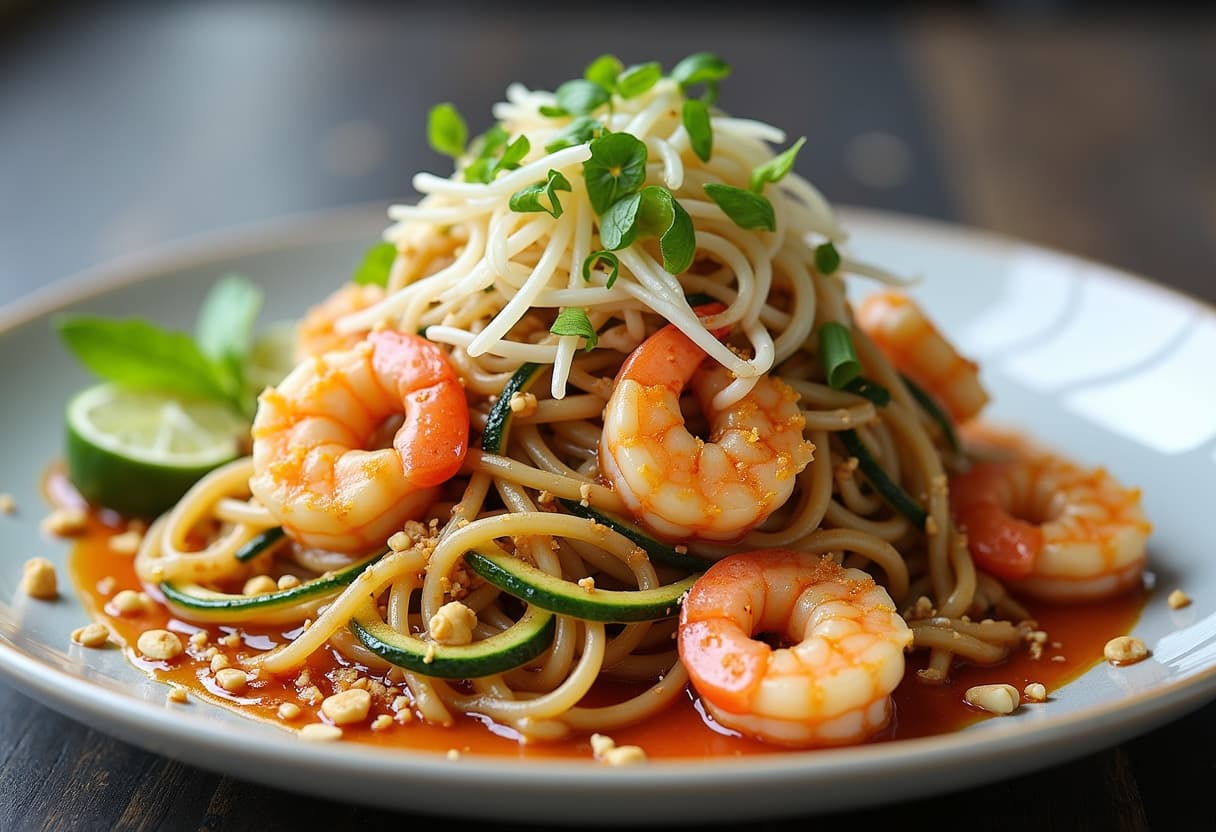
All the tangy, nutty, savory soul of Thai street food with just 7g net carbs per serving. Shirataki and zucchini noodles soak up a sugar-free tamarind-style sauce, then get tossed with shrimp, egg, and crushed peanuts. Ready in 30 minutes start to finish.

Editorial Team · June 18, 2026
Nutrition per serving
Per serving · makes 4. Values are estimates; brands vary.
This keto pad thai delivers the bright, salty-sweet-sour punch of the takeout classic without the rice noodles or sugar. A quick sugar-free tamarind-style sauce ties together shrimp, egg, and crisp bean sprouts for a 30-minute weeknight dinner.
Ingredients
- 2 (7 oz) packs shirataki noodles, drained and rinsed
- 2 medium zucchini, spiralized (about 12 oz)
- 1 lb large shrimp, peeled and deveined
- 3 large eggs, lightly beaten
- 3 tbsp avocado oil, divided
- 3 cloves garlic, minced
- 1.5 cups bean sprouts
- 4 scallions, cut into 1-inch pieces
- 1/3 cup roasted peanuts, roughly crushed
- 3 tbsp coconut aminos
- 2 tbsp fish sauce
- 1.5 tbsp fresh lime juice, plus wedges to serve
- 1 tbsp natural peanut butter
- 1 tbsp powdered erythritol
- 1 tsp chili-garlic paste (or to taste)
Instructions
- 1
Whisk together the coconut aminos, fish sauce, lime juice, peanut butter, erythritol, and chili-garlic paste until smooth; set the sauce aside.
- 2
Dry-toast the rinsed shirataki noodles in a hot dry skillet for 5-7 minutes until they squeak and the excess water evaporates, then transfer to a plate. This is the key to noodles that aren't watery.
- 3
Heat 1 tbsp avocado oil in the skillet over medium-high. Cook the shrimp for about 2 minutes per side until pink and opaque; remove and set aside.
- 4
Add another 1 tbsp oil, pour in the beaten eggs, and scramble loosely for 30 seconds. Push to one side, add the remaining oil and garlic, and stir for 20 seconds until fragrant.
- 5
Return the shirataki and add the zucchini noodles; toss for 2 minutes. Pour in the sauce and toss to coat, cooking 1-2 minutes until the zucchini is just tender but still has bite.
- 6
Return the shrimp, then add bean sprouts and scallions. Toss for 1 minute to warm through. Remove from heat and fold in half the crushed peanuts.
- 7
Divide among 4 plates, top with the remaining peanuts, and serve with lime wedges.
Tips & notes
- Drying the shirataki and not overcooking the zucchini are what keep this from turning into a watery puddle. Serve right away for the best texture.
- Swap the shrimp for sliced chicken thigh or extra firm tofu; cook chicken through (about 6-7 minutes) before removing from the pan.
- Store leftovers airtight in the fridge for up to 3 days. Reheat in a hot skillet rather than the microwave to drive off moisture.
Log this recipe in one tap
Save keto pad thai to CarbMeNot and track its 7g net carbs against your daily budget automatically.


Frequently asked questions
- How many carbs are in keto pad thai?
- This recipe makes 4 servings, each with 7g net carbs (11.5g total carbs minus 4.5g fiber), 412 calories, 31g protein, and 27g fat.
- What noodles do you use for keto pad thai?
- A mix of shirataki (konjac) noodles and spiralized zucchini. Shirataki are nearly zero-carb and give the chewy bite, while zucchini adds bulk and freshness. Dry-toast the shirataki first so the dish doesn't turn watery.
- Can I make this dairy-free or nut-free?
- It's already dairy-free. For nut-free, swap the peanut butter for sunflower seed butter and replace the crushed peanuts with toasted pumpkin seeds; the net carbs stay about the same.
More keto recipes
CarbMeNot provides general nutrition information, not medical advice. Values are estimates — verify before relying on them for any health decision. See our Medical Disclaimer.