Keto Flour: Almond, Coconut & Best Low-Carb Baking Flours
Almond flour has ~3g net carbs per ¼ cup and coconut flour ~6g per 2 tbsp. Compare the best keto flours, swap ratios, and baking tips.

Editorial Team · March 6, 2026 · 5 min read
Last updated May 31, 2026
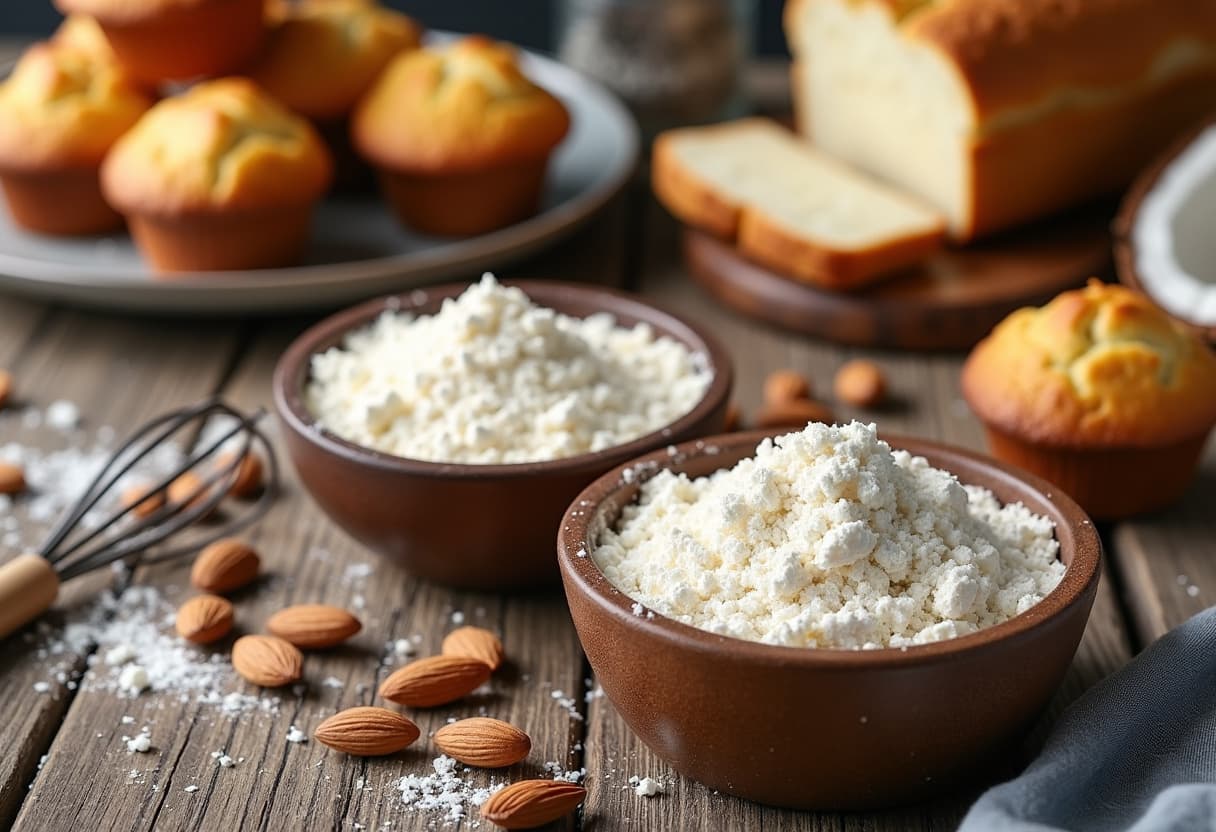
Wheat flour is roughly 75% carbohydrate, which makes it a non-starter on keto. The good news: a handful of nut, seed, and fiber-based flours let you bake bread, cookies, and pizza crust while keeping net carbs in single digits. Here's how the main keto flours compare and how to actually use them.
The best keto flours are almond flour (about 3g net carbs per ¼ cup / 28g) and coconut flour (about 3g net carbs per 2 tablespoons / 14g). Almond flour is the most versatile and forgiving for everyday low-carb baking, while coconut flour is more carb-efficient but absorbs three to four times more liquid, so it needs extra eggs and moisture. For zero-net-carb structure and thickening, bakers add psyllium husk, oat fiber, and flaxseed meal. Avoid regular wheat, oat, rice, and corn flours, which run 60-80g net carbs per cup.
Keto flour carb comparison
Here's how common low-carb flours stack up against wheat. Numbers are approximate per typical serving and vary slightly by brand, so always confirm on the package.
| Flour | Serving | Total carbs | Fiber | Net carbs |
|---|---|---|---|---|
| Almond flour | ¼ cup (28g) | ~6g | ~3g | ~3g |
| Coconut flour | 2 tbsp (14g) | ~8g | ~5g | ~3g |
| Flaxseed meal | 2 tbsp (14g) | ~4g | ~4g | ~0g |
| Psyllium husk | 1 tbsp (9g) | ~7g | ~7g | ~0g |
| Oat fiber | 2 tbsp (10g) | ~9g | ~9g | ~0g |
| Sesame flour | ¼ cup (28g) | ~5g | ~4g | ~1g |
| Sunflower seed flour | ¼ cup (28g) | ~6g | ~3g | ~3g |
| Wheat flour (for reference) | ¼ cup (31g) | ~23g | ~1g | ~22g |
A full cup of wheat flour carries roughly 90g net carbs, so even one slice of conventional bread can use most of a day's keto budget.
Almond flour: the keto workhorse
Almond flour is the default for most low-carb recipes, and almond flour keto baking is so popular because it behaves a lot like a soft wheat flour. It's made from blanched, skinless almonds ground fine, giving a pale crumb and gentle, slightly sweet flavor that works in cookies, muffins, cakes, pancakes, and breading.
Per ¼ cup (28g) it delivers about 3g net carbs, 6g protein, 14g fat, and 160 calories. Because that fat content is high, almond flour can brown fast and turn greasy if you overload a recipe, so don't simply double it. Buy "blanched almond flour" (not almond meal) for the finest texture, and store it in the fridge or freezer, since the oils go rancid faster than wheat flour at room temperature.
Coconut flour: carb-efficient but thirsty
Coconut flour is the other keto staple. It's a byproduct of coconut milk production, dried and ground into a soft, very absorbent powder. Coconut flour keto recipes use surprisingly little of it: ¼ to ⅓ cup can replace a full cup of almond flour because it soaks up so much liquid.
Per 2 tablespoons (14g) you get about 3g net carbs, 2g protein, 4g fat, and 60 calories, plus a hefty 5g of fiber. That fiber is exactly why it drinks up moisture. Expect to add an extra egg (or two) and more liquid than you think, and let the batter rest a couple of minutes so the flour fully hydrates before baking. It also adds a mild coconut sweetness, which is great in cake but noticeable in savory bread.
Zero-carb helpers: psyllium, oat fiber, flax
Nut flours alone can bake crumbly, so keto bakers reach for near-zero-net-carb add-ins that supply structure and chew:
- Psyllium husk (about 0g net carbs per tbsp) gels with water and gives keto bread a stretchy, wheat-like crumb. A little goes a long way; too much turns loaves gummy or purple.
- Oat fiber (about 0g net carbs per 2 tbsp) is pure insoluble fiber, not oat flour. It lightens dense almond-flour bakes and helps mimic a white-bread texture.
- Flaxseed meal (about 0g net carbs per 2 tbsp) binds like an egg and adds omega-3s, ideal in crackers and rustic loaves.
- Vital wheat gluten is near-zero carb and makes excellent low-carb yeast bread, but it's pure gluten, so it's off-limits for anyone gluten-free or grain-free.
These rarely work solo; they're mixed into a nut-flour base.
Substitution ratios that actually work
Swapping keto flours into a standard recipe is where most bakes fail. Use these starting points, then adjust by feel:
| Swap | Ratio | Adjustment |
|---|---|---|
| Wheat → almond flour | ~1:1 by volume | Reduce liquid slightly; add ½ tsp extra binder |
| Wheat → coconut flour | ~¼ cup per 1 cup wheat | Add 1 egg + extra liquid per ¼ cup |
| Almond → coconut flour | ¼–⅓ cup coconut per 1 cup almond | Add 1–2 eggs and more liquid |
Coconut flour is never a 1:1 sub for anything. When in doubt, find a recipe written specifically for the flour you have rather than forcing a conversion.
Flours to skip on keto
Plenty of "alternative" flours sound healthy but aren't keto. Oat flour (~60g net carbs/cup), rice flour, corn flour, tapioca and arrowroot starch, banana flour, and chickpea flour all run high in net carbs. Cassava flour is essentially pure starch. "Gluten-free flour blends" are usually built on rice and tapioca, so they're poor keto choices despite the wholesome packaging. The only reliable way to know is to read the nutrition label and calculate net carbs.
Track it in CarbMeNot
Baking flours are easy to underestimate because the carbs hide in a finished muffin or slice of bread. Log your flours and recipes in CarbMeNot to see real net carbs per serving, compare almond versus coconut on the fly, and make sure your homemade keto treats actually fit your daily target. A quick scan or search before you bake keeps your low-carb baking honestly low-carb.
Frequently asked questions
- What is the best flour for keto baking?
- Almond flour is the most versatile keto flour, with about 3g net carbs per ¼ cup (28g) and a neutral flavor that swaps close to 1:1 for some wheat recipes. Coconut flour is the most carb-efficient by weight but absorbs huge amounts of liquid, so it's best in recipes designed for it. For zero-carb thickening or fiber, oat fiber and psyllium husk round out a keto baker's pantry.
- How many carbs are in almond flour vs coconut flour?
- A ¼ cup (28g) of almond flour has roughly 6g total carbs and 3g of fiber, leaving about 3g net carbs. The same volume of coconut flour is denser: 2 tablespoons (about 14g) has roughly 8g total carbs and 5g fiber, or about 3g net carbs, but you use far less of it per recipe. Always check the label, as brands vary by 1-2g.
- Can I substitute almond flour for coconut flour 1:1?
- No. Coconut flour absorbs three to four times more liquid than almond flour, so you cannot swap them evenly. A common rule is to use about ¼ to ⅓ cup coconut flour for every 1 cup of almond flour, then add an extra egg or two and more liquid. It's usually easier to follow a recipe written for the specific flour.
- Is almond flour the same as almond meal?
- Not exactly. Almond flour is made from blanched (skinless) almonds ground fine, giving a pale color and smooth crumb ideal for cakes and cookies. Almond meal often includes the skins and is coarser, which works for breading and rustic bakes but makes denser cakes. Their carb counts are nearly identical.
- Does keto flour spike blood sugar?
- Almond and coconut flour have a much lower glycemic impact than wheat flour because they're low in net carbs and high in fat, fiber, or protein. Most low-carb flours won't meaningfully spike blood sugar in normal serving sizes. The exception is starchy additions like vital wheat gluten blends or any flour cut with regular wheat, so read ingredient lists carefully.
Sources
Keep reading
Free tools: Is It Keto? checker · macro calculator · protein calculator · 7-day meal plan PDF