Tempeh vs Tofu: Protein, Carbs & Which Is Better
Tofu is lower-carb (~0.5-1g net per 100g) and better for strict keto; tempeh packs ~20g protein and ~5g fiber per 100g. Full USDA comparison inside.

Editorial Team · July 2, 2026 · 8 min read
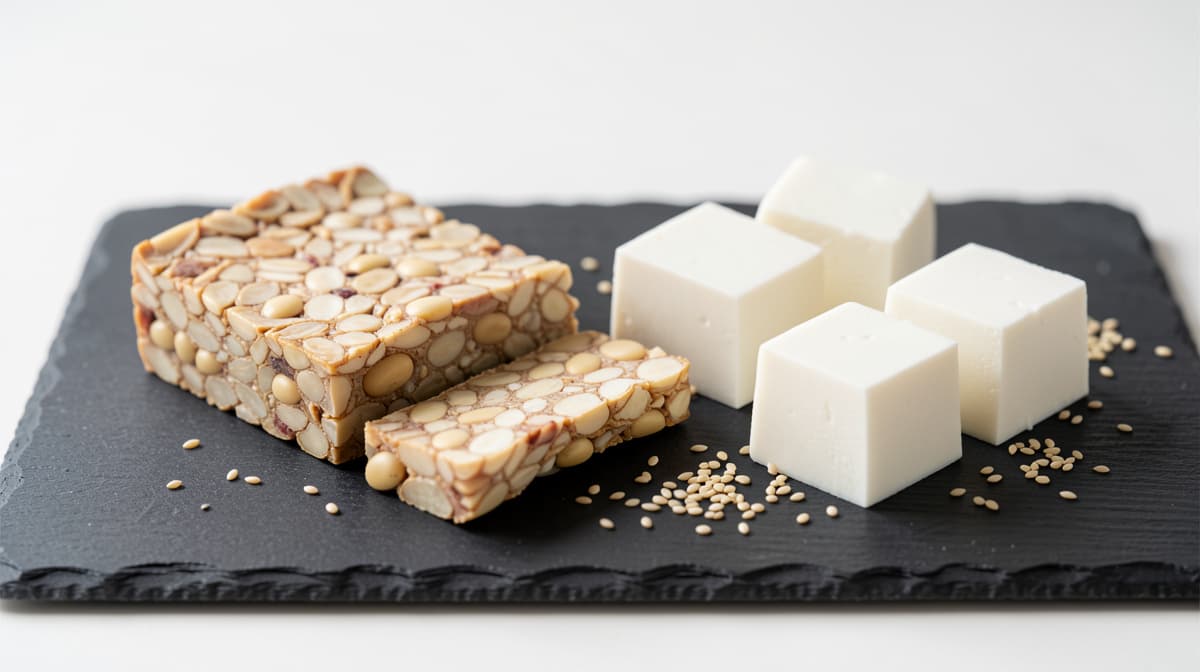
If you want the most protein and fiber per bite, tempeh wins: about 20g protein and 7.6g carbs per 100g, versus roughly 17g protein and 2.8g carbs for firm tofu. If you're eating strict keto or just want the lowest-carb option, tofu wins, with as little as 0.5-1g net carbs per 100g. Both are legitimate whole-soy proteins — the right pick depends on your macros and your recipe.
Quick comparison table
USDA-typical values per 100g (about 3.5 oz):
| Nutrient | Tempeh | Firm tofu | Regular/soft tofu |
|---|---|---|---|
| Calories | 192 | 144 | 76 |
| Total carbs | 7.6 g | 2.8 g | 1.9 g |
| Fiber | ~5 g* | 2.3 g | 0.3 g |
| Net carbs | ~3 g | ~0.5 g | ~1.6 g |
| Protein | 20.3 g | 17.3 g | 8.1 g |
| Fat | 10.8 g | 8.7 g | 4.8 g |
*USDA doesn't isolate fiber for tempeh because fermentation changes how the fiber measures; most commercial labels report 4-7g per 100g, so ~5g is a fair middle estimate. Net carbs = total carbs − fiber (− sugar alcohols, which neither food contains).
One honest caveat most articles skip: "tofu" is not one food. USDA firm tofu set with calcium sulfate and nigari runs 144 calories and 17.3g protein per 100g, but a typical supermarket extra-firm block often labels closer to 90-100 calories and 10-11g protein per 100g, and silken tofu drops to about 55 calories and 5g protein. The "tempeh has double the protein of tofu" claim is true against regular and silken tofu, and only modestly true against dense extra-firm. Check your specific block.
What's the actual difference between tempeh and tofu?
Both start with soybeans, but the processing diverges completely.
Tofu is made like cheese. Soybeans are soaked, ground, and strained into soy milk, then a coagulant — calcium sulfate, magnesium chloride (nigari), or both — curdles the milk. The curds get pressed into blocks. More pressing means firmer tofu, more protein per gram, and less water. The straining step removes most of the bean's fiber, which is why tofu is so low-carb: what's left is mostly protein, fat, and water.
Tempeh is made like a fermented food, because it is one. Whole soybeans are partially cooked, inoculated with the mold Rhizopus oligosporus, and incubated for 24-48 hours until the mycelium binds the beans into a dense, sliceable cake. Nothing is strained out — you're eating the entire bean, skin, fiber, and all. That's why tempeh carries more of everything: more protein, more fiber, more carbs, more calories.
The fermentation matters beyond texture. It partially breaks down phytic acid, the compound in legumes that binds minerals, so the iron (2.7mg per 100g), zinc, and magnesium in tempeh are more absorbable than the same minerals in unfermented soy. Fermentation also converts some of soy's isoflavones into their aglycone forms, which your body absorbs more readily, and many people find fermented soy easier on digestion — less bloating than beans.
Tofu counters with a mineral trick of its own: when it's set with calcium sulfate (check the ingredient list), it becomes a genuinely rich calcium source — USDA lists calcium-set firm tofu at over 600mg per 100g, more than a glass of milk. Nigari-only tofu carries far less, so the coagulant on the label actually changes the nutrition.
Which has more protein and fiber — and what about the B12 claim?
Protein: Tempeh delivers about 20.3g per 100g, among the highest of any unprocessed plant food. Firm tofu delivers 17.3g (USDA calcium-sulfate/nigari firm), typical store extra-firm about 10-12g, and regular tofu about 8g. Per calorie, they're closer than they look: tempeh gives you roughly 10.6g protein per 100 calories, firm tofu about 12g. So if you're cutting and want maximum protein per calorie, dense tofu is quietly excellent. If you want maximum protein per serving without eating a huge volume, tempeh is the easier tool — a 4 oz (113g) portion is about 23g protein, similar to a chicken thigh.
Both are complete proteins with all nine essential amino acids, a distinction most plant proteins can't claim.
Fiber: No contest. Tempeh's whole-bean construction gives it roughly 4-7g fiber per 100g; firm tofu has about 2.3g and softer styles almost none. If your low-carb diet skews low in fiber — a common complaint — tempeh is one of the few high-protein foods that meaningfully helps.
The B12 myth — be careful here. You'll see claims that tempeh provides vitamin B12 because it's fermented. Treat that as unreliable. Rhizopus mold does not produce B12; when B12 shows up in tempeh, it comes from incidental bacterial contamination (typically Klebsiella pneumoniae) during traditional production. Modern commercial tempeh made under clean conditions usually contains little to none, amounts vary wildly batch to batch, and some of what's measured may be inactive B12 analogues that don't work in the human body. If you're vegan or mostly plant-based, get B12 from fortified foods or a supplement. Do not budget it from tempeh.
Which is better for keto and low carb?
For strict keto — typically 20-50g net carbs per day — tofu is the safer default, and it's not close on the numbers.
Run the math on real portions. A 100g serving of firm tofu carries about 2.8g total carbs and 2.3g fiber, netting out around 0.5-1g net carbs. You could eat an entire 14 oz block (about 400g) for roughly 2-4g net carbs. Tofu is functionally a free food on keto.
Tempeh is higher but still workable. A standard 3 oz (85g) serving runs about 6.5g total carbs; subtract roughly 4g of fiber and you're at about 3g net carbs. Even a generous half-package (4 oz) lands around 3.5-4.5g net. On a 30g/day net-carb budget, that's about 12-15% of your allowance for a serious protein hit plus fiber — a trade many keto eaters should happily make, since fiber is the nutrient keto diets most reliably shortchange.
Two label warnings. First, flavored and marinated tempeh (BBQ, sesame-ginger, "bacon" strips) often adds sugar — some flavored strips run 3-5g added sugar per serving, which can double the net carbs. Buy plain and season it yourself. Second, multi-grain tempeh cut with rice or barley runs higher in carbs than pure soy tempeh; the ingredient list tells you which you're holding.
If you're doing moderate low-carb (50-100g/day) rather than strict keto, the carb difference stops mattering and tempeh's fiber and protein edge arguably makes it the better everyday pick.
Which is easier to cook with?
They behave like different ingredients, and picking the right one for the dish matters more than the macro deltas.
Tofu is a flavor sponge. It's nearly neutral, so it takes on whatever you give it — but only if you manage its water. Press firm tofu for 20-30 minutes (or buy super-firm/vacuum-packed, which needs no pressing), then pan-fry, bake, or air-fry. For a chewier, meatier bite, freeze the block and thaw it; the ice crystals leave a spongy texture that drinks up marinades. Silken tofu goes the other direction entirely — blend it into smoothies, creamy dressings, or a low-carb "cheesecake" base. Cornstarch coatings crisp it beautifully, but note that adds carbs; on keto, dust with a little coconut flour or just sear it dry in oil.
Tempeh brings its own flavor — nutty, earthy, slightly bitter, with a firm, dense chew that holds up on a grill or under a crumble. Two tricks fix most tempeh complaints: steam or simmer the slices for about 10 minutes before marinating, which mellows the bitterness and opens the surface to absorb flavor; and slice it thin or crumble it so the seasoning-to-surface ratio stays high. Crumbled tempeh is an outstanding stand-in for ground meat in tacos and chili; thin marinated slabs make the best plant-based "bacon" texture you'll get from soy.
Rule of thumb: sauces, soups, scrambles, and crispy cubes → tofu. Grilling, sandwiches, crumbles, and anything that needs chew → tempeh.
The bottom line
There's no loser here. Choose tofu when net carbs are the binding constraint (strict keto), when you want a neutral canvas, or when you want calcium from a calcium-set block — at ~0.5-1g net carbs per 100g, it fits any macro plan. Choose tempeh when protein and fiber per serving are the goal: 20g protein and ~5g fiber per 100g for a very reasonable ~3g net carbs. Just buy it plain, skip the sugary marinades, and don't count on it for B12. The genuinely optimal answer for most low-carb eaters is rotation — tofu on strict days and in soups and stir-fries, tempeh when you want fiber, chew, and something to put on the grill. Log whichever you eat and let your daily net-carb total, not the ingredient, make the call.
If your protein question is dairy rather than soy, we ran the same comparison on the two high-protein yogurts: skyr vs Greek yogurt — including whether you can swap one for the other.
Frequently asked questions
- Is tempeh keto-friendly?
- Yes, in normal portions. A 3 oz (85g) serving of plain tempeh has about 6.5g total carbs and roughly 4g fiber, netting around 3g net carbs — easy to fit in a 20-50g/day keto budget. Stick to plain soy tempeh: flavored or marinated versions often add 3-5g sugar per serving, and multi-grain tempeh made with rice or barley runs higher in carbs.
- Does tempeh have vitamin B12?
- Don't count on it. The Rhizopus mold that ferments tempeh doesn't produce B12; when B12 appears in tempeh, it comes from incidental bacterial contamination during traditional production. Modern commercial tempeh usually contains little to none, amounts vary batch to batch, and some may be inactive analogues. If you're vegan or mostly plant-based, get B12 from fortified foods or a supplement.
- Which is better for weight loss, tempeh or tofu?
- Both work; they win differently. Firm tofu is lower in calories (about 144 per 100g vs 192 for tempeh) and slightly higher in protein per calorie, making it easy to eat in volume. Tempeh's ~20g protein plus ~5g fiber per 100g makes it more filling per serving. Pick tofu for lower-calorie volume eating, tempeh for satiety — and measure portions either way.
- Can I substitute tempeh for tofu in recipes?
- Sometimes. They swap well in stir-fries, tacos, curries, and grain bowls, but tempeh is dense, chewy, and nutty while tofu is soft and neutral, so blended or creamy recipes (scrambles, smoothies, sauces) need tofu, and grilled or crumbled 'meaty' dishes favor tempeh. If you swap in tempeh, steam it about 10 minutes first to cut bitterness and help marinades absorb.
Keep reading
Free tools: Is It Keto? checker · macro calculator · protein calculator · 7-day meal plan PDF