Low-Calorie High-Protein Meals: 15 Ideas Under 500 Calories
15 meals under 500 calories with 30-45 g protein each — exact builds, calorie counts, and the satiety math behind protein-first eating.

Editorial Team · July 2, 2026 · 7 min read
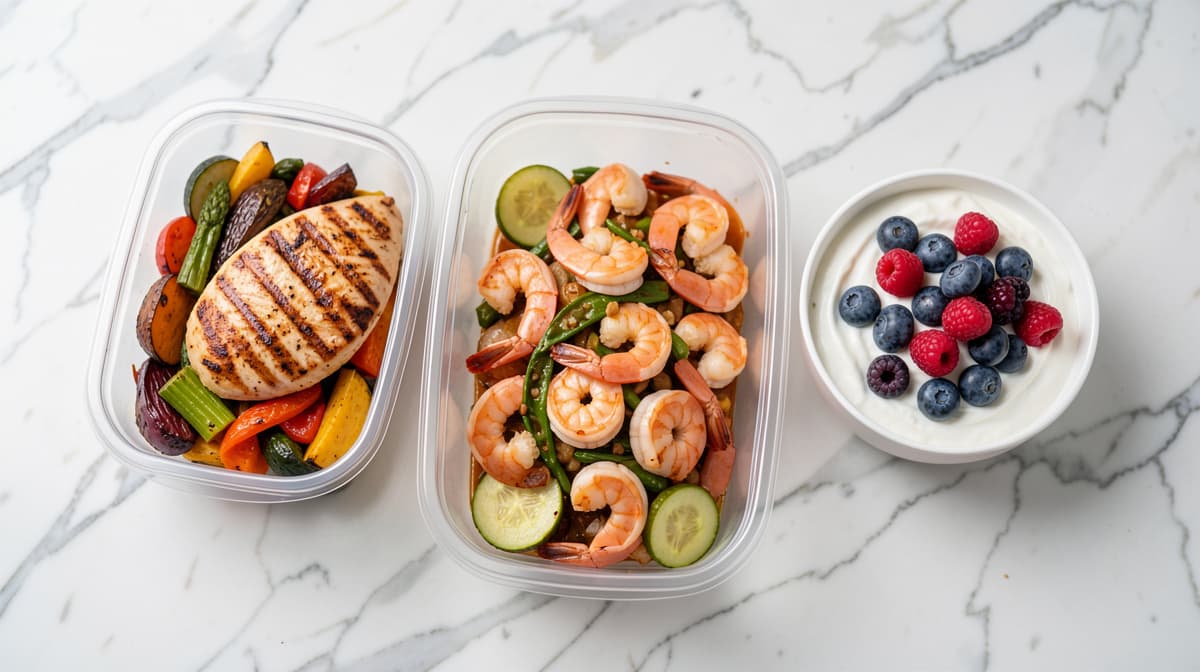
The best low-calorie high-protein meals deliver 30–45 grams of protein for 250–450 calories: a six-egg-white turkey scramble runs about 350 calories and 40 g protein, sheet-pan salmon with broccoli lands near 430 and 36 g, and tuna salad lettuce wraps come in at just 250 calories with 30 g. Below are 15 exact builds, plus the satiety math that explains why protein is the macro to prioritize when calories are capped.
Which 15 meals pack 30+ grams of protein under 500 calories?
Every build below is based on USDA per-portion numbers, not restaurant guesses. Totals shift with brands and portions, so treat these as tight estimates — within 10–15% if you weigh the protein source.
| Meal | The build | Calories | Protein |
|---|---|---|---|
| Egg-white turkey scramble | 6 egg whites, 3 oz turkey breast, 1 oz cheddar, peppers | ~350 | 40 g |
| Greek yogurt bowl | 1.5 cups nonfat Greek yogurt, 1/2 cup berries, 1 tbsp chia | ~300 | 35 g |
| Chicken breast + roasted veg | 5 oz grilled breast, 2 cups broccoli and carrots, 1 tsp olive oil | ~400 | 45 g |
| Tuna salad lettuce wraps | 5 oz can tuna, 1 tbsp light mayo, celery, romaine leaves | ~250 | 30 g |
| Shrimp stir-fry | 6 oz shrimp, 2 cups stir-fry vegetables, 1 tsp sesame oil, soy sauce | ~300 | 38 g |
| Cottage cheese plate | 1 cup 2% cottage cheese, 1 hard-boiled egg, cucumber, tomato | ~320 | 34 g |
| Sheet-pan salmon | 5 oz salmon, 2 cups broccoli, lemon, 1 tsp olive oil | ~430 | 36 g |
| Lettuce-wrapped turkey burger | 5 oz 93% lean turkey, tomato, onion, mustard, butter lettuce | ~320 | 32 g |
| Lean beef bowl | 5 oz cooked 93/7 ground beef, zucchini, peppers, salsa | ~420 | 40 g |
| Baked cod + green beans | 8 oz cod, 2 cups green beans, 1 tsp butter, lemon | ~280 | 40 g |
| Chicken salad, yogurt Caesar | 5 oz chicken, romaine, parmesan, Greek-yogurt Caesar dressing | ~380 | 42 g |
| Whey protein smoothie | 1 scoop whey, 1 cup skim milk, 1/2 banana, spinach, ice | ~320 | 36 g |
| Pork tenderloin + cauli mash | 5 oz roasted tenderloin, 1.5 cups cauliflower mash | ~380 | 42 g |
| Tofu-edamame bowl | 6 oz extra-firm tofu, 1 cup shelled edamame, slaw, sriracha | ~400 | 34 g |
| Turkey chili | 1.5 cups: 93% lean turkey, tomatoes, kidney beans, chili spices | ~380 | 38 g |
A few standouts. Baked cod is the protein-density champion — about 7 calories per gram of protein, close to the theoretical floor. White fish, shrimp, egg whites, nonfat Greek yogurt, and chicken breast are the leanest proteins in the store; build around them and 40 g of protein costs under 300 calories, leaving room for vegetables and a little fat for flavor.
The tofu-edamame bowl is the strongest vegetarian option because it pairs two complete soy proteins. Quinoa-and-chickpea bowls, the usual plant-based suggestion, cost 110–130 calories per 10 g of protein — nearly double.
And note what's not driving these calorie counts: cooking fat. One tablespoon of olive oil is 119 calories with zero protein; most builds here use one teaspoon (40 calories) or none. Free-pour the oil and a 300-calorie stir-fry quietly becomes a 550-calorie one — the most common reason logged meals and real meals don't match.
Why does protein keep you full on fewer calories?
Three mechanisms, all measurable.
Thermic effect of food (TEF). Protein contains 4 calories per gram, the same as carbohydrate — but your body spends roughly 20–30% of protein's calories just digesting and processing it, versus about 5–10% for carbs and 0–3% for fat. Eat 40 g of protein (160 calories) and roughly 32–48 of those calories are burned during processing. Across a day with 130–150 g of protein, that's a real 100+ calorie edge over the same calories from carbs and fat — not diet-breaking on its own, but free.
Satiety hormones. Protein triggers a stronger release of fullness signals (PYY, GLP-1, CCK) and suppresses ghrelin more than the other macros. In controlled feeding studies, people who raise protein to around 30% of calories spontaneously eat several hundred fewer calories per day without being told to restrict.
Muscle preservation. In a calorie deficit, inadequate protein means a meaningful share of the weight you lose is lean mass, which lowers resting metabolic rate. Higher intakes — around 0.7–1 g per pound of body weight daily while dieting — shift losses toward fat.
Same 4 calories per gram on the label, but protein costs more to process, blunts hunger harder, and protects the tissue that keeps your metabolism up.
How much protein should you aim for per meal?
Target 30–40 g per meal, three to four times a day. That number isn't arbitrary: roughly 0.4 g per kilogram of body weight per meal (about 30 g for a 165 lb person) is the dose that maximally stimulates muscle protein synthesis in most research, and adults over ~60 need the higher end for the same effect.
Distribution matters more than most articles admit. The typical American pattern — 10 g of protein at breakfast, 20 g at lunch, 60+ g at dinner — means two of three meals under-deliver on satiety and muscle signaling, so hunger peaks in the late afternoon. Front-loading with the egg-white scramble (40 g) or Greek yogurt bowl (35 g) is often the highest-leverage fix for people who snack their deficit away between 3 and 6 p.m.
For a full day: three meals from the table plus one protein-forward snack lands at 1,200–1,500 calories and 130–160 g of protein — a deficit for most adults, with protein high enough to protect lean mass. Bigger or very active people should add carbs and fat around these builds rather than shrinking the protein.
How do you build your own version under 500 calories?
Use this formula and you can improvise indefinitely:
- Start with 5–6 oz of a lean protein (cooked weight): chicken breast, turkey, white fish, shrimp, pork tenderloin, 93/7 beef, tofu, or 1.5 cups Greek yogurt or cottage cheese. That's your 30–45 g of protein for 150–290 calories.
- Add 2+ cups of non-starchy vegetables — broccoli, zucchini, peppers, green beans, leafy greens. Roughly 50–80 calories, plus fiber that amplifies the fullness effect.
- Cap added fat at 1–2 teaspoons (40–80 calories) and measure it. Fat carries flavor; it just can't be free-poured on a calorie budget.
- Optionally add a half-cup of a starch or fruit — rice, potatoes, beans, berries — for 60–120 calories if you have room and want it.
Worst case that stack totals about 490 calories; most combinations land between 280 and 430.
One thing worth noticing: skip step 4 and nearly every meal on this list is naturally low-carb — eleven of the fifteen come in under about 10 g of net carbs. That's why the same meals show up in keto plans and standard calorie-counting plans alike; lean protein plus non-starchy vegetables is the shared foundation. Keto-strict eaters just swap the banana for berries and skip the kidney beans in the chili. Track a few of these in CarbMeNot and you'll see calories and net carbs fall together.
Flavor is the long game. Salt, acid (lemon, vinegar, salsa), heat (sriracha, chili crisp in small doses), and fresh herbs add nearly zero calories. The people who sustain high-protein eating for years aren't the most disciplined — they're the ones whose 350-calorie meals actually taste good.
The bottom line
Fifteen meals, all 250–450 calories, all 30–45 g of protein — built from lean sources that deliver protein at 7–12 calories per gram. The physiology stacks in your favor: protein burns 20–30% of its own calories in digestion, suppresses hunger hormones harder than carbs or fat, and protects muscle in a deficit. Aim for 30–40 g per meal spread evenly across the day, keep added fat to a measured teaspoon or two, and let vegetables fill the plate. Counting calories, carbs, or both, the formula is the same — and it's one you can eat for years, not weeks.
Frequently asked questions
- Is 30 grams of protein per meal enough to build muscle?
- For most people, yes. Around 0.4 g per kilogram of body weight per meal (about 30 g for a 165 lb person) maximally stimulates muscle protein synthesis in most research. Adults over 60 respond better to 35-40 g per meal. Total daily intake matters most, though: aim for roughly 0.7-1 g per pound of body weight while in a calorie deficit, paired with resistance training.
- Are these meals keto-friendly?
- Mostly. Eleven of the fifteen meals come in under about 10 g of net carbs, since lean protein plus non-starchy vegetables is the shared foundation of keto and calorie-counting plans alike. To make the rest strict-keto, swap the half banana in the smoothie for berries, skip the kidney beans in the turkey chili, and hold the optional starch in any build.
- Can eating this much protein hurt your kidneys?
- Not in healthy people. Research on intakes well above these levels — up to around 1.5 g per pound of body weight daily — shows no harm to kidney function in people without pre-existing kidney disease. If you have diagnosed kidney disease or impaired kidney function, protein needs are individualized, so work with your doctor or a registered dietitian before increasing intake.
- What are the cheapest high-protein, low-calorie foods?
- Eggs and egg whites, canned tuna, cottage cheese, frozen chicken breast, tofu, and dried lentils consistently deliver the most protein per dollar. Canned tuna and eggs typically cost just a few cents per gram of protein. Whey protein powder is also cheaper per gram than most meat once you buy in bulk, which makes the smoothie one of the most budget-friendly meals on the list.
Keep reading
Free tools: Is It Keto? checker · macro calculator · protein calculator · 7-day meal plan PDF