Ground Turkey vs Ground Beef: Which Is Healthier?
At the same lean ratio they're nearly identical: ~170 calories, 0g carbs per 4 oz of 93/7. The lean percentage matters more than turkey vs beef.

Editorial Team · July 2, 2026 · 6 min read
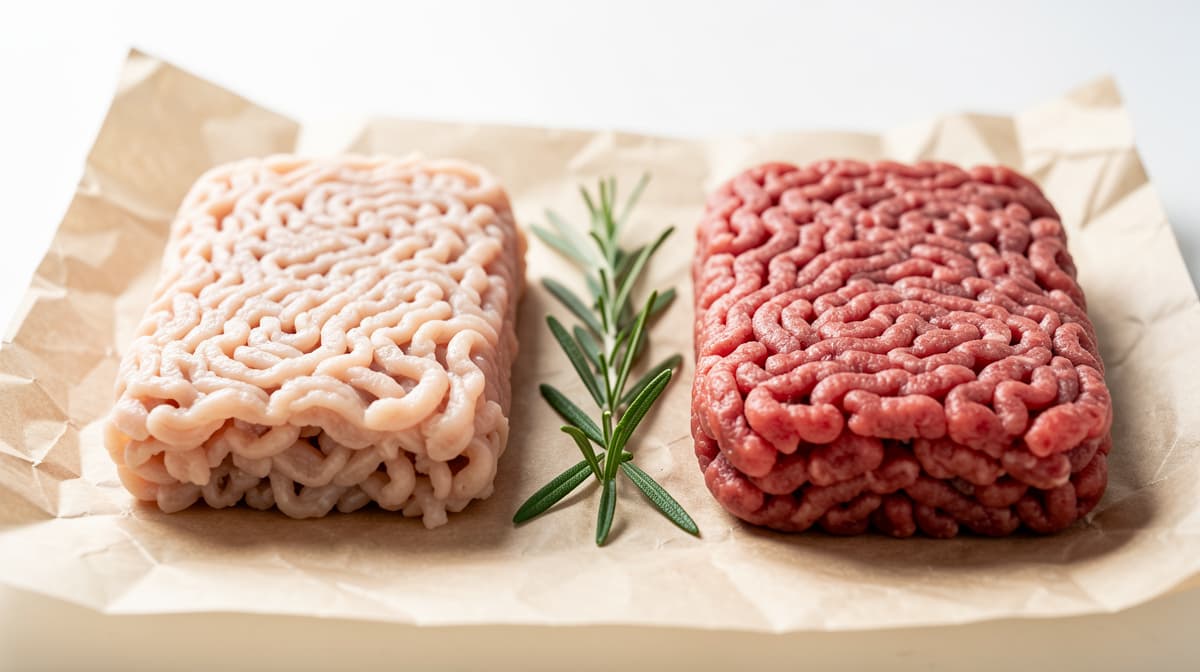
Neither ground turkey nor ground beef is automatically the healthier choice — the lean-to-fat ratio printed on the package matters far more than the animal it came from. A 93/7 ground turkey and a 93/7 ground beef are nearly identical in calories, fat, and protein, while an 80/20 grind of either is a very different food. Beef wins on iron, zinc, and B12; turkey edges ahead on saturated fat at the same ratio. Both have 0g carbs.
Quick comparison table
Nutrition per 4 oz (112g) raw serving, typical USDA/label values:
| Product | Calories | Carbs | Fiber | Net carbs | Protein | Total fat | Sat fat |
|---|---|---|---|---|---|---|---|
| Ground turkey breast (99% lean) | 120 | 0g | 0g | 0g | 26g | 1.5g | 0.5g |
| Ground turkey 93/7 | 170 | 0g | 0g | 0g | 21g | 8g | 2.5g |
| Ground beef 93/7 | 170 | 0g | 0g | 0g | 23g | 8g | 3.5g |
| Ground turkey 85/15 | 220 | 0g | 0g | 0g | 19g | 15g | 4g |
| Ground beef 85/15 | 240 | 0g | 0g | 0g | 21g | 17g | 6.5g |
| Ground beef 80/20 | 280 | 0g | 0g | 0g | 19g | 22g | 8g |
Read down the table and the real pattern jumps out: the gap between 93/7 and 80/20 beef is 110 calories and 14g of fat per serving. The gap between 93/7 turkey and 93/7 beef is zero calories and zero grams of fat.
Does the lean ratio matter more than the meat?
Yes, and this is where most "turkey is healthier" advice goes wrong. People compare 93/7 ground turkey against 80/20 ground beef and conclude turkey is the light option. That's not a turkey-versus-beef comparison — it's a lean-versus-fatty comparison, and lean beef would have won it too.
Match the ratios and the numbers converge. Per 4 oz raw, 93/7 turkey and 93/7 beef both land around 170 calories and 8g of fat. Beef carries slightly more protein (23g vs 21g), turkey slightly less saturated fat (2.5g vs 3.5g). Those differences are real but small — roughly the swing you'd get from a tablespoon of the milk in your coffee.
One label trap to know: plain "ground turkey" with no percentage is usually 85/15 and includes dark meat and skin, putting it closer to 85/15 beef than to anything "diet." At the other extreme, ground turkey breast (99% lean) is one of the leanest proteins in the store — 120 calories and 26g of protein per 4 oz — but there's no true beef equivalent, since even 96/4 ground beef carries a bit more fat. If your goal is maximum protein per calorie, ground turkey breast genuinely is the winner. If your goal is a normal weeknight dinner, pick the ratio first and the species second.
Which has more iron, B12, and zinc?
This is beef's clearest win, and it's worth taking seriously. Per 100g cooked, lean ground beef delivers roughly 2.4–2.7mg of iron, about 5.5mg of zinc, and around 2.5µg of vitamin B12 — that single serving covers your entire daily B12 requirement and about half the zinc RDA for men. Ground turkey comes in at roughly half those numbers: about 1.2–1.4mg iron, 3mg zinc, and 1–1.5µg B12 per 100g cooked.
The iron difference is bigger than it looks, because beef's iron is predominantly heme iron, the form your body absorbs at 2–3 times the rate of non-heme iron. For menstruating women, teens, and anyone flagged for low ferritin, regularly choosing beef over turkey is a meaningful nutritional lever, not a rounding error.
Turkey isn't empty, though. It's a strong source of selenium (around 30µg per 100g, versus roughly 20µg in beef) and niacin, and its fat profile skews more unsaturated. If you eat a varied diet with other iron and zinc sources — eggs, shellfish, legumes — the micronutrient gap matters less. If ground meat is your main animal protein, beef pulls ahead.
On saturated fat: at matched ratios turkey saves you about 1g per serving. Current American Heart Association guidance still favors keeping saturated fat moderate, so if you eat ground meat five nights a week, that gram adds up — but swapping 80/20 beef for 90/10 beef saves you far more (about 4g per serving) than swapping beef for turkey at the same ratio ever will.
Is ground turkey or beef better for keto and low carb?
For carbs, it's a tie: both are 0g total carbs, 0g fiber, 0g net carbs (net carbs = total carbs − fiber − sugar alcohols). On a keto budget of 20–50g net carbs a day, unseasoned ground meat of either species costs you nothing, which is exactly why it anchors so many low-carb meal plans.
Two keto-specific notes flip the usual advice. First, keto flips the fat logic: if you're targeting roughly 70% of calories from fat, 85/15 or 80/20 grinds fit your macros better than ultra-lean turkey breast, which can leave you scrambling to add fat elsewhere. Very lean meat plus very low carb is a recipe for being hungry.
Second, watch the pre-seasoned packages. Taco-seasoned or "savory herb" ground turkey and beef often contain added sugar, dextrose, or starch fillers — typically 1–3g of carbs per serving. Plain meat plus your own spices keeps it at zero. If you're logging in CarbMeNot, plain ground meat is a rare food you can log without checking the label; seasoned versions are not.
Can you swap turkey for beef in recipes?
Mostly yes, with two adjustments: fat and flavor.
Turkey is milder and leaner-tasting, so it disappears happily into heavily seasoned dishes — tacos, chili, curries, stuffed peppers, lettuce wraps. Add cumin, smoked paprika, garlic, and a splash of Worcestershire or fish sauce (both add savory depth for essentially zero carbs), and most people won't notice the swap. Browning the turkey hard in a bit of olive oil or avocado oil replaces the flavor that beef fat would have contributed.
Where turkey struggles is dishes where beef is the flavor: a plain burger, a smash patty, a bolognese you simmer for hours. A 93/7 turkey burger cooked like a beef burger comes out dry and gray. If you want a good turkey burger, use 85/15 turkey, mix in a little grated onion for moisture, and don't press it on the grill.
Temperature matters too. All ground poultry must reach 165°F, while ground beef is safe at 160°F — and lean turkey dries out fast past its target. Pull it as soon as it's there; a thermometer helps more with turkey than with any other ground meat.
On price, ground turkey 93/7 usually runs cheaper per pound than 93/7 beef in US supermarkets, while 80/20 beef is often the cheapest of all. If budget is the constraint, lean turkey is frequently the cheapest lean option available.
The bottom line
Buy the ratio, not the species. A 93/7 grind of either turkey or beef gives you about 170 calories, 8g of fat, and 21–23g of protein per 4 oz — nearly interchangeable. Choose beef when iron, zinc, and B12 matter most or when the meat carries the dish; choose turkey to shave saturated fat, save money, or lighten heavily spiced recipes. Both are 0g net carbs, so on keto the tiebreaker is your fat macro, not your carb count. The genuinely unhealthy move is neither meat — it's assuming "turkey" on the label means lean without reading the percentage.
Frequently asked questions
- Is ground turkey healthier than ground beef?
- Only if it's leaner. At the same ratio (93/7 vs 93/7), both have about 170 calories and 8g fat per 4 oz. Turkey has roughly 1g less saturated fat, while beef has more iron, zinc, and B12. The lean percentage on the label matters far more than the species.
- Which has more protein, ground turkey or ground beef?
- Beef, slightly. Per 4 oz raw of a 93/7 grind, ground beef has about 23g protein versus 21g for ground turkey. The exception is ground turkey breast (99% lean), which packs about 26g protein in just 120 calories — the highest protein-per-calorie option of the group.
- Is ground turkey keto-friendly?
- Yes. Plain ground turkey and plain ground beef both have 0g total carbs, 0g fiber, and 0g net carbs, so they fit easily within a 20–50g net-carb keto day. Just avoid pre-seasoned packages, which can add 1–3g of carbs per serving from sugar or starch fillers.
- Why does my 93/7 ground turkey taste drier than beef?
- Turkey has less connective tissue and milder fat, and ground poultry must be cooked to 165°F versus 160°F for beef, so it overcooks easily. Use 85/15 turkey for burgers, brown it in a little olive oil, mix in grated onion for moisture, and pull it off the heat right at temperature.
Keep reading
Free tools: Is It Keto? checker · macro calculator · protein calculator · 7-day meal plan PDF