Cream of Wheat vs Oatmeal: Fiber, Protein & Which Is Better for Weight Loss
Oatmeal has 4g fiber per bowl vs 1g in Cream of Wheat and a lower GI (55 vs 66), which makes it the better pick for weight loss; Cream of Wheat wins on iron. Both are ~24g net carbs per bowl — not keto.

Editorial Team · July 2, 2026 · 7 min read
Last updated September 8, 2026
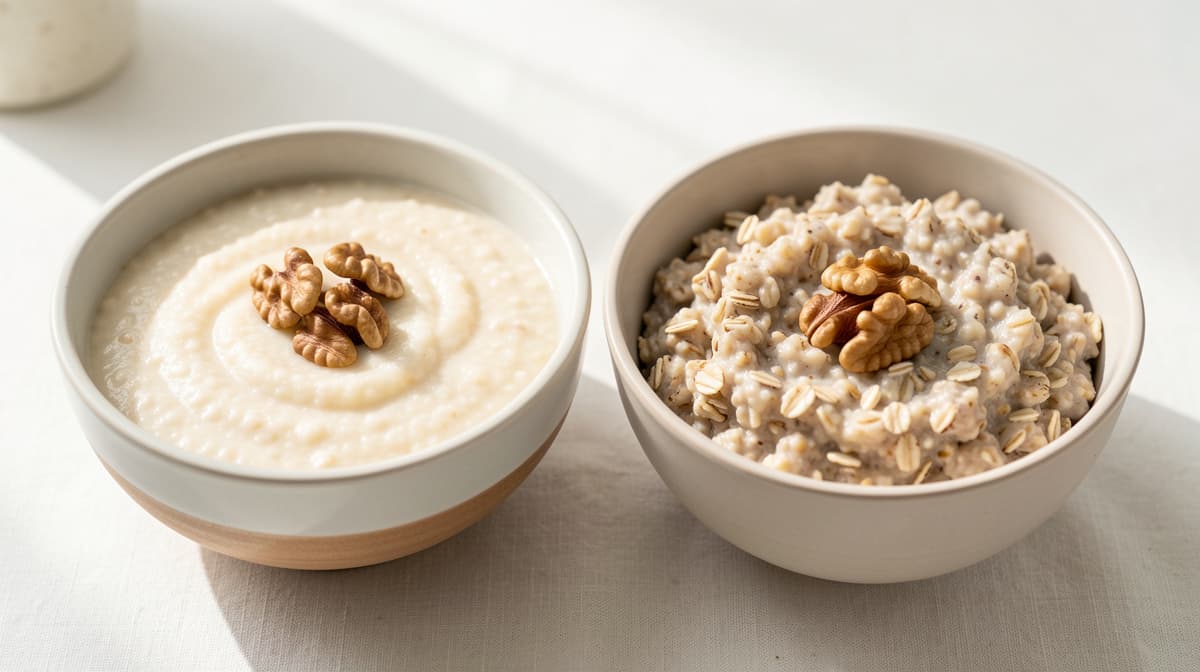
Oatmeal is the more nutritious hot cereal for most people: a standard bowl delivers about 4 g of fiber and 5 g of protein versus roughly 1 g of fiber and 4 g of protein in Cream of Wheat, and it produces a gentler blood sugar response. Cream of Wheat counters with far more iron — about 9–11 mg per serving versus 2 mg — and a smoother, easier-to-digest texture. For keto, though, it's a tie: both land at 23–25 g net carbs per bowl.
Quick comparison table
Values below are USDA-typical figures for one standard serving cooked in water — 3 tbsp (33 g) dry Cream of Wheat (enriched farina) and ½ cup (40 g) dry old-fashioned rolled oats. Each makes roughly one cooked cup.
| Nutrient (per serving) | Cream of Wheat (33 g dry) | Oatmeal, rolled oats (40 g dry) |
|---|---|---|
| Calories | 120 | 150 |
| Total carbs | 25 g | 27 g |
| Fiber | 1 g | 4 g |
| Net carbs | ~24 g | ~23 g |
| Protein | 4 g | 5 g |
| Fat | 0.5 g | 3 g |
| Iron | ~9–11 mg (50–60% DV) | ~2 mg (10% DV) |
| Glycemic index (approx.) | 66 (regular), 74 (instant) | 55 (rolled), ~53 (steel-cut), 79 (instant) |
Net carbs = total carbs − fiber − sugar alcohols. Neither cereal contains sugar alcohols, so the math here is just carbs minus fiber.
What's actually different about these two cereals?
They're different grains at different levels of processing. Cream of Wheat is farina — the starchy endosperm of wheat, milled after the bran and germ are removed. That makes it a refined grain, which is why it cooks up so smooth and why it's enriched: iron and B vitamins (thiamin, riboflavin, niacin, folate) are added back by law, and Cream of Wheat adds more iron than enrichment requires. Oatmeal — whether steel-cut, old-fashioned, or quick — is a whole grain. The oat groat keeps its bran and germ through processing, which is where most of the fiber, fat, and micronutrients live.
That single distinction explains almost every line in the table. Oats carry 4 g of fiber per serving, including about 2 g of beta-glucan, the soluble fiber behind oatmeal's FDA-recognized heart-health claim (3 g of beta-glucan daily, as part of a low-saturated-fat diet, may reduce heart disease risk). Oats also bring 3 g of mostly unsaturated fat, which is part of why they're more filling and slightly higher in calories. Farina, stripped of bran and germ, is nearly pure starch — hence 1 g of fiber, almost no fat, and a texture like silk.
Texture and cook time matter too, and here Cream of Wheat has honest advantages. It's ready in about 2½ minutes, has no chew, and is genuinely easier on the stomach — there's a reason it shows up in bland and low-residue diets for people recovering from GI illness. If you find oatmeal gluey or gritty, farina is the porridge you'll actually eat. One caveat in the other direction: Cream of Wheat is wheat, so it's off the table for celiac disease, while certified gluten-free oats are fine for most people with celiac.
Fiber, protein and blood sugar: which is better for weight loss?
Oatmeal, and it's not particularly close — with one big asterisk about processing.
In the standard international GI tables, regular Cream of Wheat scores around 66 and the instant version around 74, both in the high range. Rolled-oat porridge averages around 55, and steel-cut oats a bit lower, both moderate. The gap comes from beta-glucan, which thickens the contents of your gut and slows how fast glucose hits your bloodstream, and from oats' more intact starch structure. For anyone watching post-meal glucose — prediabetes, type 2 diabetes, or just avoiding the 10 a.m. crash — that's a meaningful difference from the same-sized bowl.
The asterisk: instant oatmeal has a GI around 79, higher than regular Cream of Wheat. Flavored instant packets also add 8–12 g of sugar. So the honest ranking is steel-cut ≈ rolled oats < regular Cream of Wheat < instant Cream of Wheat ≈ instant oatmeal. "Oatmeal is low-GI" is only true if you're not buying maple-and-brown-sugar packets.
Satiety follows the same logic. The fiber-fat-protein combination in oats digests slower, and in satiety research oatmeal consistently outperforms refined cereals at keeping people full through the morning. Cream of Wheat's near-zero fiber and fat mean it clears the stomach fast — pleasant going down, hungry by mid-morning unless you fortify it.
Where Cream of Wheat genuinely wins is iron. A single serving supplies roughly 9–11 mg — half or more of the 18 mg Daily Value, and several times what oatmeal provides. For menstruating women, pregnant women, endurance runners, and anyone flagged for low ferritin, that's not a trivial perk; enriched farina is one of the cheapest reliable iron sources in the grocery store. (Have it with vitamin C — berries or a glass of orange juice — since fortified non-heme iron absorbs better that way, and keep in mind coffee and tea with the meal blunt absorption.)
Can either one fit a keto or low-carb diet?
Not in normal portions — and this is where a lot of comparison articles mislead by crowning oatmeal the "low-GI, high-fiber" winner without doing the carb math. Oatmeal's 4 g of fiber only knocks its 27 g of total carbs down to about 23 g net. Cream of Wheat sits at about 24 g net. On a keto diet targeting 20–50 g net carbs per day, one modest bowl of either cereal spends most or all of your daily budget before you've eaten anything else. Lower GI changes how fast the glucose arrives, not how much arrives.
If you're doing moderate low-carb (say, 75–100 g net per day) rather than strict keto, oatmeal is the defensible pick: use a half serving (¼ cup dry, ~11–12 g net carbs), choose steel-cut or rolled, and pair it with protein — stir in a scoop of protein powder or an egg white while cooking, or top with Greek yogurt and walnuts. The added protein and fat further flatten the glucose curve and make the small portion actually filling.
For strict keto, swap the grain entirely. The good news is that hot-porridge texture is easy to replicate:
- Hemp heart porridge — simmer 3 tbsp hemp hearts in unsweetened almond milk: ~170 calories, ~1 g net carbs, 9–10 g protein.
- Chia porridge or pudding — 2 tbsp chia seeds: ~140 calories, 12 g carbs but 10 g fiber, so ~2 g net.
- Flaxseed meal "noatmeal" — ¼ cup golden flax meal whisked into hot water with cinnamon: ~150 calories, ~1 g net carbs, plus omega-3s.
- Coconut flour porridge — 2 tbsp coconut flour with cream and an egg: ~3–4 g net carbs and a texture surprisingly close to farina.
Combine flax, chia, and hemp with a splash of cream and you get a bowl in the 3–5 g net carb range that eats remarkably like oatmeal. If you're tracking in CarbMeNot, log the swap by ingredient — net carbs on these vary a lot by brand and portion, and seed calories add up fast even when carbs stay near zero. (Checking a cereal label yourself? The free net carbs calculator does the total-minus-fiber math instantly, and our low-carb grains guide ranks every grain by net carbs.)
The bottom line
For general health, oatmeal is the better default: four times the fiber, more protein, heart-healthy beta-glucan, and a GI of ~55 versus 66–74 — provided you choose rolled or steel-cut, not sweetened instant packets. Cream of Wheat is the right call in specific situations: you need serious iron (9–11 mg per bowl), you want something gentle during GI recovery, or you simply won't eat oatmeal's texture. Neither is a keto food — at 23–24 g net carbs per bowl, both consume a full day's strict-keto budget — so keto eaters should reach for hemp, chia, or flax porridge at 1–5 g net carbs instead, and moderate low-carbers should halve the oatmeal portion and add protein. Pick based on your actual goal: fiber and blood sugar, choose oats; iron and smoothness, choose farina; ketosis, choose neither. And whichever bowl you pick, the higher-leverage breakfast fix for most people is protein: see protein oatmeal for upgrading oats, or find your daily target with the protein calculator. Sweetening either bowl? Monk fruit vs erythritol vs allulose covers the zero-carb options.
Frequently asked questions
- Is Cream of Wheat or oatmeal better for weight loss?
- Oatmeal, for most people. Its 4 g of fiber and 3 g of fat per serving slow digestion and keep you fuller through the morning than Cream of Wheat's 1 g of fiber and near-zero fat, even though oatmeal has slightly more calories (150 vs 120 per serving). Fullness per calorie matters more than the 30-calorie difference. Whichever you choose, cook it in water or unsweetened milk and skip the brown sugar — toppings are where hot-cereal calories usually get out of hand.
- Is Cream of Wheat keto friendly?
- No. One serving (3 tbsp dry, about 1 cup cooked) has roughly 25 g total carbs and only 1 g fiber, leaving about 24 g net carbs — essentially an entire day's budget on a strict keto diet of 20–50 g net carbs. Oatmeal is no better at ~23 g net per bowl. For a keto hot cereal, use hemp heart, chia, or flaxseed-meal porridge, which run about 1–5 g net carbs per bowl.
- Which has more iron, Cream of Wheat or oatmeal?
- Cream of Wheat, by a wide margin. As an enriched and additionally fortified farina, one serving delivers roughly 9–11 mg of iron — 50–60% of the Daily Value — while a half cup of dry oats provides about 2 mg (roughly 10% DV). That makes Cream of Wheat a practical choice for people with low iron stores. Pair it with a vitamin C source like berries or orange juice to improve absorption, and avoid drinking coffee or tea with the meal.
- Is Cream of Wheat easier to digest than oatmeal?
- Generally yes. Because farina is a refined grain with the bran removed and only about 1 g of fiber per serving, it's smooth and low-residue, which is why it appears in bland diets for GI recovery. Oatmeal's 4 g of fiber is a long-term benefit but can be harder on a sensitive or recovering gut. One exception: Cream of Wheat contains gluten, so people with celiac disease should choose certified gluten-free oats instead.
Keep reading
Free tools: Is It Keto? checker · macro calculator · protein calculator · 7-day meal plan PDF